Heather Lennon, founder and owner of Imagine General Contracting and Development, is a true believer that beauty lies in things often overlooked or dismissed.
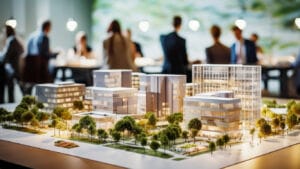
She saw that in a 50,000-square-foot parcel at McDowell Road and 11th Street in Phoenix’s McDowell Miracle Mile Revitalization zone. An ongoing project, which she calls Imagine Coronado, aims to repurpose seven century-old bungalows into a wellness and community enclave
She and her team will showcase it during the 2026 Destruction and Reuse Conference, which is making its Phoenix debut. Themed “Reuse Rising,” the event, primarily for architects, contractors, developers, policymakers, reuse professionals and students, runs from Tuesday, Nov. 17, to Friday, Nov. 20. It is open to the public, too.
The main sessions are on Wednesday, Nov. 18, through Thursday, Nov. 19, at On Jackson, 245 E. Jackson St., Phoenix.
Full passes are $575 for nonmembers and $300 for a single day. A free Stardust tour is offered on Nov. 20, and students pay $50 per day. Registration closes on Nov. 16 at buildreuse.org/conference.
MORE NEWS: Here’s how many jobs Arizona is projected to add by 2035
DEEPER DIVE: 10 Arizona restaurants make Yelp’s Top 100 Mexican food spots
Last year’s conference in St. Paul, Minnesota, hosted more than 300 attendees and organizers hope the 2026 event will top that.
Hosted by Build Reuse, the conference emphasizes the importance of deconstruction — the careful disassembly of a building so its materials can be reused rather than landfilled. Reuse centers then resell the cabinets, doors and fixtures.
Build Reuse diverts about 1.8 million tons of material a year. Shannon Goodman, its board president, said the total number of buildings in the country is expected to double in 40 years.
About a third of today’s buildings will likely be demolished during that time.
“We have a choice to make,” Goodman said. “There’s either going to be a lot of materials going into landfill, or it’s going to be one of the most incredible opportunities we’ve ever had.”
Demand for salvaged materials has grown over the past 10 to 15 years, Goodman said. That now outpaces the infrastructure to supply it, which saves money.
“If we can scale up the infrastructure that makes reuse possible, then all of those resources turn into local jobs, much more affordable materials and all kinds of new enterprises that pop up,” Goodman said.
Stardust, the Valley’s only local building material reuse nonprofit and a conference co-host, sells its inventory for 50% to 80% less than big-box retailers. Goodman said it is a misconception that salvaged and reclaimed materials are more expensive.
The benefits go beyond the price tag. Reuse organizations often operate in economically vulnerable communities, Goodman said, and deconstruction creates new career pathways.
Ryan Gurr, coordinator of Circular Arizona — a nonprofit focused on fostering a circular economy through education efforts and a conference co-host — also said reuse is the most obvious part of the circular economy.
This economic model, which aims to keep products and materials in use for as long as possible through repurposing and recycling, is the opposite of a “take-make-waste” system.
“When anything is being reused, it is eliminating the need for more materials to be put into the economy,” Gurr said.
But the gap between what reuse offers and what people know about it is the biggest obstacle, said Stardust CEO Karen Jayne. Many people remodeling a kitchen don’t realize how easy it is to have it deconstructed.
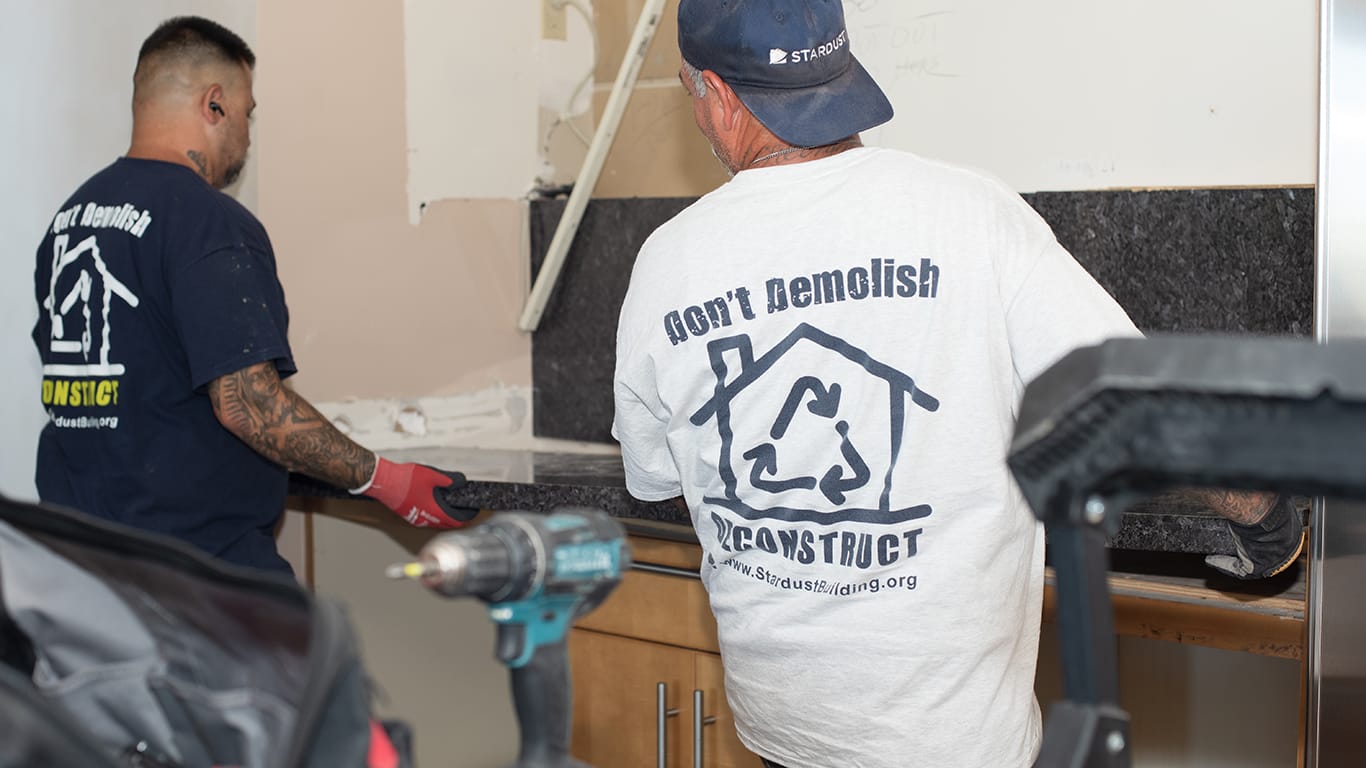
“It’s easy to schedule,” she said. “Our teams will come into the home and remove the kitchen within half a day.”
Jayne said a half-day job is $350, well below what homeowners would pay a contractor, a crew and a dumpster to demolish it. Stardust also provides an itemized receipt that homeowners may use for tax purposes.
On the other hand, commercial projects face tougher logistics, including storing materials until a project is ready and handling warranties, Goodman said.
One example of that is Imagine Coronado. Those homes were blighted, but neighbors fought to prevent their demolition. Each needed new electrical, air conditioning and foundations, and thousands of dollars in mold remediation, Lennon said.
Salvaging takes more time and effort than buying new, and old buildings hide surprises, such as jerry-rigged foundations or centuries’ worth of leftover concrete in the yard. For example, in one of the Imagine Coronado bungalows that was an early Montessori school, a basement was discovered. Lennon plans to convert it into a humidor for the cigar business.
Preserving a historic building also involves wading through paperwork, which slows the process. As a longtime preservationist, Lennon said nothing surprises her.
Now that the interior layouts for the bungalows are complete, the work is moving to gardens and pathways. The next step is to obtain a demolition permit for the unsafe back sheds, but Lennon plans to save the weathered plywood for wall art.
“The stories in those homes are worth telling,” said Lennon, adding that the City of Phoenix has been a great partner.
“These things still have life left in them and can serve a purpose again.”