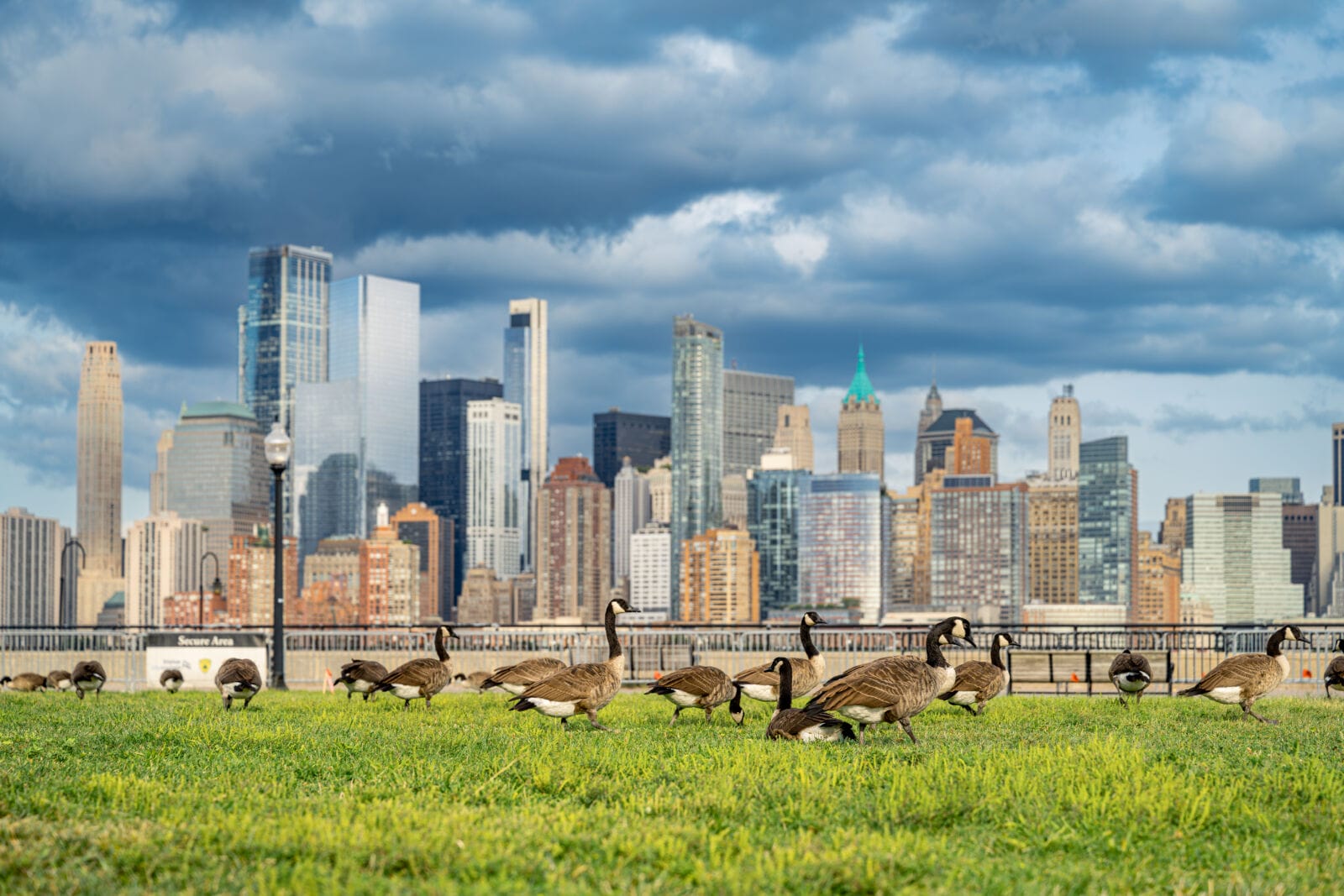
A flock of geese on a corporate lawn doesn’t look like a financial problem. It looks like a minor nuisance, something the grounds crew will handle before anyone important notices.
That assumption is where the real cost starts. Office parks, apartment communities, shopping centers, and business campuses are exactly the kind of open, manicured landscape geese are drawn to, and once a flock settles in, the expenses show up in places most property managers don’t expect.
Why These Properties Are Such an Easy Target
Commercial landscapes check every box geese look for. Wide lawns give them a clear sightline to spot predators. Retention ponds and decorative water features offer safety and easy access. Low foot traffic during early mornings and evenings means little to discourage them from staying.
Industrial campuses and shopping centers add another layer to the problem. These properties often have large, uninterrupted grass areas with almost no natural predator activity. Once a pair of geese identifies a site as safe, they tend to return to it year after year, which means the infestation rarely stays a one-season event.
This is usually the point where property managers start looking for a wild geese removal, often after realizing that the birds aren’t going to move on by themselves.
The Landscaping Damage Adds Up Quietly
Geese are constantly grazing. A resident flock will tear up grass down to bare patches, wreck ornamental plantings and tear up newly seeded areas faster than turf crews can repair them. That damage is counter to what the landscaping budget was meant to protect on properties that spend heavily on curb appeal.
Re-seeding bare patches, replacing sod and replanting damaged beds is also not a one-time fix. As long as the geese keep coming back, the repairs keep happening, and the maintenance line item gets bigger every season.
Cleaning Costs That Never Really Stop
Droppings are the most visible cost, and also the most constant. Sidewalks, entrances, parking lots, and outdoor seating areas all need repeated cleaning to stay usable, especially on properties with heavy foot traffic during business hours.
Power washing an entrance walkway once might solve the appearance problem for a few days. It does nothing to stop the birds from coming back, which means the same cleanup gets scheduled again and again, often on a budget that was never built for it.
DEEPER DIVE: Here are Arizona’s Most Admired Companies of 2026
WOMEN IN BUSINESS: The Most Influential Women in Arizona for 2026
Liability Is the Cost Owners Don’t See Coming
Wet droppings on a hard surface create a real slipping hazard, and commercial properties carry a higher standard of responsibility than most owners realize. A documented goose problem that goes unaddressed can become difficult to defend if someone is injured near an entrance or walkway.
Insurance carriers pay attention to this pattern too. Repeated incident reports tied to a known, unmanaged wildlife issue can affect claims and premiums well beyond the cost of a single accident.
Tenant Perception Shapes the Bottom Line
Curb appeal counts for more in leasing decisions than most owners will admit. If you see a property with droppings all over the walkways, algae building up in the pond, or geese blocking the main entrance, it speaks volumes about how well the site is managed overall.
Tenants notice, and so do prospects on their first tour of the property. What may seem like a goose problem to maintenance staff can have a subtle effect on renewal conversations and how a listing agent pitches the property to new clients.
Why Proactive Management Wins Financially
Reactive cleanup, repeated landscaping repairs and the liability exposure of ignoring the issue can quickly become more expensive than taking preventive action. Property managers dealing with recurring goose problems should understand how to get rid of Canadian geese safely and effectively before the damage becomes a regular maintenance expense.
Consistent prevention and behavioral deterrents can discourage geese from returning to the property, particularly when implemented before nesting season. Taking action early helps reduce repeated cleanup, landscaping repairs and other costs associated with a persistent goose problem.
Protecting Value Over the Long Run
Commercial property value isn’t just about square footage and location. It’s also about how consistently a site is maintained and how it presents itself to the people deciding whether to stay, renew, or sign a new lease.
Geese don’t leave on their own, and the costs of ignoring them rarely stay small. Addressing the problem early, before it becomes landscaping damage, liability exposure, and a tenant complaint all at once, is usually the more affordable path in the long run.