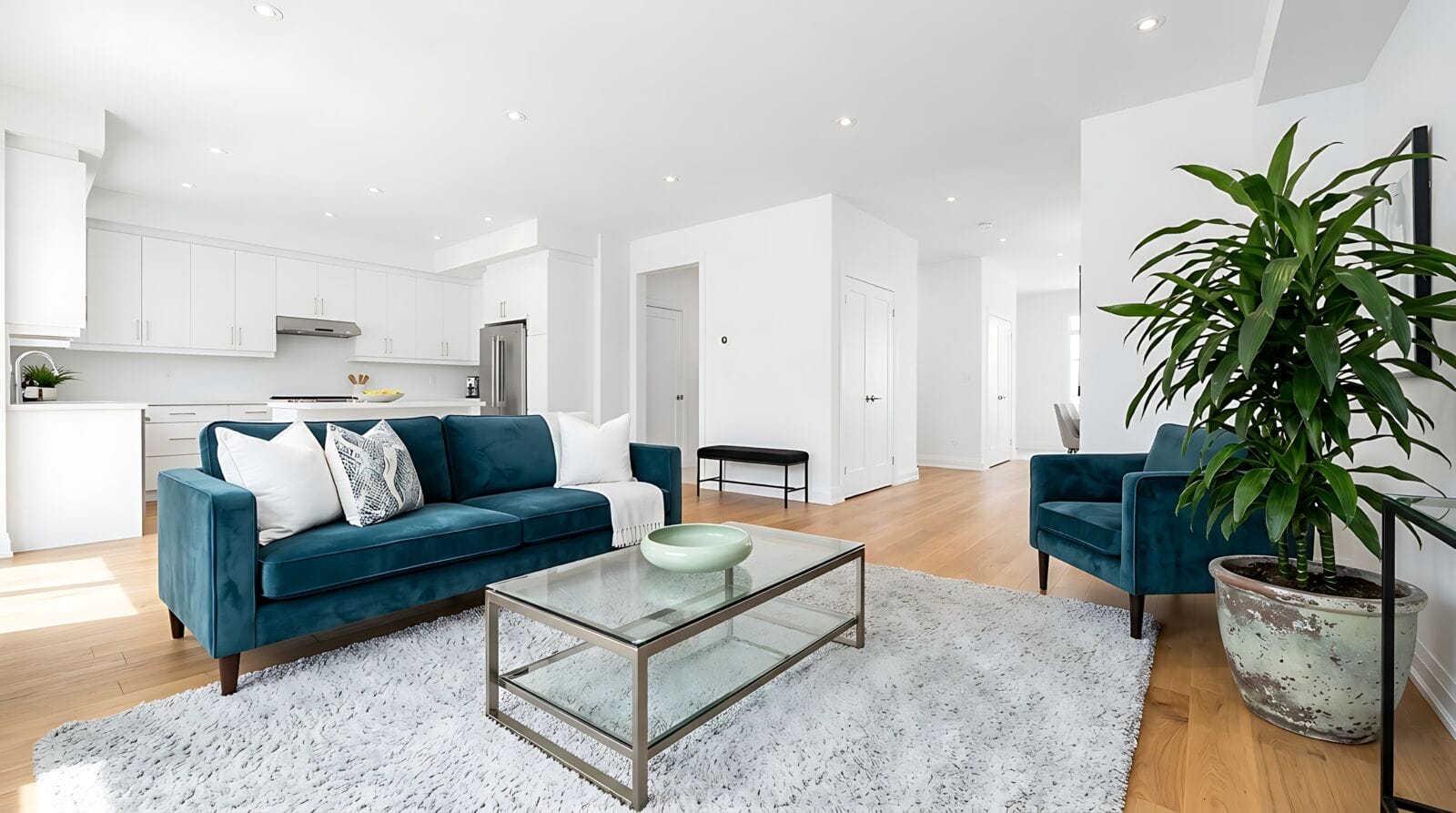
Two homes with the same floor plan can sell weeks apart, and furniture is part of the reason. How a home is furnished shapes how quickly a buyer can picture themselves living there, and that picture is what moves a sale. Whether you are staging a home to sell or furnishing one you have just bought, the same handful of principles apply. Here they are.
Buyers buy a feeling, and furniture creates it
A buyer walking through a home is not really assessing the walls. They are asking, often without knowing it, whether they can imagine their life happening there. Furniture answers that question. A warm, well-arranged room helps a buyer picture evenings on that sofa; a bare or cluttered one leaves them doing hard imaginative work, and buyers who have to work tend to move on. The furniture is selling the life, not just filling the space.
This is why photographs matter as much as viewings. Most buyers decide whether to visit at all from the listing images, and a well-furnished room simply photographs better than an empty or awkward one. The pieces you choose are doing their first job before anyone sets foot inside, on the screen where the shortlist gets made.
MORE NEWS: Fairmont Scottsdale Princess sold to San Manuel Investment Authority
Stage with a few good pieces, not a full house
Staging is not about filling every room. It is about placing a few considered pieces that suggest how good the space could be. A well-chosen sofa, a statement chair, a properly scaled dining table: these read as aspirational and let the architecture show. Cramming a home with furniture does the opposite, hiding the space a buyer is actually paying for. Fewer, better pieces almost always show better than more.
There is a cost angle here that sellers often miss. Staging a whole house with rented furniture is expensive and forgettable. Owning a few genuinely good pieces achieves more, shows better, and, unlike the rental, you keep them. Money spent on one excellent chair or sofa is money that moves house with you, rather than money that disappears when the staging company collects its van.
Scale to the room and keep the sightlines open
Right-sized furniture makes rooms feel larger, and wrong-sized furniture shrinks them. Keep pieces in proportion to the room, float them off the walls where it helps the flow, and keep the paths through a space clear. Buyers read openness as space and clutter as the lack of it, so the way furniture is arranged can make the same square footage feel generous or cramped.
Neutral, but not bland
The safe advice is to keep staging neutral, and warm neutrals are indeed the right base. But neutral does not have to mean forgettable. One or two recognisable design pieces, a sculptural chair, a good light, lift a neutral room from inoffensive to aspirational without alienating anyone. A considered space signals that the home has been cared for, which is exactly the impression a seller wants to leave.
The trick is that a design classic is broadly liked in a way a personal, of-the-moment choice is not. A recognisable, well-proportioned piece reads as tasteful to almost everyone, so it lifts the room without narrowing the pool of buyers who can see themselves living there. That is a rare and useful combination when you are trying to appeal to as many people as possible at once.
Furnishing a home you have just bought
The same thinking helps once the sale is done and it is your home to fill. Start with the anchor pieces, the sofa, the bed, the dining table, and buy those well, because they set the tone for everything else and they are the pieces you will use every day. The sofa is usually the piece a living room arranges itself around, so a range of designer sofas is a sensible place to start and build outward from.
Then fill in slowly, learning the rooms before you furnish them completely. A home built up around a few good anchors always feels more considered than one bought in a single weekend.
You do not need to spend a fortune
None of this, staging or furnishing, requires a large budget. The pieces that make a home show and feel its best can be affordable design classics rather than expensive originals. A specialist such as Mobelaris offers faithful reproductions of these designs, sold honestly as reproductions, which lets a home look considered without a considered-home price. Spend where it shows, keep it simple and well-scaled, and let a few good pieces do the work, whether you are trying to sell a home or settle into one. Either way, the furniture is working for you long after the decision to buy it is made.