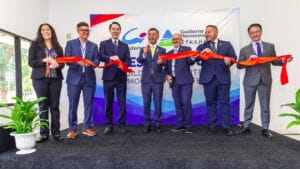
For innovators, saudi arabia business registration through the entrepreneur route is the foundation for building a scalable venture. The Kingdom’s startup framework is designed to support exactly this kind of ambition.
A framework for innovation
The misa entrepreneur license is purpose-built for founders bringing new technology or models to market, connecting them with incubators and the wider innovation ecosystem.
Scaling from the start
With the license secured, founders can focus on product, customers, and growth, backed by a support structure designed for early-stage ventures.
Capital and momentum
Growing saudi investment into innovation signals strong, sustained backing for founders building in priority sectors.
What founders gain beyond the license
The entrepreneur route is designed around the realities of early-stage ventures, which differ sharply from those of established corporations. Capital expectations are often lighter, support structures are built in, and the eligibility criteria reward innovation and scalability rather than scale alone. This makes the Kingdom genuinely accessible to founders who have a strong idea and a credible plan, not only to large, well-funded companies expanding into the region.
The practical upshot for founders is speed and confidence. Knowing that an established framework stands behind the entry process removes much of the uncertainty that deters first-time entrants to a new market. With eligibility criteria that reward genuine innovation and a support network that remains engaged after the license is issued, the entrepreneur route offers not just a starting point but a foundation that continues to add value as the venture matures and scales. In short, the entrepreneur route is not merely a faster way to obtain a license; it is an entry into a structured environment built to help innovative ventures take root, grow, and thrive within one of the most ambitious economic transformations underway anywhere in the world today.
The market context
One figure puts the opportunity in perspective. Mining and metals are an emerging frontier, with the Kingdom investing heavily in critical minerals for batteries and future materials. Special economic and free zones offer tailored incentives, customs advantages, and streamlined regulation for qualifying activities. Renewable energy targets are among the most ambitious in the region, with large-scale solar and wind projects underway. Education and human-capital initiatives are creating demand for edtech, training academies, and R&D commercialisation partnerships.
What to prepare before you start
Investors should gather a core document set early: the parent company’s registration certificate, audited financials, a board resolution authorising the Saudi entity, passports for shareholders and the appointed manager, and a clear activity description. Papers originating outside the Kingdom generally need attestation and Arabic translation, a step that trips up the unprepared. Correct activity classification at the start keeps the process clean.
How Motaded works with businesses of all sizes
Motaded specializes in establishing large corporations in Saudi Arabia, handling the complete 23-step incorporation journey for multinationals and regional groups while offering an integrated operating environment suited to businesses of every size — from solo investors and SMEs to enterprise-scale entities.
Motaded’s reach — 281 establishments across 8 sectors — is backed by a complete ecosystem: government relations, accounting and Zakat, HR and visas, office solutions, and persistent launch support. Investors get one point of contact and the freedom to focus on growth, with capability that scales from small firms to large groups.
Frequently asked questions
Is sole foreign ownership possible? Yes across most activities, enabled by the MISA investment license.
How long does setup take? Usually eight to twelve weeks, depending on the activity and how complete the documentation is.
How is the process initiated? By obtaining the MISA license, which unlocks the full sequence.
Timeline and what to expect
Most foreign entities are operational within eight to twelve weeks when documents are complete and activity codes correct. The investment license comes first, then commercial registration; tax, social-insurance and labor enrolments follow in parallel, with banking as the final milestone.
Getting started
Innovation has a home in the Kingdom. The entrepreneur license is the foundation founders build on. The right execution partner handles licensing, registration, and compliance in parallel, so the entity reaches readiness without the delays that catch the unprepared. The combination of openness and ambition makes the current window an attractive one for serious entrants. The entrepreneur ecosystem rewards those who arrive prepared and well-advised, and the supporting infrastructure has never been more developed than it is today.