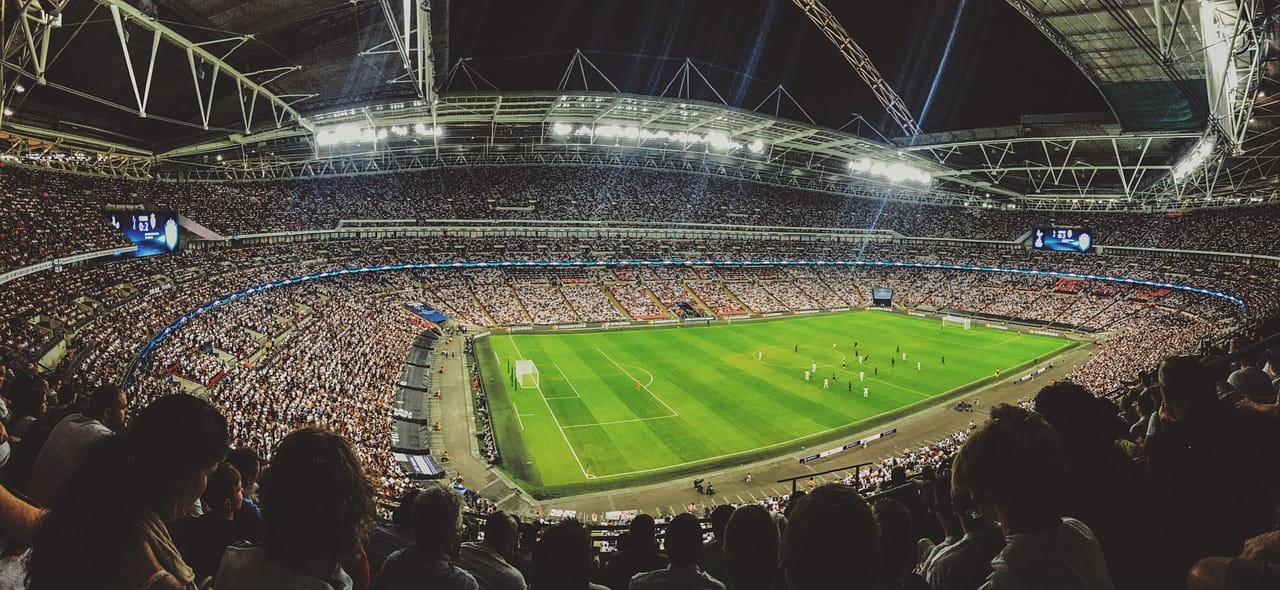
Old Trafford holds more fans than any other ground in the Premier League, and it isn’t particularly close. Manchester United’s home has seated more than 74,000 supporters since its most recent expansion, comfortably clear of the next four grounds on this list. Anyone checking the Premier league betting odds for a big away fixture will find these five stadiums coming up again and again.
Capacities have shifted plenty in recent years, with Everton’s move to a new ground and ongoing redevelopment talk at a few other clubs. But this top-five has settled into a fairly stable order, mixing century-old grounds with brand new arenas.
Here’s a look at when each was built, the goalscoring records they’ve produced and some of the games that have defined them.
Old Trafford, capacity 74,310
Manchester United have called Old Trafford home since 1910, and it remains the largest club ground in England by some distance. Wayne Rooney holds the scoring record here, netting 101 Premier League goals at the stadium during his 13 years at the club, including his famous overhead kick against Manchester City in 2011. The ground survived bomb damage during the Second World War and has since hosted World Cup and European Cup matches.
Tottenham Hotspur Stadium, capacity 62,850
Spurs opened their current 62,850 seater home in April 2019, replacing White Hart Lane on a site just yards away. Harry Kane scored his first goal there in a 3-1 win over Aston Villa and went on to become the club’s all-time leading scorer before his move to Bayern Munich. The stadium’s retractable pitch, built for NFL fixtures, remains unique among Premier League grounds, and it has hosted regular NFL London Series games alongside football.
London Stadium, capacity 62,500
Built for the 2012 Olympics, the ground in Queen Elizabeth Park was converted for football and became West Ham’s home in 2016. Michail Antonio holds the club’s all-time Premier League scoring record, much of it built-up here after he broke Paolo Di Canio’s old mark in 2021. The stadium also hosted West Ham’s run to their first major trophy in decades, the 2023 Conference League triumph.
Anfield, capacity 61,276
Anfield is the oldest ground on this list by some distance, having staged football since 1884 and become Liverpool’s home in 1892. Mohamed Salah has scored 101 Premier League goals here since 2017, matching Rooney’s Old Trafford tally.
The stadium’s most talked about night in recent memory came in 2019, when Liverpool overturned a three-goal deficit to beat Barcelona in a Champions League semi-final, one of several European comebacks the ground is known for.
Emirates Stadium, capacity 60,704
Arsenal moved from Highbury in 2006, and the Emirates has been their home ever since. Robin van Persie remains the ground’s top scorer with 45 Premier League goals, ahead of Theo Walcott and Olivier Giroud. For those tracking football odds across a full season, fixtures at grounds like this one tend to draw some of the heaviest interest given the size of the crowds and the history behind them.
These five stadiums show two different paths to the same outcome. Old Trafford and Anfield built their reputations over more than a century, while the other three got there inside the last 20 years. Between them, they’ve hosted title deciders, European comebacks and record crowds, and each one still shapes how its club is talked about today.