Almost every luxury handbag owner has two kinds of bags: the one they reach for without thinking, and the one that looks beautiful on the shelf but rarely leaves it. The strange part is that the second bag is often the more expensive, more admired, more “special” purchase. Understanding why that happens, and how to avoid it, is one of the most useful things a buyer can learn before spending on their next Gucci.
This isn’t really a question of which Gucci bag is best. It’s a question of which Gucci handbag becomes part of your actual life. Those are different things, and the gap between them explains a lot of the quiet regret that follows expensive handbag purchases.
The Bag You Buy Isn’t Always the Bag You Carry
The moment of purchase and the months of ownership reward almost opposite qualities. In a boutique or a product photo, a bag is judged on presence: how striking it looks, how recognizable it is, how much it makes you feel something in the first three seconds. Daily carrying rewards the reverse: ease, comfort, and the ability to slip into an outfit rather than dominate it.
A handbag can score brilliantly on the first test and poorly on the second, and that is precisely how a stunning bag ends up living in its dust bag. The purchase felt right. The ownership never quite clicked. Nothing was wrong with the bag; it simply asked for more occasion, more effort, or more coordination than an ordinary Tuesday offers.
What Actually Decides Whether a Bag Gets Carried
The bags people reach for daily tend to share a handful of practical traits, and none of them have much to do with how impressive the bag looks on a shelf.
Scale is the first. A bag that’s slightly too small to hold a phone, keys, and a card holder becomes a bag you leave home, no matter how lovely it is. A bag that’s a touch too large feels like a commitment you only make on purpose. The everyday winners usually sit in the forgiving middle.
Carry style matters just as much. How a bag sits on the body, whether hand-held, short shoulder strap, or hands-free crossbody, quietly determines how often it comes along. A top-handle bag is elegant but occupies a hand; an adjustable strap that converts to a crossbody removes a dozen small reasons to leave it behind. People underestimate how much a strap drop shapes a bag’s real-life mileage.
Weight is the least glamorous factor and one of the most decisive. Substantial hardware feels reassuring in the boutique and heavy by the end of a long day. Closure friction works the same way: a bag you can open one-handed at a checkout counter gets used far more than one guarding its contents behind a stiff clasp you have to stop and wrestle with.
Finally, there is range, in both color and occasion. A neutral that works with denim and tailoring covers more of an actual week than a seasonal shade you have to build an outfit around. The bags that become favorites tend to have a low floor and a high ceiling: appropriate for errands, still appropriate for dinner.
How the Flagship Gucci Collections Tend to Score
Seen through the lens of wearability rather than desirability, Gucci’s core collections sort themselves fairly clearly. Browsing Gucci handbags with these traits in mind often predicts which piece you’ll actually carry better than a wishlist does.
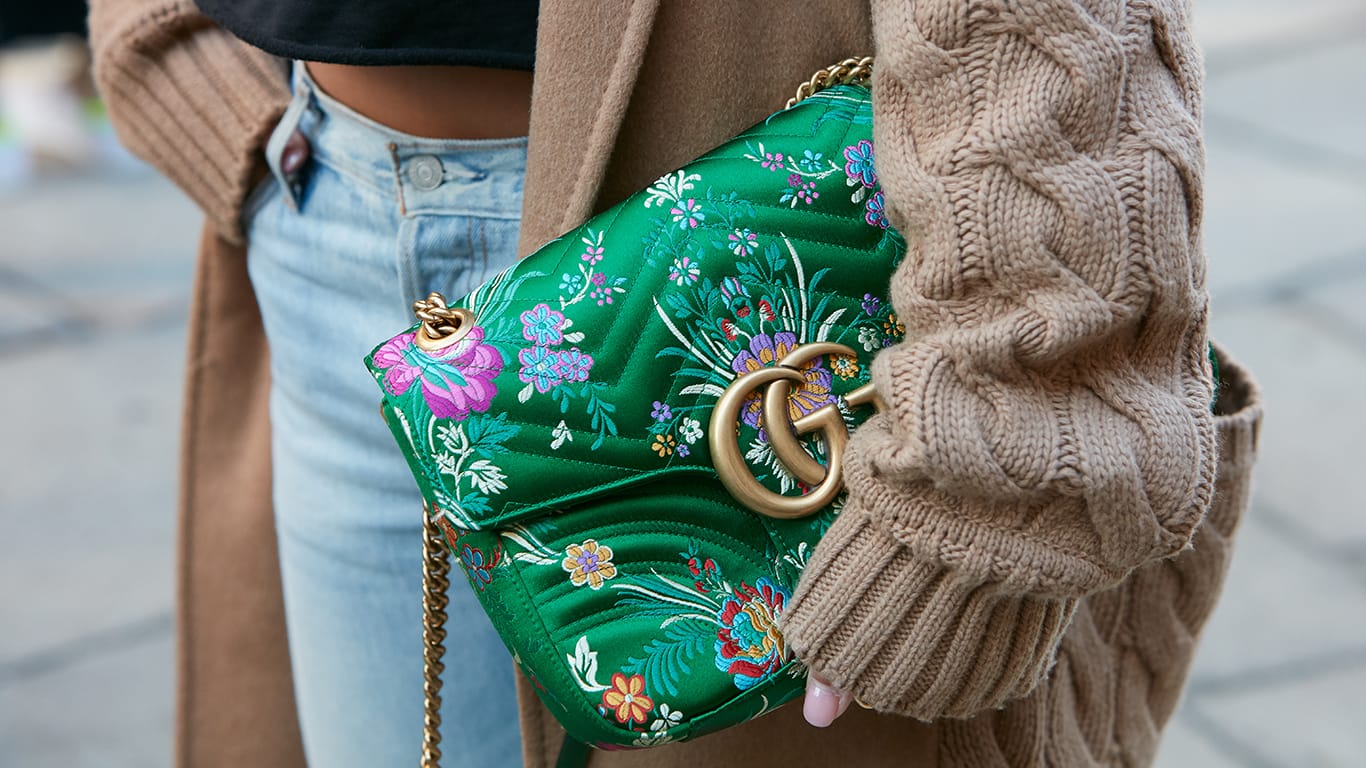
The Marmont tends to become an everyday favorite. Its soft structure, adjustable chain that can go shoulder or crossbody, and forgiving proportions make it easy to grab without planning an outfit around it. The Jackie 1961 earns its loyalty differently. Its clean silhouette and quiet profile mean it rarely clashes with anything, which is why longtime owners often report reaching for it more than louder pieces. The Ophidia, especially in tote and larger shapes, is a workhorse: durable canvas, roomy, and unbothered by daily use, which is exactly why it travels and commutes well.
The Horsebit 1955 sits slightly more toward the structured, polished end. It carries beautifully but leans a little more considered, a bag many owners love for work and dressed occasions more than for a quick coffee run. Among Gucci’s core collections, the Dionysus is more likely to become an occasional bag if it’s purchased with everyday use in mind. Its tiger-head clasp and decorative presence are the whole point, and they’re spectacular, but a statement bag is, by design, an occasion bag. Bought as a statement piece, it delights. Bought expecting an everyday companion, it disappoints.
None of this makes the decorative bags worse. It simply means they answer a different question, and buyers who confuse the two questions are the ones who end up with beautiful handbags they never carry.
The Statement-Bag Trap
There’s a reason the boutique favorite so often becomes the shelf ornament. Statement bags are engineered to win the purchase decision with dramatic hardware, bold shapes, and unmistakable identity. Those same qualities also narrow the number of days you’ll naturally reach for it. The more strongly a bag announces itself, the more it needs the outfit and the setting to rise to meet it, and most days don’t.
The trap isn’t buying a statement bag; it’s buying a statement bag while quietly expecting it to behave like an everyday one. Owners who name the role in advance, calling it “my dinner-and-events bag” rather than “my new go-to,” rarely end up disappointed. The regret comes from mismatched expectations, not from the bag itself.
Buying for the Life You Actually Live
The most reliable way to avoid a closet bag is to picture a genuinely ordinary week before buying, not a highlight reel of events. How often will you carry hands-free? What has to fit inside every single day? How much weight still feels comfortable at hour eight? How dressed-down is your most common outing?
Answer those honestly and the right Gucci usually chooses itself. Someone whose week is mostly errands, commuting, and casual meetings is nearly always happier with a Marmont, a Jackie, or an Ophidia than with a bag built to be admired. Someone shopping specifically for evenings and events has every reason to choose the more decorative piece, as long as that’s the role they’re filling.
Based on AskMeWear’s experience serving luxury shoppers, first-time buyers tend to shop for how a bag looks in the moment, while repeat buyers shop for how a bag behaves over a year. The second instinct is the one that produces bags people actually carry, and it’s the instinct worth borrowing early.
Wearability Is Also Where the Value Is
There’s a practical footnote to all of this. A bag’s real cost isn’t its price; it’s its price divided by the number of times you carry it. A beautiful handbag worn twice is expensive no matter what it cost. A slightly less dramatic bag carried three times a week for years quietly becomes one of the best-value pieces in a wardrobe. Everyday wearability and long-term value turn out to be the same trait viewed from two angles, which is why the bag that becomes a favorite is so often the smarter purchase, not just the more comfortable one.
Frequently Asked Questions
Which Gucci bags are easiest to carry every day? The Marmont, Jackie 1961, and Ophidia are the usual everyday favorites, thanks to forgiving proportions, comfortable carry options, and neutral versatility that suits a wide range of outfits.
Are statement bags like the Dionysus a bad choice? Not at all. They’re excellent when bought for the role they play. A decorative, structured bag shines at dinners and events; it just isn’t designed to be a grab-and-go everyday piece, so it’s happiest when that’s the expectation.
How do I avoid buying a bag I won’t carry? Picture an ordinary week rather than a special occasion, and match the bag’s size, carry style, weight, and color range to that reality. If a bag needs the right outfit and setting to work, plan to use it that way.
Does everyday use hurt a Gucci bag’s value? Sensible daily use rarely does, and a bag you actually carry earns its keep in a way a shelved one never can. Neutral, classic styles in good condition tend to hold resale interest well regardless.
Final Thoughts
The most satisfying Gucci purchase is rarely the one that impresses hardest in the store. It’s the one that quietly fits into the life you already live: light enough, roomy enough, easy enough to open, and neutral enough to disappear into whatever you’re wearing. Statement bags earn their place too, but as occasion pieces rather than everyday companions.
Decide which role you’re actually filling before you buy, and the bag that comes home is far more likely to be one you carry for years than one you admire from a shelf. The best luxury purchase isn’t the bag that earns the most compliments; it’s the one that quietly becomes part of your routine.