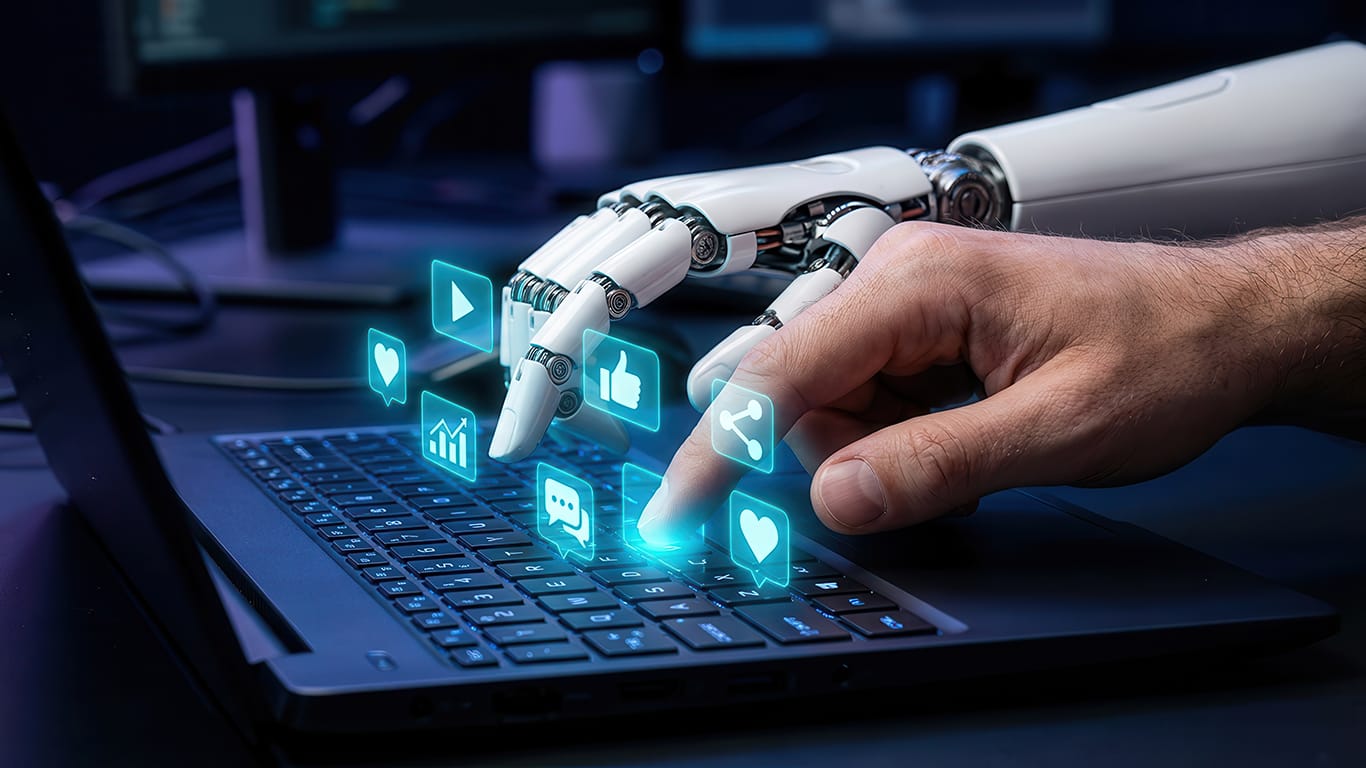
Artificial intelligence is advancing at an extraordinary pace, influencing nearly every aspect of digital innovation. What began as a technology for automating repetitive tasks has evolved into a powerful ecosystem capable of generating content, solving complex problems, and supporting creative decision-making. Today, businesses are using AI not only to improve efficiency but also to unlock entirely new ways of working.
As organizations continue to adopt intelligent technologies, AI is becoming an essential part of long-term digital transformation strategies.
The Rise of More Capable AI Models
The latest generation of AI systems offers far more than basic text generation. Modern models can analyze information, understand context, generate creative ideas, and assist with visual and multimedia projects.
One example is Hailuo 3.0, which represents the industry’s ongoing effort to build faster, more intelligent AI models that can support a wide range of professional tasks. As these models continue to improve, users benefit from better reasoning, stronger contextual understanding, and more natural interactions across different applications.
This evolution allows businesses to complete projects more efficiently while maintaining high standards of quality.
AI Is Making Creativity More Accessible
Creative work has traditionally required specialized skills and expensive software. AI is changing that by making advanced creative capabilities available to a much wider audience.
Today, entrepreneurs can create marketing materials, educators can design learning resources, and content creators can develop engaging visuals without needing years of technical experience. AI reduces many of the barriers that once limited creative production, enabling individuals and teams to bring ideas to life more quickly.
This accessibility is encouraging innovation across industries, from education and healthcare to retail and entertainment.
Prompt Design Has Become a Valuable Skill
As AI models become more powerful, the quality of user input has become increasingly important. Well-structured prompts provide AI with the context needed to generate accurate, detailed, and relevant outputs.
Many creators now experiment with a gemini ai photo prompt to produce more refined visual results. Instead of relying on short instructions, they include details about composition, lighting, artistic style, perspective, color palettes, and atmosphere to guide the AI more effectively.
Developing strong prompting techniques allows users to consistently achieve higher-quality outputs while reducing the need for repeated revisions.
DEEPER DIVE: West Valley reinvents itself as entertainment destination
WOMEN IN BUSINESS: The Most Influential Women in Arizona for 2026
AI Is Supporting Smarter Business Operations
Organizations are integrating AI into everyday workflows to improve productivity and decision-making. Rather than replacing employees, AI assists by handling repetitive processes and providing valuable insights that help teams work more effectively.
Some common applications include:
- Generating content ideas.
- Summarizing research and reports.
- Supporting customer service.
- Assisting with product design.
- Improving internal collaboration.
- Accelerating creative production.
By automating routine tasks, businesses can dedicate more time to innovation and strategic planning.
Human Expertise Remains the Driving Force
Although AI has become remarkably capable, successful outcomes still depend on human creativity, critical thinking, and experience. AI can generate suggestions and streamline workflows, but professionals remain responsible for defining objectives, evaluating results, and making informed decisions.
The most effective organizations view AI as a collaborative technology that enhances human capabilities rather than replacing them.
Looking Ahead
Artificial intelligence will continue to evolve with more advanced reasoning, improved multimodal capabilities, and greater personalization. Future AI systems are expected to become even better at understanding user intent and adapting to different industries and workflows.
Businesses that invest in AI literacy and responsible adoption today will be well positioned to take advantage of these innovations while remaining competitive in an increasingly technology-driven world.
Conclusion
Artificial intelligence is transforming how individuals and organizations approach creativity, productivity, and problem-solving. Advanced models like MiniMax H3 demonstrate the rapid progress being made in AI capabilities, while techniques such as developing an effective gemini ai photo prompt show how thoughtful human guidance can significantly improve results. As AI continues to mature, it will remain a valuable partner for businesses and creators seeking to innovate, scale their work, and shape the future of digital experiences.