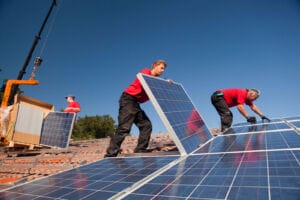
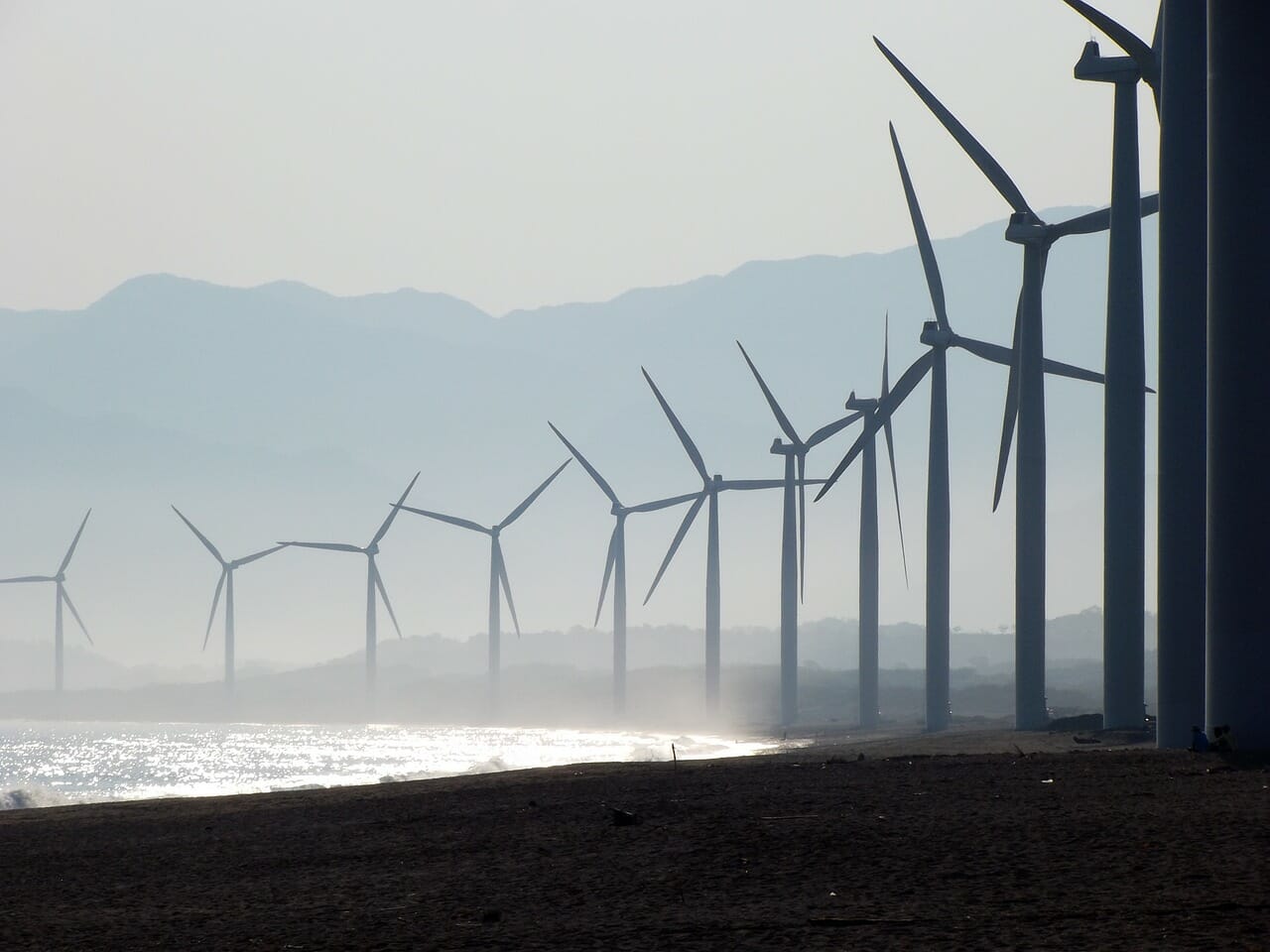
The energy industry is in a strange place right now. People talk nonstop about clean energy, net-zero goals, big plans for the future — but the practical side is much messier. Even if we keep adding solar and wind at a record pace, it’s still not enough. IRENA estimates that the world needs roughly 1,000 GW of new renewable capacity every year from now until 2030. It’s a massive target, and the older power grids we rely on were never designed for anything like this.
With conventional power plants, you more or less know what you’re getting. They run steadily, and operators can control the output. Renewables don’t behave that way. Digital systems help make sense of everything: they predict demand, estimate how much energy renewables will produce, and coordinate countless devices scattered across different regions. And now it’s worth looking at the companies that are actually pushing these solutions forward.
What renewable energy sources actually look like today
When people say “renewable energy,” they’re usually thinking about basic stuff. Solar panels on roofs. Maybe some windmills. But it’s gotten way more complex than that.
- Solar energy now includes massive industrial parks generating hundreds of megawatts. There’s Al Dhafra PV2 in the UAE – the world’s biggest single-site solar plant with four million modules powering 200,000 homes. Some solar installations float on reservoirs. Others are built right into building facades.
- Wind energy has gone offshore in a big way. Dogger Bank in the UK has turbines as tall as skyscrapers, sitting miles out in the North Sea where winds are stronger and more consistent. These things can power millions of homes.
- Hydropower is old news, sure. But pumped hydro storage is basically a giant battery – pump water uphill when you have extra electricity, let it flow down through turbines when you need power. Simple physics, massive impact.
- Biomass energy uses everything from agricultural waste to wood chips. Countries like India and the US are converting biomass plants that used to run on coal.
- Geothermal just keeps running. No weather dependence, no variability. Iceland gets most of its energy this way. And green hydrogen, made by splitting water with renewable electricity, might be the future for heavy industry and shipping.
Here’s what all these sources have in common: they only work at scale if we have serious digital transformation in renewable energy. You can’t manage this many variables, this much data, this many interconnected systems without software that can think faster than humans.
LOCAL NEWS: Phoenix housing market outpaces national trends again in 2025
INDUSTRY INSIGHTS: Want more news like this? Get our free newsletter here
The companies building these solutions
1. DXC Technology
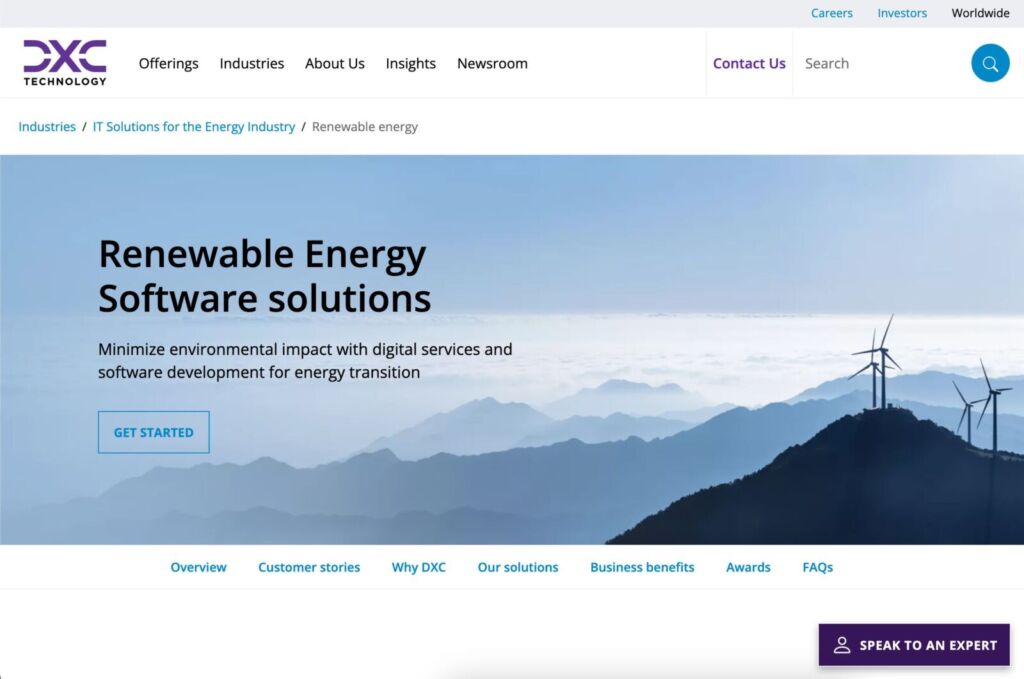
DXC gets into the complicated stuff. They build Distributed Energy Resource Management Systems – DERMS for short. What that means in plain English: software that can juggle thousands of solar panels, wind turbines, and batteries at once.
Their renewable energy digital services do real-time forecasting and balancing. When a cloud covers a solar farm, the system already knows and has adjusted before anyone notices a flicker. They use predictive analytics to figure out what’s going to happen hours or days ahead, which matters when you’re trying to keep the lights on for millions of people.
The thing about DXC is they’re focused on helping utilities transition without blowing up their existing infrastructure. Grid stability sounds boring until your power goes out. Their systems make sure that doesn’t happen, even when half your electricity is coming from sources that change by the minute.
2. Siemens Energy
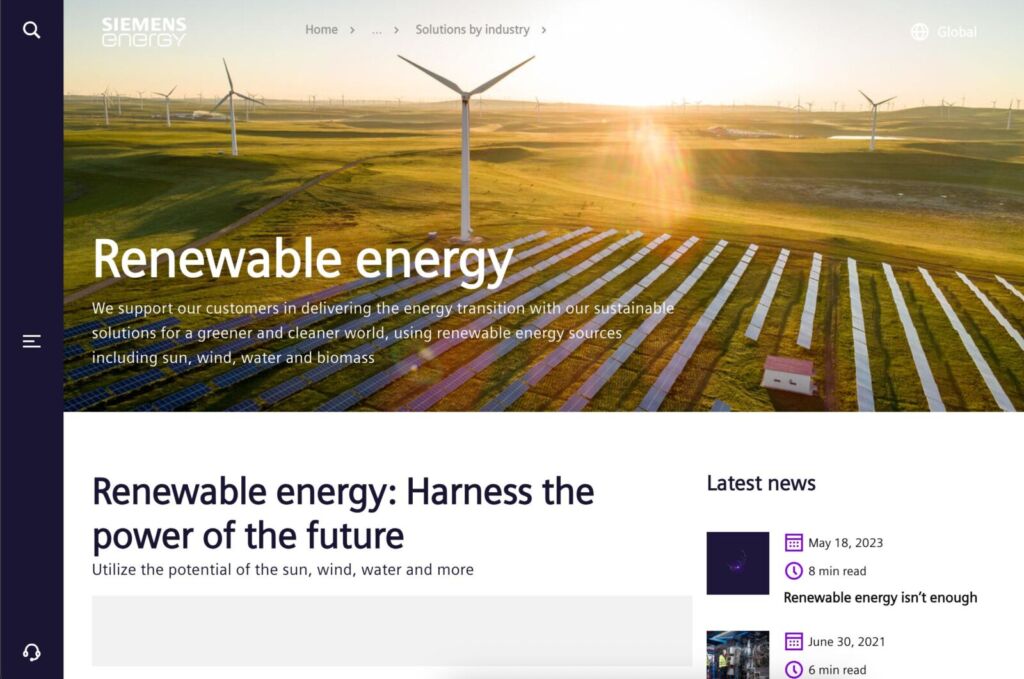
Siemens has been in energy forever. Their Omnivise Digital Solutions covers pretty much everything – from the moment you build a power plant to the day you tear it down decades later. They make distributed control systems that pull data from every sensor, every turbine, every transformer, and show it all in one place.
What’s interesting is their edge computing for substations. Instead of sending all data to some central cloud and waiting for instructions, the processing happens right there on-site. Milliseconds matter when you’re managing a grid.
Siemens is also deep into green hydrogen tech. They’re working on projects in over 100 countries and their equipment generates about half the world’s electricity. When you flip a light switch, there’s a decent chance Siemens technology is involved somewhere in that chain.
3. Schneider Electric
Schneider built EcoStruxure, which is basically their answer to “how do we make everything smarter?” It connects hardware, software, and services to optimize energy use in buildings, factories, and grids.
Their new One Digital Grid Platform uses AI to manage planning, operations, and asset management all in one place. The AI automatically catches when the digital model of a grid doesn’t match reality – like when someone forgot to update the system after installing new equipment. Sounds simple, but that kind of mismatch causes real problems.
Schneider also runs a venture fund backing startups working on clean energy tech. Their approach to digital transformation in renewable energy includes everything from microgrid management to consulting services that help companies figure out how to actually decarbonize their supply chains.
4. ABB
ABB does electrification and automation at a massive scale. They make robotic systems for manufacturing solar panels, complete instrumentation packages for solar and wind plants, and the smart grid systems that tie it all together.
Their battery storage solutions are particularly interesting. BESS-as-a-Service means companies can use battery systems without buying them outright. For industrial users trying to cut electricity costs during peak hours, that’s huge. You get energy independence without the capital expenditure.
ABB supplies converters for the world’s biggest offshore wind farms and generators for hydroelectric plants. Their renewable energy digital services include distributed control systems that give operators real-time visibility into everything happening across their assets. Less downtime means more power generation means more money.
5. GE Vernova
GE Vernova is the spinoff from General Electric that focuses purely on power generation and grid management. They generate about 25% of the world’s electricity through their installed base of 2200 GW worth of equipment.
Their Grid Orchestration Software uses AI to predict demand, optimize energy flow, and integrate all those distributed resources we keep talking about. Their Advanced Asset Performance Management system pulls data from information systems, operational systems, and engineering models to help people make faster decisions.
GE Vernova partnered with Amazon Web Services to accelerate cloud migration and bring generative AI into energy infrastructure. They’re working on everything from wind farms to small modular reactors. The renewable energy digital services from GE Vernova are about coordination – making sure different energy sources work together instead of fighting each other.
6. IBM Energy and Utilities
IBM brings Watson and AI expertise to energy. Their Maximo platform manages assets, and Watson handles the heavy data analytics. They’re using AI to forecast renewable energy production, optimize maintenance schedules, and manage distributed resources.
IBM is also experimenting with quantum computing for modeling complex energy systems. Their blockchain platforms enable peer-to-peer energy trading – imagine selling excess solar power from your roof directly to your neighbor. They build digital twins that simulate how turbines, transformers, and entire grids will behave under different conditions.
Cloud solutions from IBM let energy companies scale operations without spending millions on IT infrastructure. Digital transformation in renewable energy from IBM is about making the complex stuff manageable through better data and better intelligence.
7. Accenture
Accenture isn’t selling hardware or software directly. They’re consultants who help energy companies figure out their entire digital transformation strategy. Sometimes the problem isn’t technology – it’s knowing which technology to use and how to implement it without disrupting your business.
They work with industry leaders on IoT, Big Data, AI, and cloud solutions. Their approach covers operational excellence, asset management, customer experience, and decarbonization. Renewable energy digital services from Accenture include predictive maintenance for wind and solar farms, platforms for managing virtual power plants, and real-time carbon emission monitoring.
They also help companies integrate ESG principles into operations and reporting.
Why this stuff actually matters
We’re at a turning point. IRENA calls digital transformation in renewable energy a “critical catalyst” for hitting COP28 targets – tripling renewable capacity by 2030. Companies investing in digital solutions are already cutting operational costs by 20-30%.
Predictive analytics can forecast wind and solar generation 24-48 hours ahead. That gives grid operators time to prepare for fluctuations. IoT sensors detect equipment failures weeks before they happen, cutting maintenance costs by 20% and extending equipment life by 3-5 years.
Fixing this requires collaboration between private companies, governments, and tech firms. Projects like TwinEU – a 25 million euro initiative to create a digital twin of Europe’s electricity grid – show what’s possible when everyone works together. Denmark and Germany are already using digital twins to improve renewable integration and prevent grid failures.
Bottom line
Digital transformation in renewable energy isn’t optional anymore. The world is electrifying transportation, industry, and buildings. The only way to provide stable, affordable, clean energy is through smart grids that can adapt on the fly.
These seven companies – DXC Technology, Siemens Energy, Schneider Electric, ABB, GE Vernova, IBM, and Accenture – each tackle the problem differently. Some focus on hardware and automation. Others build software and analytics. Some create comprehensive consulting strategies.
Renewable energy digital services are becoming the foundation of our new energy system. They let us not just generate cleaner energy, but use it smarter.
By 2050, renewable sources should provide half the world’s electricity. But that future only happens if we invest in the technology to manage it effectively. Companies implementing digital transformation in renewable energy today aren’t just saving money – they’re building the infrastructure for a sustainable, secure, and prosperous future for everyone.