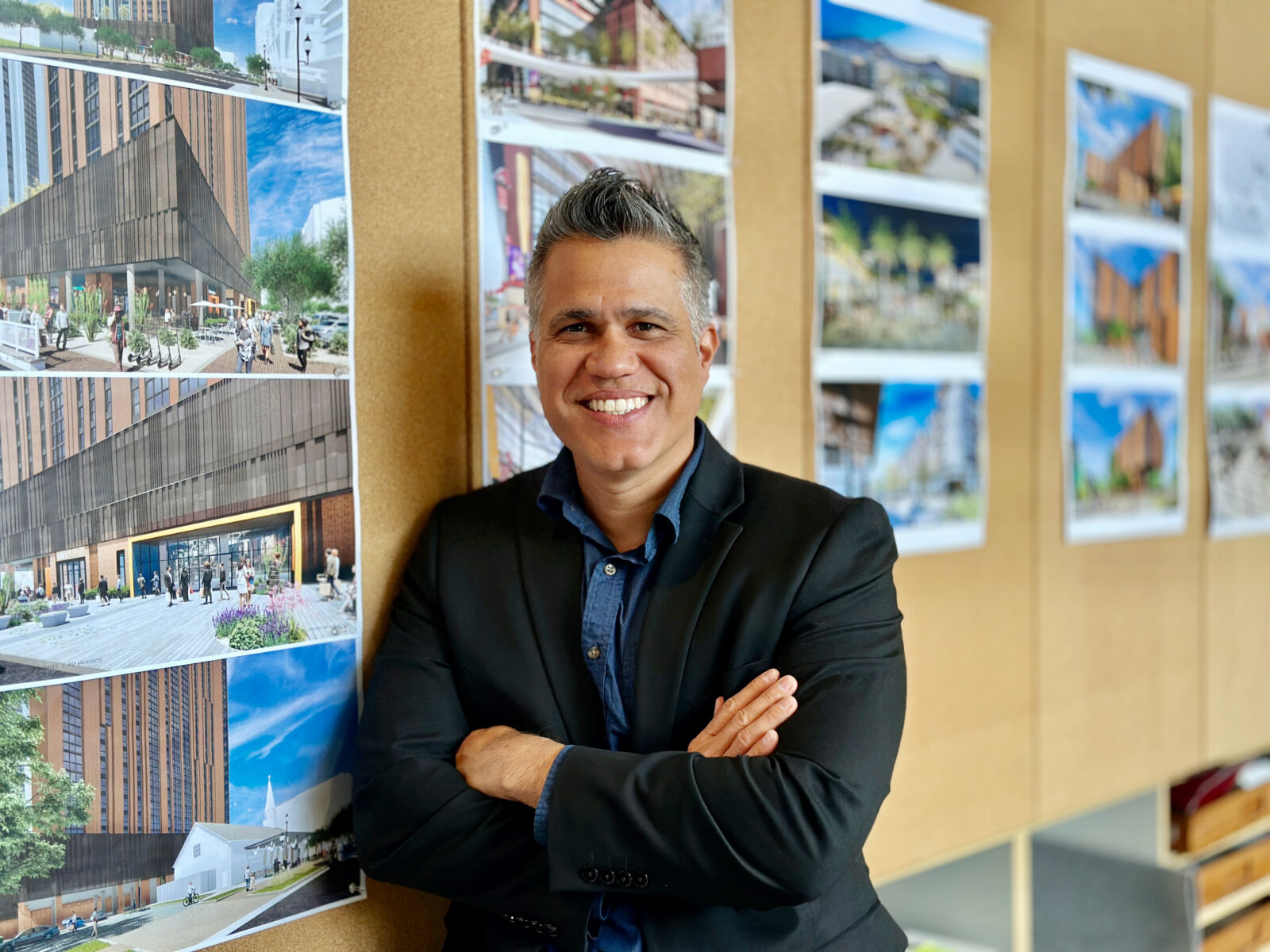
Whether it’s to an auditorium full of strangers or a packed all-staff meeting, delivering a message clearly and confidently is a critical talent for leaders to develop. Those who do it well make it look easy, but public speaking can be improved upon just like any other skill.
That’s why Victor Irizarry, senior associate at RSP Architects, decided to try out improv classes, which have bolstered his confidence and given him a new creative outlet.
AZRE magazine sat down with Irizarry to learn why he started performing improv and how he applies lessons learned on stage in his career. The following responses have been edited for clarity and length.
DEEPER DIVE: PTK spotlight: Arizona architects to know in 2026
AZRE: When did you start taking improv classes?
Victor Irizarry: I began performing in 2018 after having a really rough year. I’m originally from Puerto Rico, and 2017 was when Hurricane Maria destroyed the island. My family was still there, which caused a lot of anxiety, then I got in a car accident — pretty much anything bad that could happen did that year. So, I needed something different.
AZRE: Improv is a difficult style of performance. What drew you to it?
Victor Irizarry: Since English is my second language, I’ve always been a little insecure about public speaking. I dabbled in theater in high school and enjoyed it, so I mentioned to my wife that improv sounded fun. It wasn’t something I’d sign myself up for, but she ended up gifting me classes for Christmas.
AZRE: What was going through your head when you showed up for that first class?
Victor Irizarry: I had no idea what I was getting myself into. I didn’t know anyone, but we all wanted to try something different. I fell in love with improv right away — it was exactly what I needed. Eight years later, I’m on two improv teams, one of which performs in Spanish.
AZRE: A big part of improv is the concept of “Yes, and…” Can you describe what that means?
Victor Irizarry: Imagine we’re sitting next to each other at a conference. If I ask, ‘Do you want to talk about the weather?’ and you say ‘No,’ — that’s the end of the conversation. But if you say ‘Yes, it doesn’t get this hot back home,’ we can go back and forth from there. But you don’t always have to say yes in improv. We always talk about boundaries before a show because we want to be respectful to each other and not punch down. It all boils down to being receptive to other people’s ideas and willing to push them forward together.
AZRE: Improv sounds like a release from the pressures of work, but are these skills applicable to your career?
Victor Irizarry: Performing has helped me feel like I can talk about anything with anyone. The business development side of what we do involves speaking with clients, so being able to hold a conversation on most topics, even if I’m not an expert, is huge.
Improv has also made me more confident in uncomfortable situations, because I know if I come in with a mindset of “Yes, and…” I’ll find my way into that comfort zone.
It’s also useful in the creative process because it helps you be more open to suggestions. That doesn’t mean I have to incorporate every suggestion the team throws out. Still, it’s usually better to reply with “No, but…” instead of simply rejecting an idea. That way everyone can still build on that initial thought, which can lead to an even better solution.
Even though improv may sound scary, I think people should try it at least once. The only way to get better at anything is by challenging yourself.