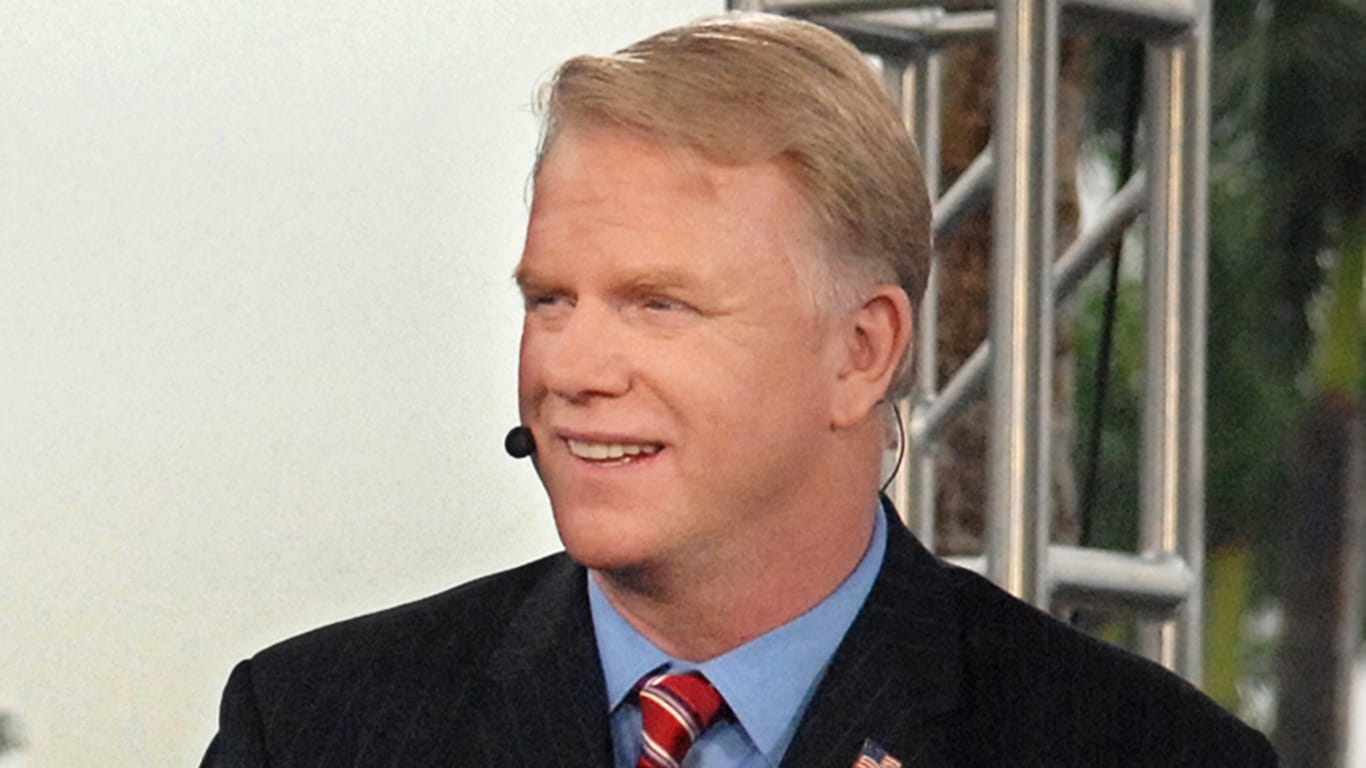
Some people spend half their lives figuring out what really matters. Boomer Esiason learned it when he was seven years old.
That was the year his mother, Irene, died of ovarian cancer. She was 37. She left behind three children and a husband who suddenly had to rebuild everyday life on his own.
Boomer’s father, Norman Esiason, was a World War II veteran who raised his son and two daughters while working long days and doing everything he could to keep the family moving forward. For Boomer, that kind of childhood left a mark.
It shaped the way he thought about family, responsibility, and what it means to protect the people you love. That is why his recent work with Ethos feels connected to the larger story of his life. For Boomer, talking about family protection is not just a campaign message. It comes from lived experience.
Long before he became an NFL MVP, a Super Bowl quarterback, a broadcaster, or an advocate, he was a kid who saw how quickly life could change for a family.
The Kid from East Islip
Boomer Esiason’s real name is Norman Julius Esiason. His famous nickname came before he did. His mother started calling him “Boomer” while she was pregnant because of how hard he kicked. It stuck, and in hindsight, it fit.
He grew up in East Islip, New York, where he became a three-sport athlete in high school, playing football, basketball, and baseball. He was talented across the board, but football was the sport that gave him his opening. The University of Maryland offered him a scholarship, and he took it.
At Maryland, Esiason set 17 school records, earned two honorable mention All-America selections, and graduated in December 1983 with a degree in communications. In the 1984 NFL Draft, the Cincinnati Bengals selected him in the second round with the 38th overall pick. He was the first quarterback taken that year.
Falling out of the first round may have stung at the time. What came next made plenty of teams look like they had missed something obvious.
A Career Built on a Left Arm and Sheer Will
Boomer Esiason played 14 seasons in the NFL with the Cincinnati Bengals, New York Jets, and Arizona Cardinals. He finished his career with 37,920 passing yards, 247 touchdowns, and four Pro Bowl selections.
His defining season came in 1988, when he won the NFL Most Valuable Player award and led the Bengals to Super Bowl XXIII. Cincinnati came painfully close to winning it all before Joe Montana and the San Francisco 49ers pulled ahead on the final drive.
That season secured Esiason’s place among the best quarterbacks of his era. He was tough, emotional, sharp, and unmistakably himself. A left-handed quarterback from Long Island who played with the edge of someone who always felt he had something to prove.
He still holds major NFL career records among left-handed quarterbacks, including passing yards, completions, and touchdowns. But the numbers only tell part of the story.
To understand Boomer Esiason, you also have to look at what happened after football became personal in a way he never expected.
The Phone Call That Changed Everything
In 1993, Esiason had just been traded to the New York Jets. During a mini-camp practice, he was pulled off the field for an urgent phone call. His two-year-old son, Gunnar, had been rushed to the hospital.
The diagnosis was cystic fibrosis.
Boomer’s first instinct was to walk away from football entirely. His family needed him, and nothing else seemed to matter. His wife, Cheryl, helped him see another path. They would keep going, but they would also fight.
In 1994, Boomer and Cheryl founded the Boomer Esiason Foundation to raise money and awareness for cystic fibrosis research and support. What began as a family’s response to terrifying news became one of the most recognized CF organizations in the country.
Over the years, the foundation has raised nearly $200 million for research, scholarships, transplant grants, and direct support for people living with cystic fibrosis. Gunnar, once the little boy at the center of his parents’ fear, is now an adult with a family of his own and a powerful voice in the CF community.
What could have remained a private family struggle became a public mission.
The NFL recognized Esiason’s work in 1995, honoring him with the Walter Payton Man of the Year Award. In 2015, he also received the Heisman Humanitarian Award for his decades of advocacy.
Life After Football
After retiring from the NFL in 1997, Esiason moved smoothly into broadcasting. He called Monday Night Football for ABC, became a longtime studio analyst for CBS Sports’ The NFL Today, and built another career in New York sports radio as the co-host of Boomer & Gio on WFAN.
He never really disappeared from public life. He kept finding new ways to show up as a broadcaster, advocate, father, and public voice for causes shaped by his own life.
Why His Message Still Feels Personal
That is why Boomer’s work with Ethos fits naturally into the larger story of his life. The partnership centers on encouraging families to have honest conversations about protection, planning, and the people who depend on them.
For him, the subject is not theoretical. It goes back to the loss of his mother, the responsibility his father carried afterward, and the way one unexpected event can change a family’s future overnight. It also connects to the choices he made years later as a father, when Gunnar’s diagnosis forced him and Cheryl to think about family and responsibility in a new way.
That is what makes the message feel less like a celebrity endorsement and more like an extension of something Boomer has been living for decades: the people you love are counting on you, and protecting them is not something to put off.
His life has been shaped by that idea again and again, from childhood to football to fatherhood to the work he continues to do now.
Boomer Esiason is remembered as an NFL MVP, a Super Bowl quarterback, and one of the great left-handed passers in league history. But his larger legacy may be simpler than that.
He is a man who learned early what family can lose, and then spent the rest of his life trying to make sure other families had more help, more hope, and more time.