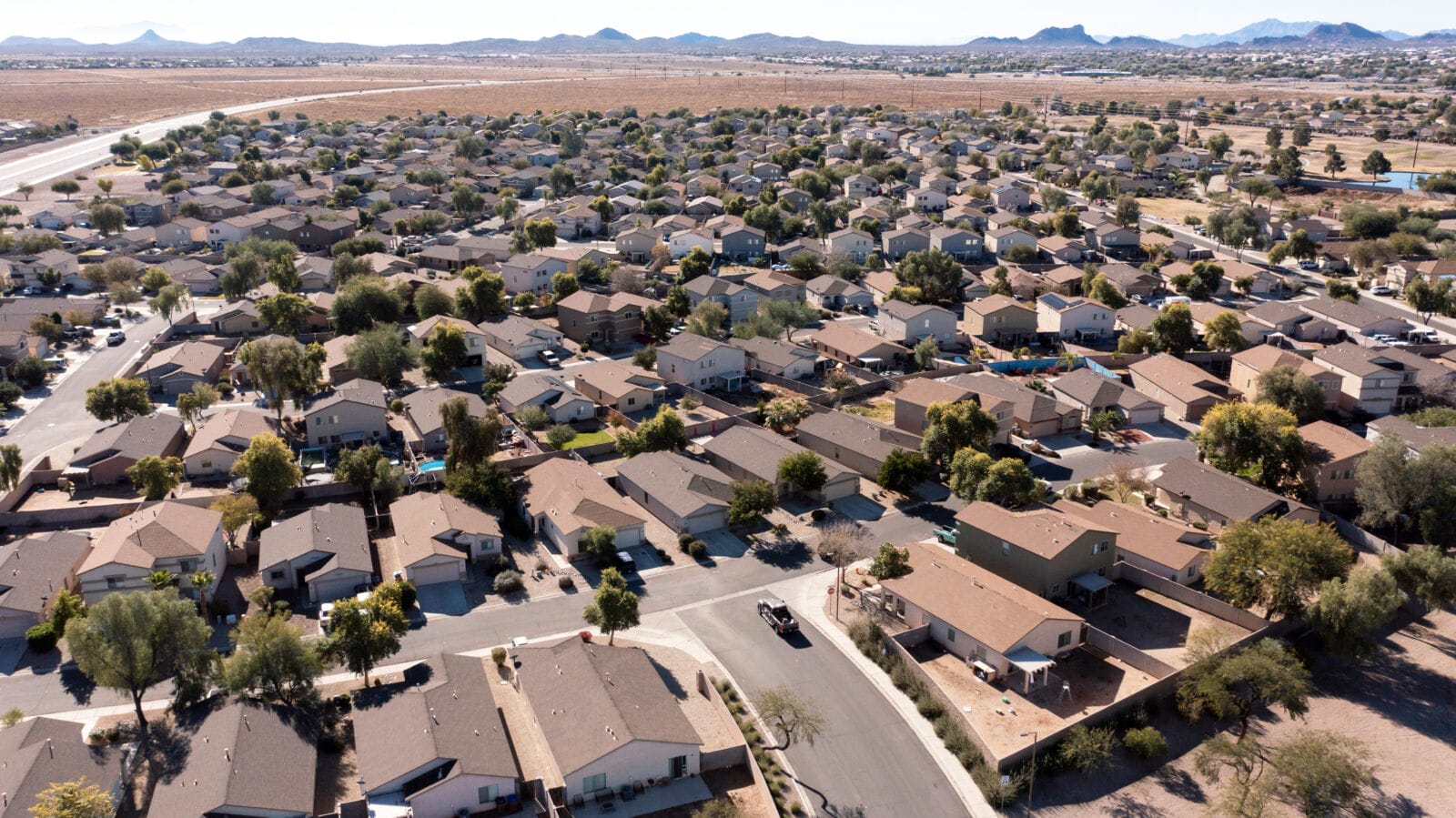
Last August, voters in San Tan Valley weighed in on whether the community should incorporate as Arizona’s 92nd municipality, with 66% casting their ballots in favor of becoming a town. With the proposition passed, San Tan Valley is empowered to create a town government, pass legislation, supply public works and other civic functions. AZRE magazine sat down with Joel Millman, director of workforce and economic development for Pinal County, to learn more about what this change in status means for the region’s growth, what industries are showing interest in Pinal and how the county is supporting workforce development efforts.
The following responses have been edited for clarity and length.
DEEPER DIVE: SRP’s Karla Moran explains how industry support helps grid growth
INDUSTRY INSIGHTS: Want more news like this? Get our free newsletter here

AZRE: Will San Tan Valley’s recent incorporation change its relationship with Pinal County’s Economic and Workforce Development Department?
Joel Millman: Before it became a town, we were responsible for San Tan Valley’s economic growth strategies. Now, we’re talking with town leadership about their vision and how we can support them. I’d like to think that we coordinate very well with all the communities in the county, and we’ll use those best practices to support San Tan Valley.
It’ll take some time for them to hire their own economic development director and establish a planning and zoning department, but in the meantime, we’ll provide any assistance needed for attracting businesses to the area.
AZRE: It sounds like even though San Tan Valley now has greater control over how it develops, the town will still have a partnership with your department.
Joel Millman: Correct, and a lot of the folks that are now working for San Tan Valley are former Pinal County employees who bring that experience with them. The town is in great shape to chart its own course, whether that’s building upon the decisions made when it was under the county or shifting gears. The way I see it, San Tan Valley is in charge of its destiny now, and our role is to work with them to meet their goals.
AZRE: Resolution Copper just hit a milestone on its way to becoming fully operational. What affect will that have on development in Superior?
Joel Millman: It’s a major step not only for Resolution Copper but for the entire county. We have the largest copper deposit in the country, and the recent court ruling allows the mine project to move forward. It feels like everyone has been on the edge of their seats for years waiting for this to get resolved, and now we can stand up and start doing things.
The Town of Superior will certainly benefit from Resolution Copper being there, but also from the ancillary industries it brings. There’s going to be an increase in the workforce, which will drive housing development and bring more amenities to the community to support that growth.
AZRE: Can you talk about the revival of Pinal County’s mining industry more broadly?
Joel Millman: It was dormant for years, but it has seen a lot of activity as the semiconductor industry and electric vehicles has driven demand for copper nationally. We’re the Copper State after all, so now we have an opportunity to stand in the limelight — not just Arizona, but Pinal County itself. It opens the door for support and supply chains coming here, which creates a diverse economy and workforce — everyone from geologists to engineers to heavy equipment operators.
AZRE: Semiconductors and electric vehicles will be critical components to the whole country’s economic future — as will AI. Are data center developers looking to build within Pinal County?
Joel Millman: They are, but we don’t have any data centers here now. It’s part of the conversation, but we’re moving cautiously. The Pinal County Board of Supervisors is taking a measured approach, ensuring that they’re well educated about the pros and cons of bringing data centers to the community. Recently, the first zoning case for a data center in Pinal was heard by the board, who opted to issue a continuance. They’re not saying yes or no, but the board doesn’t want to rush into a decision. We’ll have to wait and see what the future holds.
AZRE: What types of development are popular in the county right now?
Joel Millman: We focus on attracting high wage jobs, and that invariably falls into advanced manufacturing and supply chain projects. We’re open to the aerospace and defense industry, so long as it’s in the right place at the right time, like anything else. I’ll add that there’s an emphasis on tourism and hospitality right now, too. Building a manufacturing facility that employs 1,000 people is great — but what will they do when they’re off the clock? It’s a question we hear from companies interested in Pinal, so we’re actively promoting tourism and lifestyle amenities in the county.
AZRE: I imagine that companies are not only interested in what leisure options would be available to employees, but if there’s the labor pool needed to support their operations. Can you talk about the county’s workforce development efforts?
Joel Millman: ARIZONA@WORK is the state brand for the public workforce system under the current Workforce Innovation and Opportunity Act. Pinal County is one of 12 areas in Arizona that’s allocated federal funds to serve both job seekers and employers. There are about 15 separate federal programs all bundled into ARIZONA@WORK, but that can be confusing for people to wrap their heads around.
I like to use Home Depot as an analogy. Their stores have a bunch of different products, but they’re all related to home improvement. ARIZONA@WORK is like the Home Depot of the workforce development system — when someone comes through our doors, we lead them to the aisle that has the product they need.
AZRE: What does that look like in practice?
Joel Millman: Most job seekers are people with some sort of barrier to employment. They could be looking for a career pivot but haven’t been on the job hunt for a few decades, someone who was just laid off or a veteran transitioning back to civilian life.
In a nutshell, ARIZONA@WORK Pinal County enacts the workforce strategies laid out by the workforce board to make sure we meet the needs of industry. And we’re not just supporting new growth — we also want our existing employers to have the people needed to stay here or even expand. We’re not the only game in town, but we are part of this massive effort to support everything we just talked about.