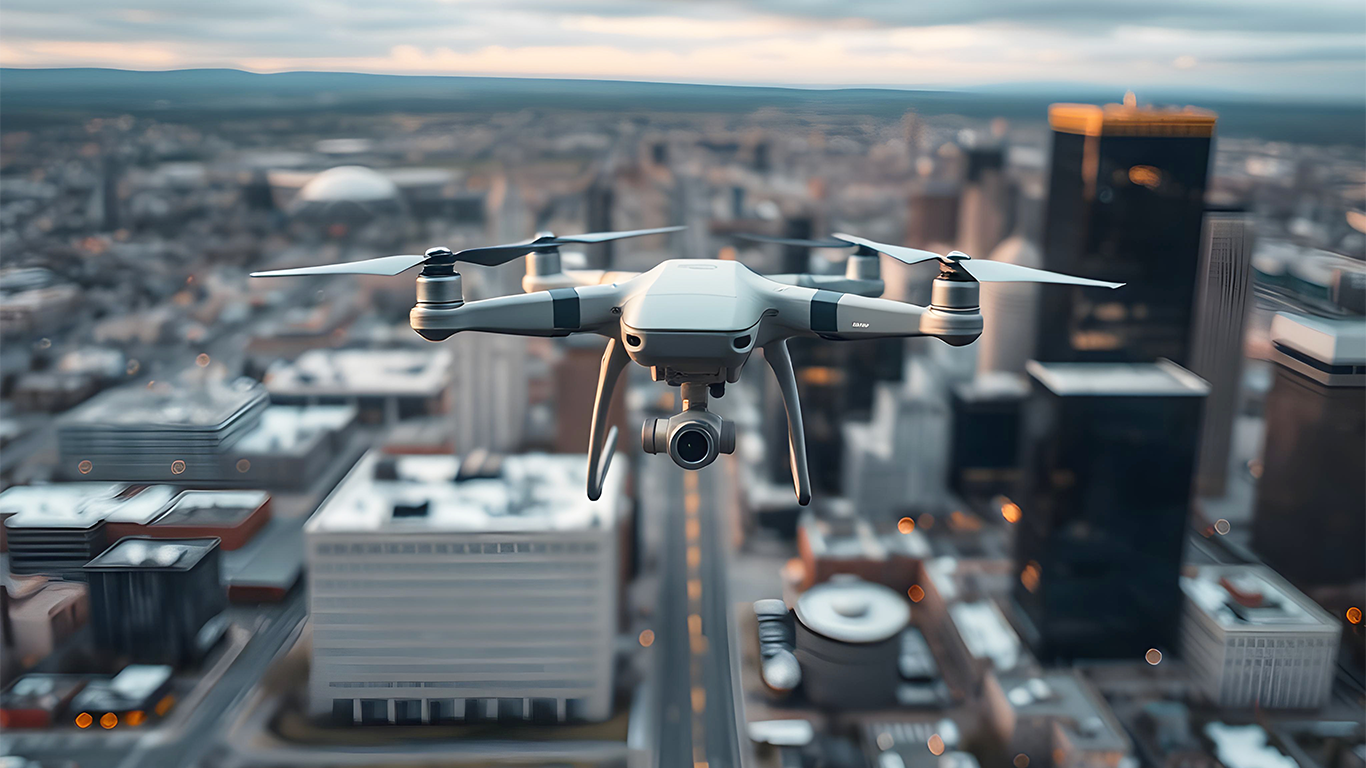
Unmanned Aerial Vehicles (UAVs) are transforming industries by automating tasks that once required extensive human effort. Their ability to navigate, gather data, and perform operations has made them an essential tool across various fields. With continuous advancements, these aerial systems are now capable of making independent decisions and executing missions with precision.
BUSINESS NEWS: East Valley mayors cite Top 3 things on to-do lists for 2025
The emergence of ai drone software has significantly improved UAV capabilities. It enables drones to process data in real time, analyze surroundings, and respond intelligently to different conditions. These developments have expanded drone applications in areas such as surveillance, agriculture, and logistics. From agriculture to defense, these innovations are setting new standards for automation.
Advanced Navigation and Obstacle Detection
Navigation is a critical aspect of a drone’s performance, ensuring seamless movement across varied environments. Traditional drones follow pre-set flight paths, relying on GPS to maintain course. However, AI-powered systems enhance this process by incorporating real-time environmental analysis. This allows drones to adjust flight paths, avoid unexpected obstacles, and operate efficiently in dynamic settings.
With machine learning and computer vision, drones recognize objects and assess distances with high accuracy. The ability to detect obstacles prevents collisions and enhances safety during flight. These capabilities are essential in applications such as urban delivery services and remote area inspections, where precise navigation is required. Intelligent obstacle detection reduces risks and improves overall operational reliability.
Independent Mission Execution and Decision Making
Autonomous UAVs are becoming more proficient at executing complex tasks without manual intervention. AI-driven drones analyze mission objectives, assess conditions, and carry out tasks with minimal human input. This level of autonomy is beneficial in large-scale operations such as infrastructure inspections, disaster assessments, and environmental monitoring.
Industries benefit from drones that adapt to situational changes and optimize performance accordingly. These drones capture real-time data and evaluate information to enhance decision-making. Advanced processing systems ensure accurate data interpretation, allowing drones to complete assignments with precision. As a result, they contribute to improved efficiency and streamlined workflows across various sectors.
Precision in Data Collection and Processing
Data collection is an essential function of UAVs, serving industries that require detailed and timely insights. AI-powered drones enhance this process by capturing high-resolution imagery, scanning environments, and processing vast amounts of real-time data. With advanced recognition capabilities, they assess surroundings, detect anomalies, and provide crucial information for various applications.
One of the key advantages of AI-driven drones is their ability to refine and streamline data processing:
- Automated filtering removes unnecessary information, ensuring that only relevant data is analyzed
- Instant analytics allow drones to interpret findings immediately, reducing the time required for decision-making
- Pattern recognition identifies subtle changes that manual reviews might overlook, improving accuracy
Pioneering AI Software for UAV Technology
Advancements in AI are reshaping how drones operate, and innovative companies are leading the way in developing intelligent autonomy solutions. Some cutting-edge AI systems are designed to enable drones to observe, learn, and act independently, allowing them to perform complex tasks with precision. These advancements are pushing UAV technology beyond pre-programmed responses, giving drones the ability to adapt in real time to changing environments.
One area of focus is integrating AI software that enhances a drone’s decision-making, navigation, and data analysis. Certain companies specialize in hardware-agnostic AI solutions, meaning their software can be implemented across various commercial and defense applications. With continuous innovation, technology is reaching new levels of efficiency, making drones more capable and reliable for a wide range of industries.
The role of ai drone software in UAV technology is reshaping how drones operate across multiple sectors. Intelligent systems enhance navigation, mission execution, data collection, and adaptability. As advancements continue, they are becoming more autonomous, improving operational efficiency and expanding their potential applications.