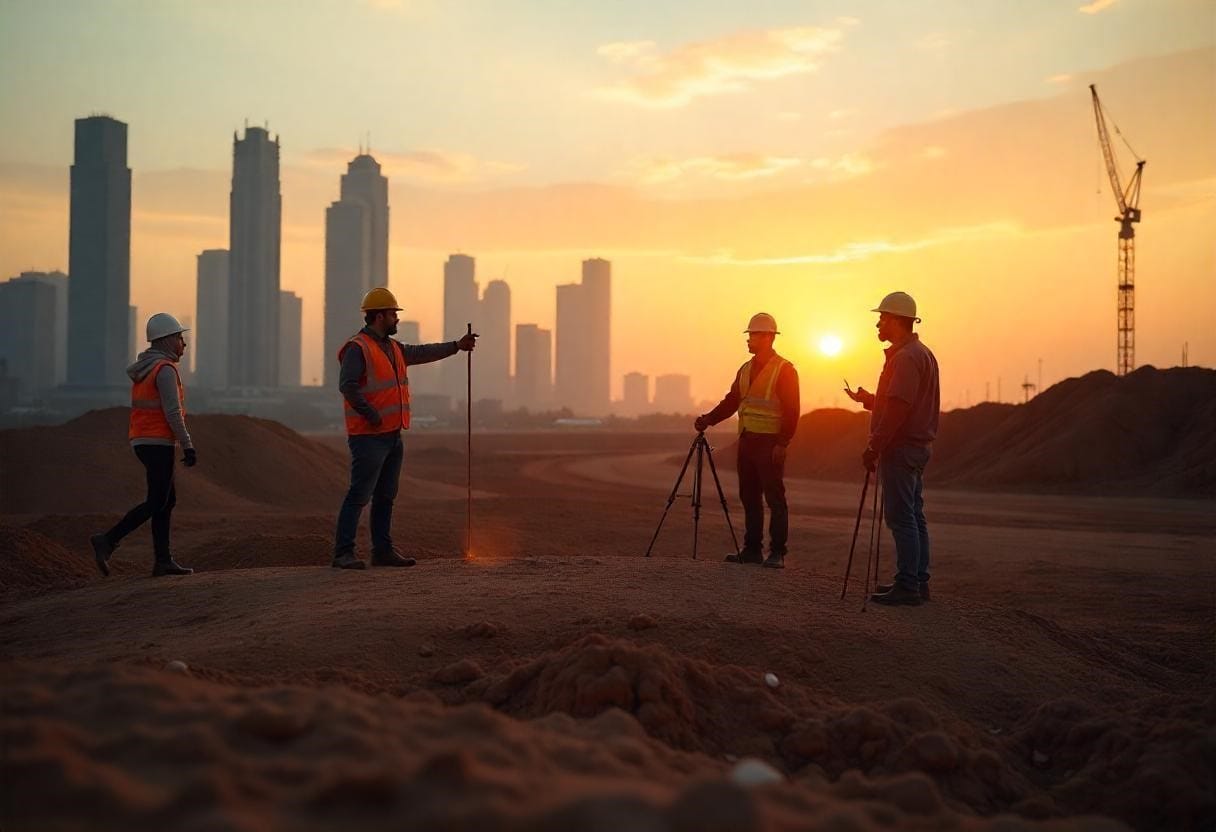
Before breaking ground on any new development in Phoenix, or anywhere in Arizona, developers will often commission a property survey to understand boundaries, elevation changes, easements, and other basic site constraints. But what many less-experienced developers or investors don’t realize is that the costs of getting the site ready often extend far beyond the survey: bringing in water, sewer, electric, roads, drainage, grading, and all the utility hookups can quickly inflate the budget. These “hidden” infrastructure costs can make or break project viability unless they’re anticipated early and managed carefully.
The Scope of Hidden Costs
Here are some of the most common, and costly, components of site preparation:
- Grading & Earthworks: Steep slopes, rocky soils, or contaminated land demand more excavation, fill, or stabilization. In some parts of Arizona, developers face caliche soil layers that are costly to excavate or condition.
- Drainage & Stormwater Systems: Arizona’s monsoon storms can overwhelm poorly designed sites. Developers are often required to build retention basins, storm drains, swales, and culverts to manage runoff while complying with floodplain management ordinances.
- Road Access & Streetscape Requirements: Landlocked or rural parcels often require new access roads, sidewalks, streetlights, and even turn lanes mandated by the city. Developers may also need to dedicate right-of-way or align with regional transportation plans.
- Water & Sewer Infrastructure: If city water and sewer lines don’t run adjacent to the site, extending them can cost hundreds of thousands, or even millions, depending on distance and terrain. Pump stations, lift stations, or large-diameter mains may also be required for capacity.
- Power & Communications: Extending high-voltage lines, building transformer pads, or undergrounding utilities adds significant expense. Developers may also need to fund conduit for broadband or fiber installation as part of modern infrastructure packages.
- Permitting, Fees & Impact Charges: Cities like Phoenix levy development impact fees to help cover new infrastructure needs triggered by growth. These charges can include water meter connection fees, wastewater capacity fees, and even contributions to parks, fire, or police facilities.
LOCAL NEWS: Here’s where new Phoenix residents are moving from
INDUSTRY INSIGHTS: Want more news like this? Get our free newsletter here
Why These Costs Matter More in Phoenix
Phoenix is growing at one of the fastest rates in the country, and much of that growth is occurring at the urban edge. While central infill projects may face fewer infrastructure hurdles, suburban and exurban projects often come with substantial extension requirements.
- Distance from Services: The farther from existing water, sewer, and power lines, the higher the extension costs. Developers drawn to cheaper land in outlying areas sometimes underestimate how quickly savings are erased by infrastructure.
- Heat Island & Climate Resilience: Phoenix ordinances increasingly encourage shading, tree planting, and green infrastructure to combat heat, which raises upfront landscaping and irrigation infrastructure costs.
- Water Scarcity: Arizona’s drought conditions mean new developments must prove long-term water supply. Developers may need to fund additional studies, conservation measures, or even alternative supply projects before entitlements are approved.
Mitigating Infrastructure Surprises
While hidden costs are unavoidable, smart developers can reduce risk through proactive planning:
- Deep Due Diligence
Go beyond a property survey. Commission geotechnical studies, utility location reports, environmental assessments, and hydrological analyses. Early technical data prevents expensive redesigns later. - Engage Utility Providers Early
Coordinate with Salt River Project (SRP), Arizona Public Service (APS), Phoenix Water Services, and telecom providers early in the entitlement process. Many have planning departments that will provide infrastructure maps, capacity constraints, and estimated extension costs. - Factor in Impact Fees and Credits
Phoenix’s development finance structure sometimes offers credits for improvements built by developers (e.g., oversizing water mains that serve the broader system). Knowing these opportunities can reduce net costs. - Plan Phased Infrastructure
Large master-planned communities often phase infrastructure, bringing utilities first to the initial lots, then extending outward as demand grows. This approach reduces upfront capital exposure. - Budget for Contingency
Even the best plans encounter surprises: soil instability, utility conflicts, regulatory changes. Adding a 10–20% contingency to site development budgets is a practical safeguard.
The Lincoln Institute of Land Policy reports that extending or replacing utility infrastructure can range from $1 to $15 million per mile depending on system type and conditions.
Similarly, studies comparing overhead vs underground utility lines note that undergrounding, while preferred for resilience and aesthetics, can cost up to 10 times more. These are trade-offs developers must weigh when considering long-term property values and community expectations.
The Developer’s Action Plan

For property owners and investors eyeing Phoenix development opportunities, an effective infrastructure strategy includes:
- Start Early: Begin infrastructure assessments before land acquisition is finalized. Surprise costs discovered post-closing can derail projects.
- Assemble a Team: Include civil engineers, utility consultants, and land use attorneys alongside brokers. Their combined input provides a more accurate feasibility picture.
- Align with City Plans: Review Phoenix’s general plan, transportation plans, and water management strategies. Projects aligned with municipal priorities may access faster approvals or cost-sharing opportunities.
- Look for Incentives: Some municipalities offer development agreements, tax abatements, or cost-sharing when projects deliver infrastructure that benefits the wider community.
- Educate Investors: Communicate clearly with equity partners about infrastructure risks. Transparency avoids conflicts when budgets inevitably adjust.
Balancing Short-Term Costs with Long-Term Value
Infrastructure spending may feel like sunk cost, but when done well, it creates value. Reliable utilities, well-designed stormwater systems, and safe, attractive roadways all support higher sale prices, stronger tenant demand, and reduced operational issues over time.
Poorly planned infrastructure, by contrast, can become a liability, leading to higher maintenance costs, regulatory penalties, or diminished property value. In Arizona’s climate and regulatory environment, cutting corners is rarely worth it.
In Phoenix and across Arizona, preparing land for development is far more complex than staking boundaries with a property survey. Developers must account for utilities, roads, stormwater, power, and the regulatory frameworks that govern them.
Those who plan early, partner with the right experts, and budget realistically for hidden costs will not only protect their margins but also deliver projects that meet community standards and stand the test of time.