Anyone connected with PET bottle production, whether you operate an automatic or a semi-automatic PET bottle blowing machine, has undeniably witnessed in the last 5 years the rise of rPET material.
The momentum this new packaging material has gained is really impressive. More and more bottles on supermarket shelves are manufactured with recycled content. Such a shift is driven by multiple factors:
- Conscious rise of consumer demand for sustainable products
- New regulations (like EU regulations requiring a specific percentage of every bottle to be made from rPET)
So, as a producer you also wonder if you can switch in your production to High-PCR (Post-Consumer Recycled) material and what you need. Achieving stable and high-quality rPET bottle production requires blow molding equipment specifically made for it.
Let’s see how PET Technologies assists clients with this.
Optimizing Oven Profiles for High-PCR rPET
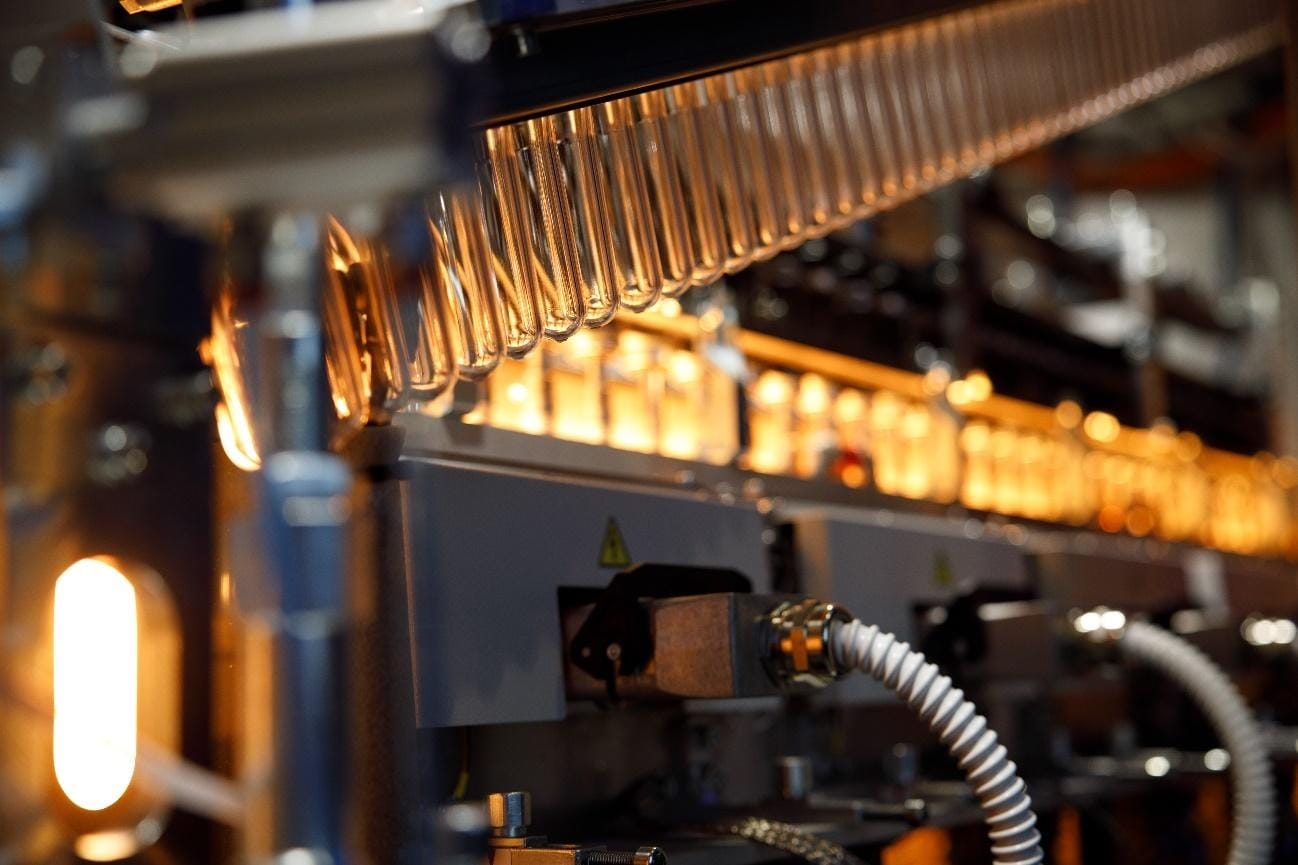
The first major challenge for the producer is oven optimization and the ability of it to heat the rPET preform properly. High-PCR rPET is not easy to process on the equipment of regular blow molding machine producers that use regular lamps.
Because rPET material has a different and more dense chemical construction, its heating is more delicate.
How PET Technologies achieves successful heating of rPET preforms for our clients:
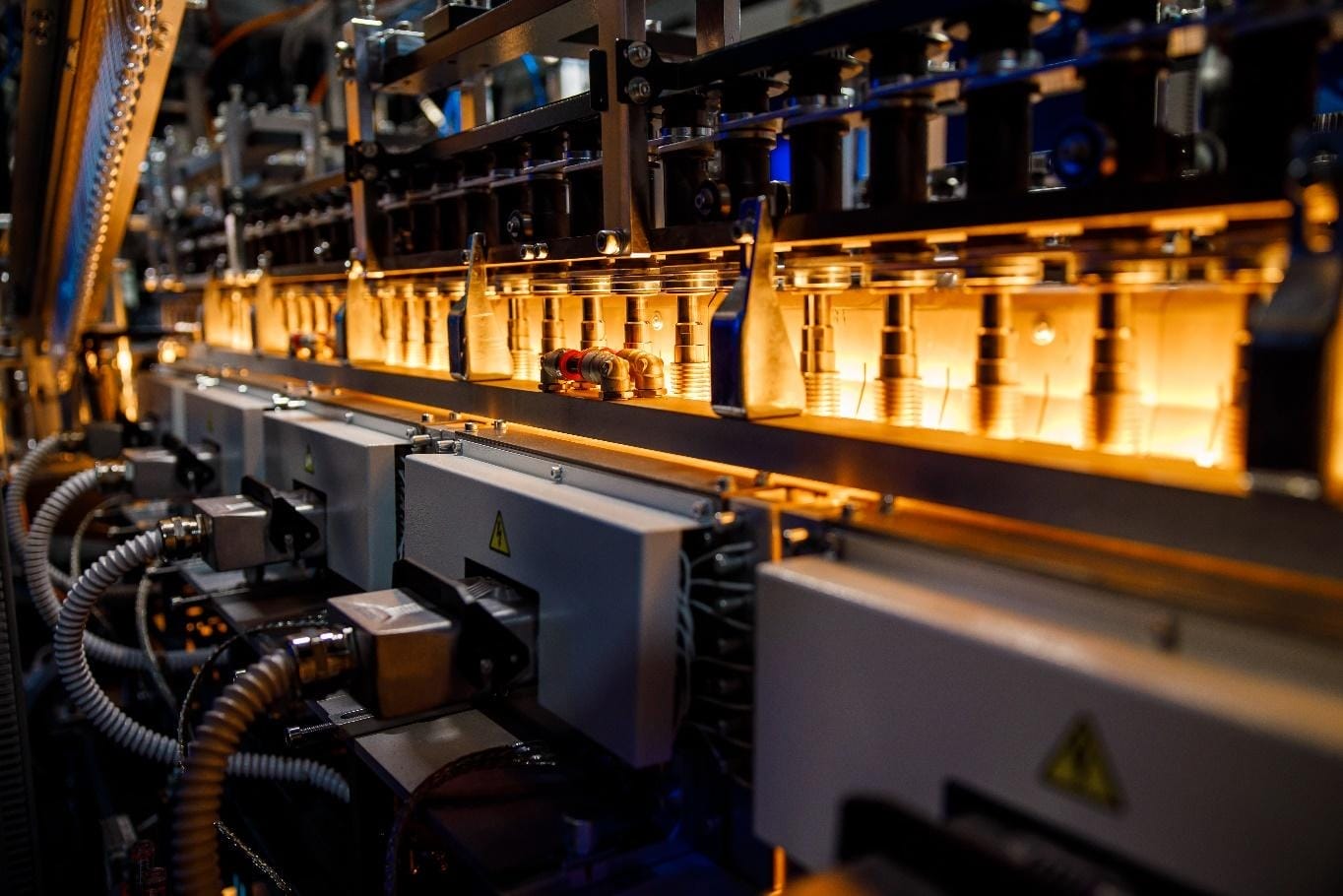
- NIR heating system: allows for deeper and more thorough penetration of the rPET preform walls. Such deep penetration brings optimization for the client, as it allows to equally heat regular and rPET preforms with no issues or downtimes.
- Thermal Consistency: Fine-tuning exact oven profiles ensures the material reaches its ideal stretching temperature without localized overheating, directly improving production reliability and efficiency.
Adjusting Air Management Strategies
Once the heated preform leaves the oven, focus shifts to the pneumatic phase. High-PCR rPET exhibits unique characteristics during stretch blow molding, necessitating adjustments to air management strategies.
- Pre-Blow Timing: The initial introduction of air must be precisely timed. Delayed pre-blow pressure helps manage the stretching, preventing uneven material distribution in the bottle base.
- High-Pressure Control: Precision in final blow air management is vital. A calibrated air system ensures the material is forced against the mold walls with exact force.
Implementing Quality Control Checks
PET Technologies equipment is deeply personalized for the client. Whatever quality controls clients want can be easily implemented as an option on blow molding machines.
The quality control sensors can be installed for:
- Preform quality
- Bottle quality
Ensuring that production process for your rPET bottle is made from quality material and turns into a quality bottle.
Balancing Throughput and Scrap Rates
The ultimate goal for an optimization for the rPET production for a new producer is maintaining high throughput while keeping scrap rates exceptionally low when running High-PCR rPET blends.
- Iterative Tuning: Continuous monitoring of both oven and air settings allows line operators to actively adapt to material variations on the fly, ensuring production efficiency remains high and defect rates remain low.
- Strategic Scalability: Before committing a complex rPET blend to a high-speed line like the APF-Max series of blow molding machine from PET Technologies, operators often utilize a semi-automatic PET bottle blowing machine for initial pilot testing. This practical approach allows for parameter development and quality validation.