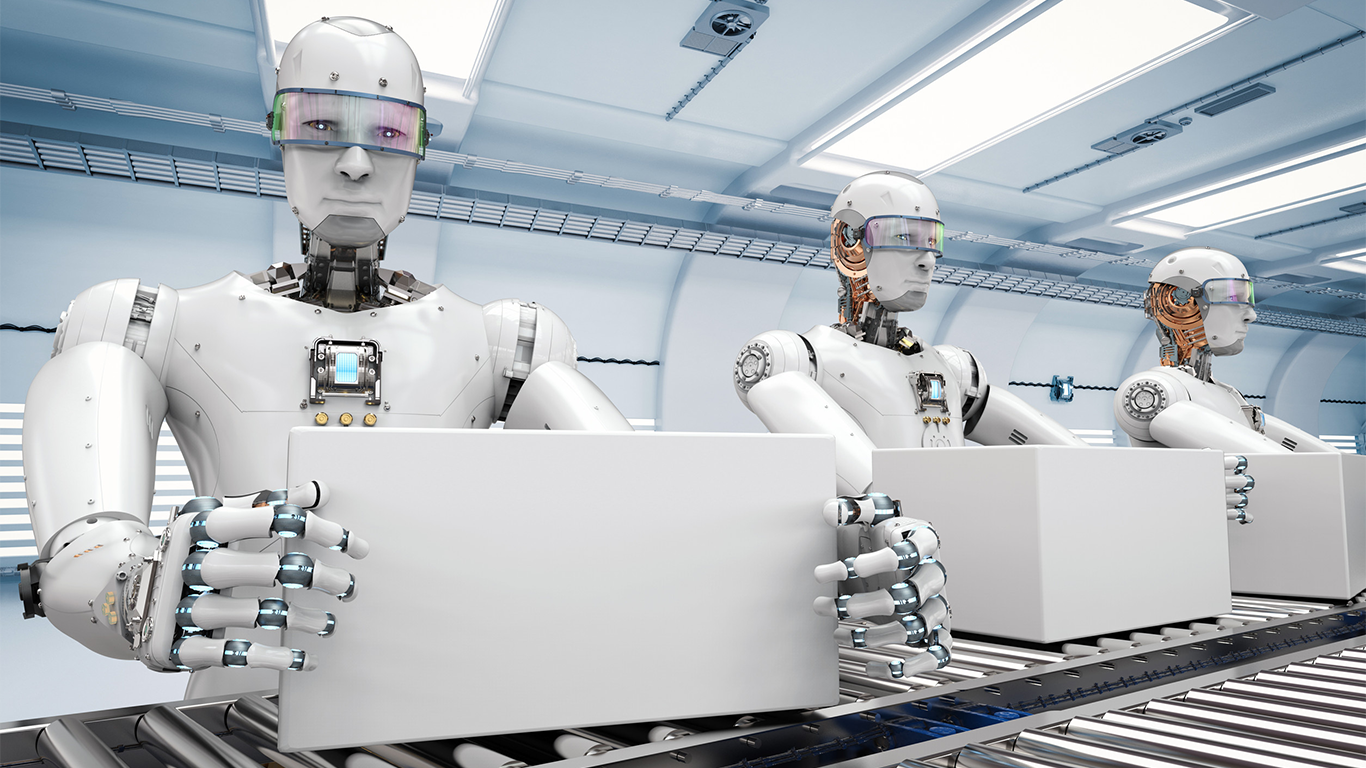
Innovation in 2025 feels less like progress and more like acceleration. Businesses now face a clear rule: adapt intelligently or risk falling behind. Technology has become the core of strategy, not a support system. Every decision, from pricing to product design, relies on digital precision and predictive logic.
AI, automation, and data now define competitiveness. Their convergence shapes how organizations respond to market shifts in real time. Companies that understand this integration gain the agility others lack. Firms such as freshcodeit.com build systems that help businesses act on information rather than get lost in it. In 2025, strategy depends on intelligence, not intuition.
DEEPER DIVE: Top 10 Arizona ZIP codes people are moving to in 2025
LOCAL NEWS: 100 best places to work and live in Arizona for 2025
The Convergence of AI, Automation, and Data
These three forces now operate as one. AI interprets information, automation executes, and data provides context. Their integration creates a single intelligent system that reacts faster and learns continuously.
A key 2025 trend is the spread of AI orchestration platforms. They merge analytics, workflow automation, and data management into a unified ecosystem. Businesses gain instant insight across departments and align marketing, logistics, and operations in real time. Agility is no longer a goal but a system feature.
Artificial Intelligence: From Insight to Decision
Artificial intelligence has matured from experimentation to execution. It no longer serves as an enhancement but as a decision-making framework that drives strategy. Companies use it to refine operations, reduce uncertainty, and identify unseen opportunities.

Smarter Forecasting and Risk Control
AI models detect weak signals in markets, logistics, and customer behavior before problems emerge. Retailers adjust stock automatically, banks assess risk through live data, and manufacturers predict equipment faults in advance.
One of 2025’s defining trends is the rise of domain-specific AI models. Companies now favor smaller, targeted systems over large general ones. These specialized models deliver higher accuracy at lower cost and embed decision power directly into business workflows.
Ethics and Accountability
Greater AI use demands stronger oversight. Bias, opacity, and unregulated systems can destroy trust. Ethical artificial intelligence now ranks as a technical requirement. Companies maintain audit trails, explain decisions, and ensure fairness in algorithms.
AI governance frameworks continue to expand in 2025. Organizations introduce transparency standards and appoint AI ethics officers to protect both data integrity and reputation.
Automation: Scaling Human Potential
Automation’s role has evolved beyond repetitive work. It now extends human capability instead of replacing it. Integrated with AI, automation performs tasks that once required multiple departments and allows people to focus on strategy and creativity.
A defining 2025 shift is toward context-aware automation — systems that understand patterns and adjust processes autonomously. Workflows no longer follow fixed rules; they respond to data, environment, and intent. This adaptive autonomy transforms automation from an efficiency tool into a continuous improvement engine.
Beyond Efficiency — Toward Autonomy
Smart workflows now handle logistics, transactions, and customer interaction with minimal supervision. A logistics network can reroute deliveries automatically. Financial software reconciles records as soon as transactions occur. Automation now enables independence, not just speed.
Human-Tech Collaboration
Automation succeeds only when it complements human judgment. Technology executes; people interpret. The next advantage belongs to organizations that balance both roles.
- Routine processes shift to automated systems that maintain accuracy and scale.
- Strategic roles expand as employees use data insights to guide direction.
- Creative work gains value because it cannot be replicated by code.
- Decision-making improves as humans focus on context instead of calculation.
Businesses that design such a balance achieve more than productivity. They cultivate workplaces where people act as thinkers, not operators.
Data as the Foundation of Strategy
Every technological trend begins and ends with information. Without structure, it becomes noise; with context, it becomes foresight. In 2025, companies view data not as a byproduct but as the central asset that powers decision-making.
A growing trend this year is the use of synthetic and clean data pipelines. Organizations generate artificial datasets to overcome privacy barriers and improve AI model training. Combined with AI-driven data cleaning, this approach raises both accuracy and compliance while reducing reliance on sensitive real-world information.
From Collection to Context
Collecting information is no longer difficult. The challenge lies in giving it meaning. Data systems now interpret rather than store. Advanced analytics reveal cause-and-effect relationships and allow teams to react before trends become outcomes. The goal is clarity, not volume — information that tells a story, not data that fills a server.
Data Governance and Trust

As dependence grows, protection becomes critical. Governance frameworks ensure accuracy and transparency. Global standards such as the General Data Protection Regulation (GDPR) and AI regulations guide how organizations manage information. In 2025, data ethics becomes a brand differentiator. Companies that treat information responsibly gain both loyalty and resilience.
The Strategic Imperative for 2025
Technology now shapes strategy, not just supports it. Artificial intelligence, automation, and data should operate as one ecosystem. Leading organizations achieve alignment by replacing isolated tools with connected systems that evolve through feedback.
An emerging 2025 development is the rise of Chief AI Officers in executive teams. Their role connects technical innovation and corporate governance and ensures that intelligence, automation, and data ethics are embedded in every business decision. Strategy becomes continuous, not periodic — a system of constant learning and adjustment.
The Future Belongs to Adaptive Thinkers
Success now depends on interpretation. Machines handle calculation and scale; people translate insight into action. The advantage lies in awareness and the ability to see patterns before others react.
AI, automation, and data have turned information into currency. Those who invest it wisely build clarity and foresight. In 2025, leadership belongs to those who understand not only how technology works but what it means.