
Maxing out a Roth IRA.
Buying a rental property with a partner.
Dabbling in crypto on the side.
Freelancing two days a week.
That’s a normal financial picture now, and someone as financially confident in what they have achieved usually confidentially dismisses any financial advice, relying on easily accessible personal finance content.
That confidence tends to hold until tax season, or until the market moves in a direction the spreadsheet never saw coming.
Wealth today isn’t built through one channel anymore. It moves across income streams, asset classes, and platforms that didn’t exist a decade ago. That complexity is exactly why more people are reconsidering whether they can do this alone.
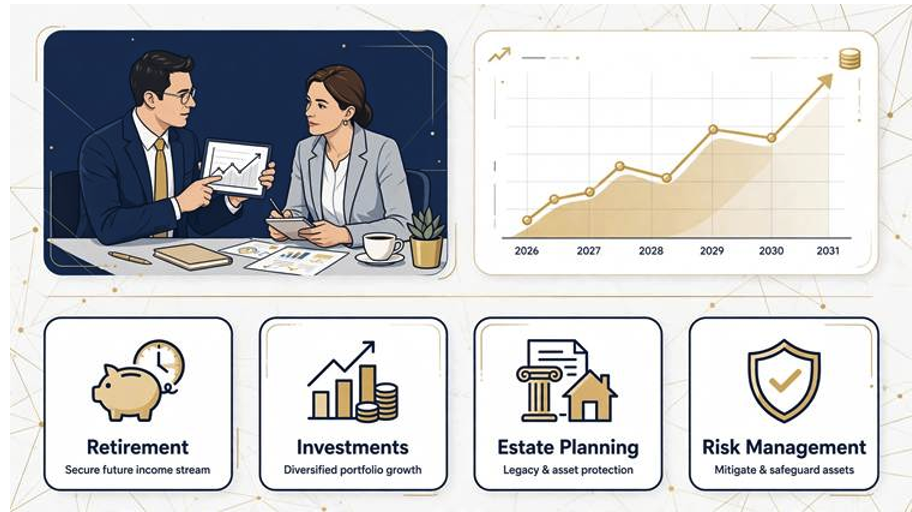
Why Wealth Building Looks Different Than It Did a Decade Ago
A single paycheck used to be the whole picture. Now it’s often one piece of a complex mix.
Assets and access has genuinely expanded. The problem is that expanded access doesn’t come with a manual.
The Rise of Multiple Income Streams
Remote work untethered a lot of earnings from a fixed employer, and freelancing platforms turned side income into something closer to a second job for millions of people.
Each stream comes with its own tax treatment, its own timing, and its own risk.
Why More Options Means More Room for Mistakes
Fractional real estate, ETFs, international markets, and digital assets all lowered the barrier to entry. They didn’t lower the odds of getting the timing or allocation wrong.
More doors open also means more ways to walk into the wrong room.
LEARN MORE: Arizona earns 19 Michelin Guide selections in inaugural Southwest Guide
What Financial Advisors Actually Do Now vs. What People Assume
There’s a lingering idea that advisors are for people who already have money or that their job starts and ends with picking stocks.
Neither has been true for a while.
Under CFP Board’s current standards, a certified planner is required to act as a fiduciary at all times when giving financial advice, which changes the entire nature of the relationship from product sales to actual planning.
Beyond Stock Picking: Tax, Real Estate, and Cash Flow Planning
Modern advisory work often looks like coordinating a Roth conversion, timing a property sale around capital gains, and structuring freelance income for quarterly taxes, all in the same conversation.
Fee-Only vs. Commission-Based, Why the Difference Matters
● A fee-only advisor is paid directly by the client, not by the products they recommend.
● Commission-based models can still be reputable, but the incentive structure is different, and that difference eventually shows up somewhere in the client’s portfolio.
Real Estate and Marketing
Real estate still anchors a lot of long-term wealth strategies, but it doesn’t sit in isolation anymore.
Good advisors increasingly function as a source of market insight and business consulting too, especially for clients who freelance or run a small side business and need someone to connect property decisions to broader income and market timing rather than treating them as separate conversations.
Buying vs. Investing: Two Different Goals
Buying a home and buying an investment property solve different problems, and conflating the two is one of the more common planning mistakes advisors see.
How Advisors Help Time Larger Purchases
Rate cycles, local market conditions, and a client’s own cash flow rarely align on their own. Part of an advisor’s job is reading those factors together instead of reacting to one at a time.

The Freelance, Remote Income, and Crypto Wrinkle
Irregular income changes the planning conversation more than most people expect.
● Retirement contributions,
● emergency funds, and
● insurance coverage all need to be rebuilt around inconsistency rather than a predictable biweekly deposit.
Crypto adds another layer, since it’s increasingly treated as a real, if volatile, slice of a diversified portfolio rather than a novelty holding, and advisors are having to get comfortable discussing it with the same rigor they’d apply to any other asset class.
Why Traditional Retirement Advice Doesn’t Always Apply
Advice built around a steady salary and employer-matched contributions doesn’t translate cleanly to someone whose income swings by 40% month to month.
Building Stability Into an Unstable Income
This usually means larger cash reserves, more conservative withdrawal assumptions, and a willingness to adjust contributions in real time rather than on autopilot.
Strategies That Separate Long-Term Wealth Planning From Guesswork
Successful long-term planning rarely comes down to picking the right stock or catching the right cycle. It comes down to structure.
The advisors who do this well build around diversification, tax efficiency, and consistency that survives a bad year, rather than chasing whatever performed best last quarter.
#1: Diversify Across, Not Just Within
Spreading money across a handful of tech stocks isn’t diversification. Real estate, equities, retirement accounts, and increasingly digital assets each respond to different pressures, and a good advisor treats that spread as the strategy itself.
#2: Plan for Decades, Not for Headlines
Markets react to news. Wealth plans shouldn’t. Part of an advisor’s value is holding the line on a strategy while a client’s instincts are screaming to abandon it during a downturn or chase something during a rally.
#3: Revisit the Plan as Life Changes
Income and goals shift, and a plan built five years ago rarely still fits. Ongoing reviews, not a one-time meeting, separate a real advisory relationship from a single transaction.
Choosing the right advisor comes down to:
● Whether they build this kind of structure with you or just react to whatever you bring into the room.
● How are you paid.
● What happens if markets drop 20%.
● Are you a fiduciary at all times, not just when it’s convenient?
So, the real question isn’t whether the tools for building wealth have multiplied; they clearly have. It’s whether anyone’s actually reading the instructions or just hoping the spreadsheet holds.