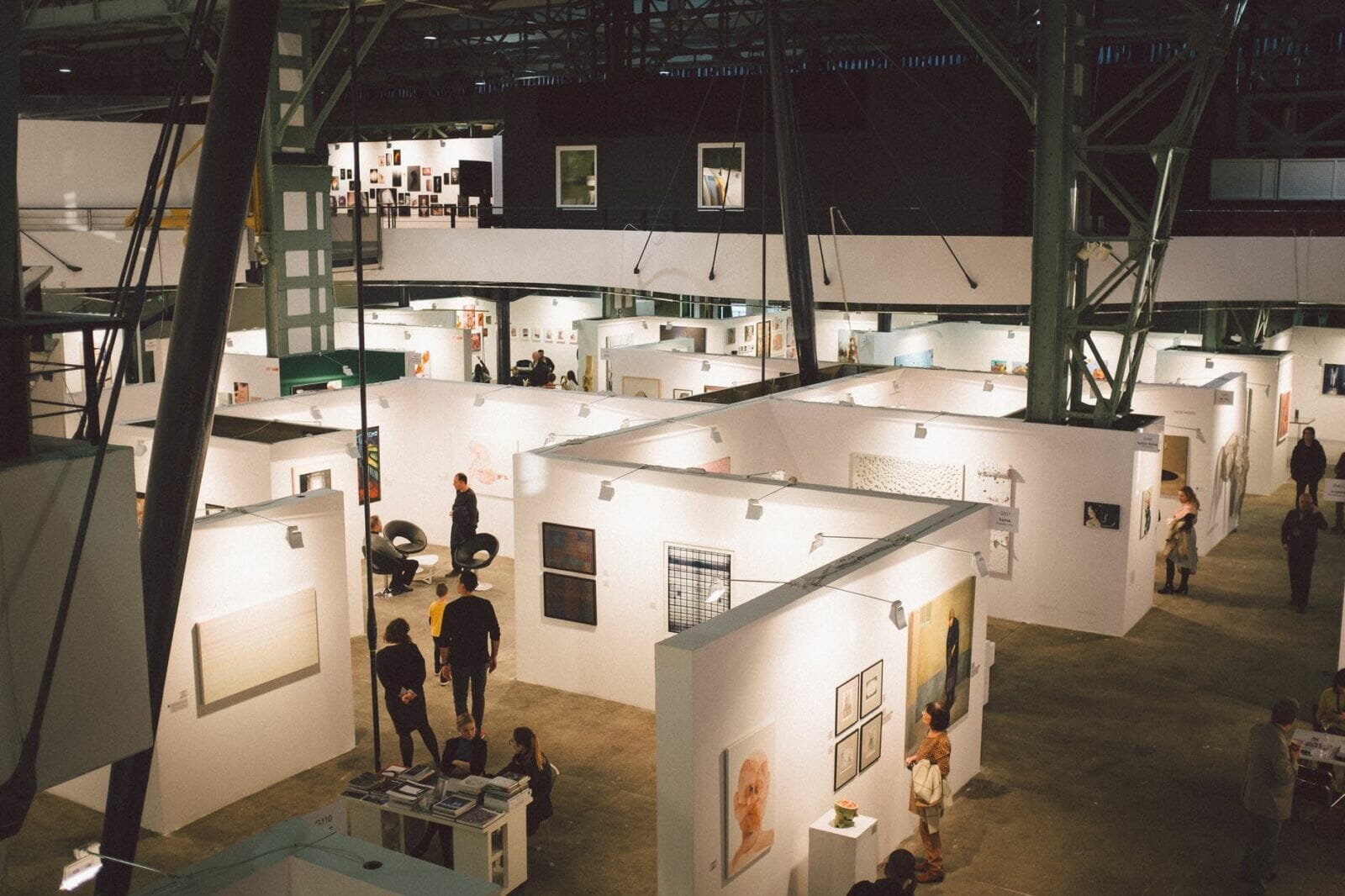
Most businesses spend between $5,000 and $50,000 to exhibit at a single trade show. That’s booth space, travel, setup, and staff time before you print a single flyer. And yet a staggering number of companies walk away with a pile of cold business cards and zero follow-up system. The opportunity is real. The execution is usually where it breaks down.
This isn’t about spending more. It’s about being deliberate with every decision from the moment you sign your booth contract to the moment your last follow-up email lands. Here’s what actually separates exhibitors who turn trade show spend into closed deals from the ones who call it a wash.
The Numbers That Should Make You Take This Seriously
Before we get tactical, one figure deserves your attention. According to the Center for Exhibition Industry Research (CEIR), 81% of trade show attendees have buying authority, meaning more than four out of five people walking the aisles are potential customers for exhibitors. That’s a concentration of decision-makers you simply can’t replicate with a paid social campaign or an email blast.
The problem isn’t the audience. It’s that most booths are invisible to them. Think about the last conference you attended as a visitor. You probably walked past dozens of tables with a folded tablecloth, a banner, and a bowl of candy. Nothing pulled you in. Nothing gave you a reason to pick up a piece of paper, ask a question, or remember the company’s name an hour later. That’s the gap most exhibitors leave wide open.
The SPACE Framework: A Pre-Show Checklist That Changes Your Results
Every high-performing exhibitor I’ve studied builds around five pre-show pillars. Call it the SPACE framework: Story, Physical materials, Attendee research, Clear offer, and Exit sequence. Miss any one of these and your ROI drops fast.
- Story. What is the single sentence a stranger should understand about your business within ten seconds of glancing at your booth? If your staff can’t say it in one breath, your signage almost certainly can’t either. Nail this first.
- Physical materials. Printed leave-behinds do work that your staff can’t. They travel home with attendees, sit on desks, and get handed to colleagues who weren’t at the show. Well-designed marketing folders are one of the most underrated leave-behinds in the business: they hold your brochure, your pricing sheet, and your business card in one organized package, which means the prospect gets one coherent story instead of a crumpled handful of disconnected pages.
- Attendee research. Most shows publish their attendee demographics in advance. Use that data. Know which industry verticals will be overrepresented and tailor your messaging accordingly before you ship anything to the venue.
- Clear offer. “Learn more about our services” is not an offer. “Book a 20-minute audit before you leave the show and get our ROI calculator for free” is an offer. Specificity converts.
- Exit sequence. What happens to every lead within 48 hours of the show closing? If you don’t have the answer written down before you arrive, you’ll answer it with silence.
What Your Booth Actually Communicates in 3 Seconds
Booth design is where most businesses treat aesthetics as optional. It’s not. Data from a 2025 trade show industry survey found that 48% of exhibitors say eye-catching booth displays are the single most effective strategy for attracting attendees. Nearly half. And yet the majority of small business booths look identical to each other.
Here’s a concrete example. Imagine two adjacent booths at a regional B2B expo in Phoenix. Booth A has a printed banner, a laptop showing a slide deck, and a stack of loose flyers sitting in a pile on the table. Booth B has a cohesive color scheme that matches their website, a standing display with a clear one-line value proposition, a tablet running a product demo on loop, and a neat rack of branded folders containing a curated packet for each buyer type they expect to meet. Both companies sell the same category of software. Only one of them gets approached first, consistently, all day.
The difference isn’t budget. It’s intentionality. Booth B spent about $400 more in total print and design costs and closed three deals from that single show. Consistency is the mechanism. Your colors, fonts, and materials should feel like the same brand whether someone is looking at your banner, your leave-behind, or your website on their phone that night.
Lead Quality Over Lead Volume: A Smarter Capture Strategy
Scanning every badge you can find is a trap. You end up with 200 contacts and no idea which three are actually worth calling. The exhibitors who consistently report the best post-show conversion rates focus on lead qualification at the point of contact, not after the fact.
Build a simple conversation script that uncovers two things: the prospect’s immediate pain point, and their timeline for making a decision. That conversation takes 90 seconds. At the end of it, you know whether to hand them a folder with your full packet or just a business card with a note jotted on the back.
Your CRM entry for each lead should have at least three fields filled out before the end of each show day: what they need, when they need it, and who else is involved in the decision. If you’re using a badge scanner, add a voice memo to each contact immediately after the conversation ends. Memory fades fast on a busy show floor.
The Leave-Behind Problem Most Exhibitors Get Wrong
Printed collateral at trade shows tends to fall into one of two failure modes. Either the company brings nothing physical and loses the prospect the moment they walk to the next booth, or they bring generic printed sheets that have no clear hierarchy and end up in the hotel trash before the attendee boards their flight home.
The research on print recall is hard to argue with. Print marketing carries a 70 to 80% higher recall rate than digital advertising. According to data compiled by Persuasion Nation (2025), print advertisements receive an average response rate of 9%, while email, paid search, and social media each receive about 1%. That’s not a small gap. A well-organized, branded physical packet gives your message a lifespan that a LinkedIn connection request simply doesn’t.
The format matters too. Loose sheets get separated, lost, or mixed with competitors’ materials. A pocket folder keeps your narrative intact: one cover, one clear hierarchy, one brand voice from the first page to the last. It also signals that you came prepared, which is its own form of credibility before a word is spoken.
Post-Show: Where Most of the Money Gets Left Behind
The show ends. You fly home. Monday hits, and your inbox is full of things that feel more urgent than following up with people you met on Thursday. This is the exact moment where the majority of trade show investment quietly evaporates.
A 48-hour follow-up rule is non-negotiable. Not a week. Not “when things slow down.” Forty-eight hours. A short personalized email referencing the specific conversation you had, with one clear next step, converts at a rate that a generic drip sequence can’t touch.
For your highest-priority leads, consider a physical follow-up. A short handwritten note with a relevant resource inside a branded folder lands on a desk, not in a spam folder. It’s unexpected enough to get opened and specific enough to get remembered.
| Phase | Key Action | Common Mistake |
|---|---|---|
| Pre-Show | Define one clear offer; prepare tiered leave-behind kits | Bringing one generic brochure for every attendee type |
| At the Booth | Qualify leads in 90 seconds; match materials to buyer profile | Scanning every badge regardless of fit |
| Day-Of Close | Add voice memo notes to each CRM entry before leaving the floor | Relying on memory at end-of-day debrief |
| 48-Hour Follow-Up | Personalized email referencing the specific conversation | Sending the same drip email to all 200 scans |
| Week 2+ | Physical mailer for top-tier prospects | Dropping the lead if the first email gets no reply |
“Information is everywhere. People crave experiences instead, especially in a face-to-face environment.”- Barry Siskind, trade show consultant, as cited in CEIR research on attendee engagement (2018).
That quote from the CEIR research still holds. The companies that win at trade shows are the ones that create a complete experience: a booth worth stopping at, a conversation worth having, and a physical takeaway worth keeping. Each element reinforces the others. Pull one out, and the chain weakens. Your next show is an opportunity to do all three well. Start with the SPACE checklist, invest in collateral that represents your brand honestly, and build a follow-up system before you pack a single box. The booth fee is just the entry ticket. What you do with the room is the whole game.