Under Canvas has spent a decade building a simple idea into a national outdoor‑hospitality brand: make it easy for people to sleep under the stars without giving up the comforts they secretly want.
CEO Noah Brodsky said that balance of adventure and creature comfort allows the company to now operate 17 camps nationwide, with the 18th opening in Santa Fe next year.
“They are glamping beautiful campgrounds with safari‑style tents at the foot of many national parks and state parks around the country.”
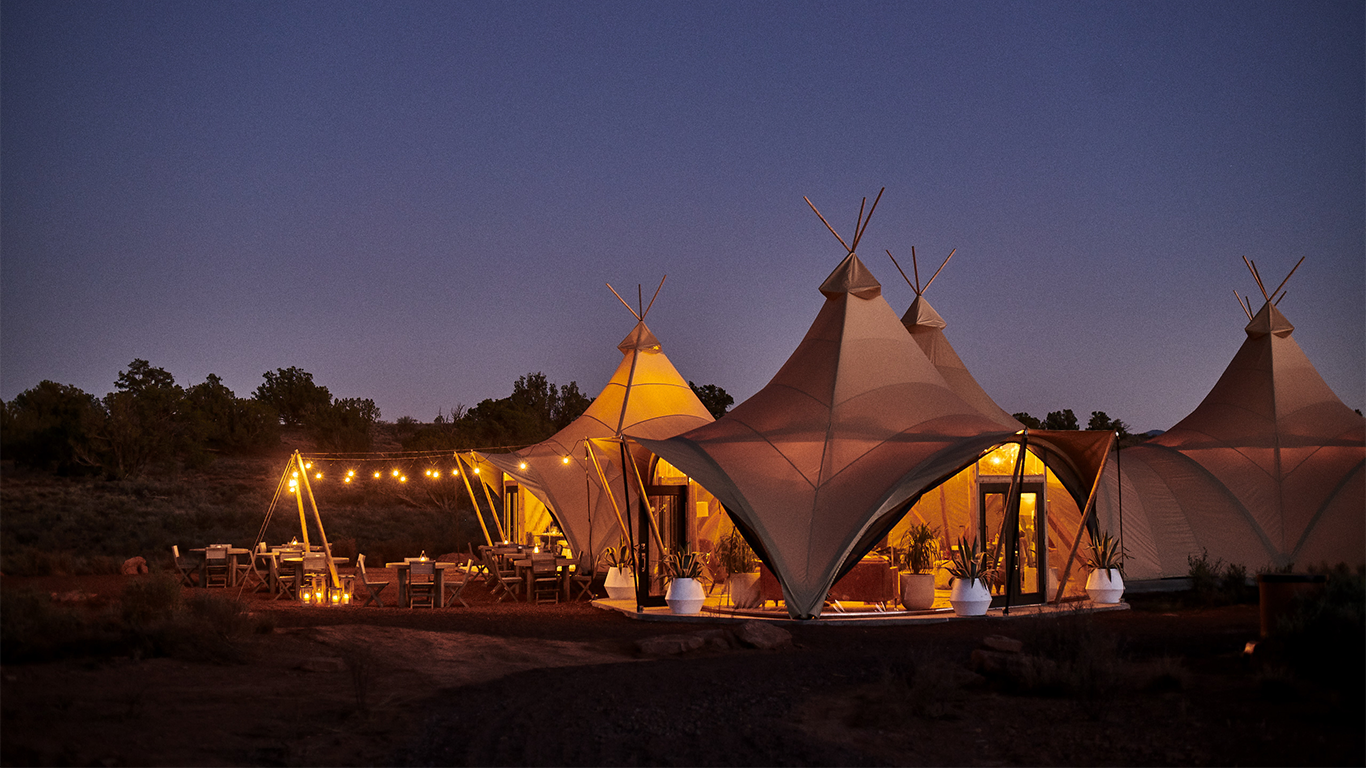
Camps house king‑size beds, hot showers, flush toilets, a tented lodge with a restaurant, and nightly complimentary s’mores. Guests spend their days in the parks and their evenings around the fire.
“It’s a great blend of getting outdoors, beautiful dark skies, but still having the creature comforts of a fine hotel,” he said.
The brand runs deep in Arizona. Under Canvas operates camps at the Grand Canyon, Lake Powell-Grand Staircase, and the Verde Valley, forming a triangle of easy road‑trip escapes for Valley travelers.
The company recently introduced its Grand Circle Road Trip, linking its Arizona camps with Utah destinations like Zion and Moab for multi‑camp itineraries.
“Phoenix will be one of our largest feeder markets down to Santa Fe,” Brodsky said, noting that the new camp — opening in 2027 — will be the brand’s most amenity‑rich yet.
“Santa Fe will have saunas, biking and a bike trail, some kids’ activities. It’s set on 600 acres. It’s stunning.”
MORE NEWS: The 10 scariest jobs in America that pay surprisingly well
DEEPER DIVE: 10 Arizona restaurants make Yelp’s Top 100 Mexican food spots
Unlike the national‑park basecamps, Santa Fe is more of a stay‑and‑play destination.
“Because it’s not in a national park, it’s a little more focused on the amenities on the campground,” he said.
Brodsky said he sees the same guest demographic at nearly every camp.
“One is people who grew up camping, but now they like having a comfortable bed and they don’t want to pitch the tent,” he says. “The other is where one person in the relationship grew up camping and the other wants a five‑star hotel, and this is the compromise.”
Families make up about a third of all guests, and multi‑generational groups are common. “Lots of grandparents and grandkids all summer long,” he said. “Very family friendly.”
The camps are also dog‑friendly, and every location includes ADA‑accessible tents.
“We want everyone to come and enjoy it,” Brodsky said.
Under Canvas opened two new camps in 2026 — its first California location in Yosemite and a White Mountains camp in New Hampshire. Yosemite, he says, has quickly become a favorite.
“That one is 15 minutes from the entrance, so you can get a jump ahead of all the rest of the tourists,” he said.
The brand continues to grow in Yellowstone, where it now operates three camps.
“To be right at the gate of the park, it’s a great way to start the morning,” Brodsky said. “You’ve got to get up and go early in Yellowstone to beat the crowds.”
Guests are always wanting more. Under Canvas is also experimenting with new ways to stay. Select camps are beginning to introduce cabin offerings — a sign of how traveler expectations are evolving.
Brodsky has witnessed the broader category shifting toward immersive, nature‑forward travel that doesn’t require sacrificing comfort. “It’s kind of roughing it, but we still have hot water,” he says. “It’s exactly that.”
For him, the magic is still in the simple moments: the fire pits, the dark skies, the chance to wake up steps from a trailhead. Even his kids insist on lighting the wood‑burning stove inside the tent — even when it’s 80 degrees. “They love starting the fire,” he says, laughing. “And then they turn it on and they’re like, ‘It’s too hot in here.’”
y
Under Canvas CEO Noah Brodsky likes to say the company sits at the crossroads of two very different travelers: the one who grew up camping, and the one who absolutely did not. “One person wants a five‑star hotel, and the other wants to pitch a tent,” he says. “This is the compromise.”
That compromise has turned into one of the fastest‑growing outdoor‑hospitality brands in the country. Under Canvas now operates 17 camps across the U.S., with an 18th opening in Santa Fe next year — a milestone that marks both expansion and evolution for the company.
“We have 17 locations open across the United States, with an 18th we just announced in Santa Fe,” Brodsky says. “They are glamping beautiful campgrounds with safari‑style tents at the foot of many national parks and state parks around the country.”
The Southwest: A Core Part of the Story
Arizona has become one of Under Canvas’s strongest regions, with camps at the Grand Canyon, Lake Powell–Grand Staircase, and the Verde Valley. Phoenix, Brodsky says, is one of the brand’s most reliable feeder markets — especially as travelers embrace road‑trip culture again.
“Phoenix will be one of our largest feeder markets down to Santa Fe,” he says. “It’s stunning — 600 acres, saunas, biking, kids’ activities. Since it’s not in a national park, it’s a little more focused on the amenities.”
The brand recently launched its Grand Circle Road Trip, connecting its Arizona camps with Utah destinations like Zion and Moab. “They’re all driving distance,” Brodsky says. “Great escapes.”
What Guests Actually Want
Brodsky has spent the past year visiting camps with his kids, his sister, and extended family — a personal test drive of the brand’s ethos. “Every one of them is just amazing,” he says. “Great places for families.”
He sees the same guest archetypes everywhere:
The nostalgic camper who now prefers a king bed and hot shower.
The mixed‑comfort couple negotiating between adventure and luxury.
The multi‑gen crew — “lots of grandparents and grandkids all summer long,” he says.
And increasingly, travelers who want accessibility. “We have ADA accessible tents at all of our camps,” Brodsky says. “We want everyone to come and enjoy it.”
They also want to bring their dogs. “We’re dog‑friendly,” he says. “Bring them on.”
A Year of Big Moves
Under Canvas opened its first California camp in Yosemite and a White Mountains camp in New Hampshire in 2026. Yosemite, Brodsky says, is already a standout.
“That one is 15 minutes from the entrance to Yosemite, so you can get a jump ahead of all the rest of the tourists,” he says.
Yellowstone — where the brand began — now has three camps. “To be right at the gate of the park, it’s a great way to start the morning,” he says. “You’ve got to get up and go early in Yellowstone to beat the crowds.”
The Next Chapter: Cabins, Comfort, and a New Kind of Outdoor Stay
Under Canvas is beginning to introduce new cabin offerings at select camps, a sign of how traveler expectations are shifting. Brodsky sees the future of outdoor hospitality as immersive, nature‑forward, and comfort‑conscious.
“It’s kind of roughing it, but we still have hot water,” he says. “It’s exactly that.”
He laughs when he talks about the wood‑burning stoves inside the tents — a favorite of his kids. “They love starting the fire,” he says. “Even when it’s 80 degrees out. And then they turn it on and they’re like, ‘It’s too hot in here.’”
Why It Works
Under Canvas isn’t selling luxury. It’s selling access — to dark skies, trailheads, quiet mornings, and the feeling of being close to something bigger than yourself. The comfort is just the bridge that gets people there.
“You get back at night, have a great dinner, make s’mores — complimentary s’mores every night — and have a great night’s sleep under the stars,” Brodsky says. “It’s incredible.”
And for a growing number of travelers, that’s the sweet spot: not roughing it, not resorting it — something in between.