
Looking for real, lasting weight-loss help in Aurora? You’re not alone. We sifted insurance rules, patient reviews, and outcome data to spotlight eight programs—from hospital bariatric teams to a 7,000-foot mountain retreat. Each cleared a 100-point scorecard covering credentials, results, cost transparency, and follow-up care, then we ranked them by treatment style so you can zero in on the right fit. Whether you need Denver gastric bypass with full insurance coverage, MD-guided GLP-1 medications, or a coach to tackle stubborn hormone issues, you’ll find a credible, compassionate option here. First, a quick look at our vetting method—then your next step.
How we chose these eight standouts
Aurora is overflowing with diet plans, med-spa injections, and hospital programs that promise the moon. We wanted proof, not promises, so we built a 100-point scorecard that grades each center on six factors that matter when you are the one stepping on the scale.
First, we looked at clinical credentials: board-certified obesity physicians and ASMBS-accredited surgeons earned full marks. Second, range of services, because one tool cannot fix every weight problem. Third, documented outcomes; if a program could not show average weight-loss numbers or share complication rates, we moved on.
Next came patient satisfaction; we read hundreds of Google and ObesityHelp reviews in search of steady five-star praise and any red flags. We also weighted cost and insurance access, rewarding centers that post self-pay prices and navigate Medicaid’s new bariatric rules. Finally, we scored innovation and long-term support for extras like telehealth check-ins, bilingual groups, and Saturday nutrition classes that help patients keep weight off.
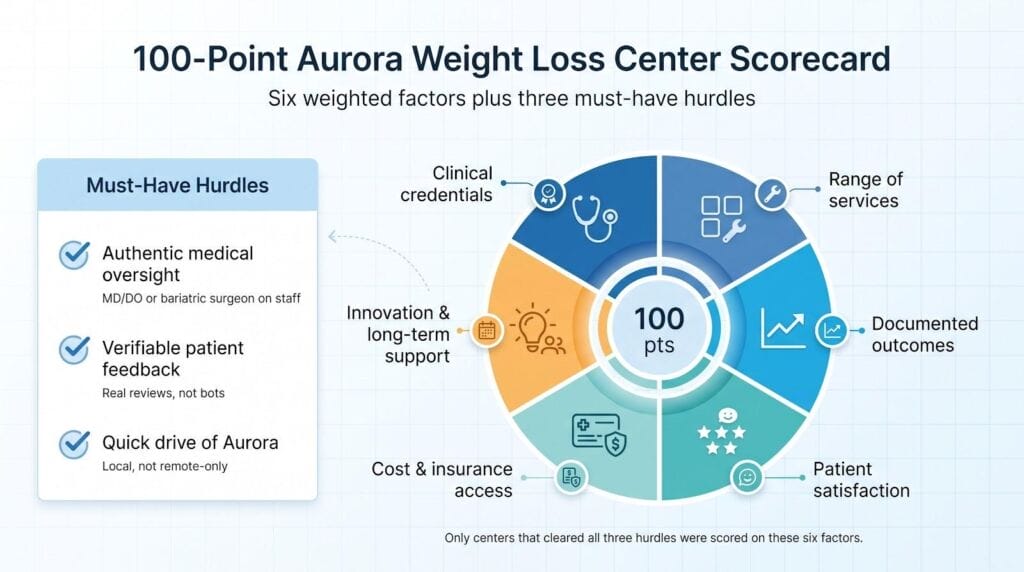
Every finalist also had to clear three must-have hurdles: authentic medical oversight, verifiable patient feedback, and a location within a quick drive of Aurora. Those rules removed pill-only pop-ups and distant telehealth brands.
The result is eight programs that excel on paper and in real life. We group them by treatment style (surgical, medical, or lifestyle) and rank them inside each group so you can jump straight to the option that matches your goals and budget.
Surgical programs: ranked options

Bariatric & Metabolic Center of Colorado, Parker
If you want the safety net of a full hospital without feeling like a number, start here. Dr. Joshua Long’s team operates inside Parker Adventist Hospital while running the clinic with a boutique vibe. That blend means you enjoy one-on-one visits, an operating room with Center of Excellence status for top-tier safety, and the option of a minimally invasive Denver gastric bypass surgery that lasts about 60–90 minutes, keeps you in the hospital just one or two days, and delivers an average 60–80 percent loss of excess weight.
Insurance problems? They handle them. When Colorado Medicaid lowered the bariatric BMI bar to 30 for patients with serious conditions, this center was first to enroll people under the new rule, saving many Coloradans months of waiting. Private insurers and Medicare are routine, and cash packages are posted in plain sight so there is no “call for quote” surprise.
Results follow suit. Patients shed 60–80 percent of excess weight within 18 months and often see diabetes reversed, blood-pressure pills dropped, and energy soar. Saturday support groups and tele-nutrition visits help lock in those gains long after surgery.
Bottom line: if you need a proven surgical fix and a staff that tackles Medicaid paperwork as quickly as a private PPO, this is your first call.
UCHealth Anschutz Health & Wellness Center, Aurora
Picture a clinic where dietitians, surgeons, exercise physiologists, and psychologists sit a hallway apart. That is the Anschutz Health & Wellness Center. You might start with a metabolic test or a 16-week State of Slim program, and if lifestyle work is not enough, the surgical team upstairs can schedule a sleeve or bypass without sending you across town.
Because the center is tied to the CU School of Medicine, every protocol is evidence-first. Surgeons publish outcome data, researchers run drug trials, and patients can opt into studies or stick to standard care. Either way, you are surrounded by specialists who share one playbook.
Expect waitlists—the place is popular—but the payoff is breadth. Insurance coordinators prep paperwork while trainers teach safe squats for post-op life. A patient summed it up best: “The outside changes are huge, but the internal growth is bigger.” Science plus whole-person coaching makes UCHealth the gold standard for anyone who wants hospital resources without hospital coldness.
Denver Center for Bariatric Surgery (HealthONE), Aurora and Denver
Speed and volume define this program. Lead surgeon Dr. Michael Snyder has performed more than 8,000 bariatric operations, one of the highest tallies in the Rockies. That repetition sharpens technique and shortens hospital stays, so most patients walk the halls the morning after surgery and head home a day later.
The process feels like a conveyor belt in the best way: free webinar tonight, insurance verification tomorrow, consult next week. Many patients go from seminar to surgery in under three months while friends at slower systems are still compiling paperwork.
Options include sleeves, bypasses, complex revisions, and robotic procedures for extra precision. Spanish-speaking staff make the Aurora clinic welcoming for bilingual families, and monthly support groups keep momentum long after goal weight.
Pricing lands mid-pack. Insurance is widely accepted, though Medicaid approval can vary by hospital campus, so double-check. If you value an ultra-experienced surgeon and a brisk timeline, HealthONE is hard to beat.
Colorado Bariatric Surgery Institute, Parker
Some people want white-glove service from the first phone call to the last vitamin check. That is Colorado Bariatric Surgery Institute. Dr. Thomas Brown limits daily caseloads on purpose, so consultations feel unhurried and surgery slots often open weeks sooner than in larger systems.
This concierge style shows up early. Within 48 hours of your intake form, an insurance coordinator emails a personalized roadmap of every required class, lab, and psych visit. High-BMI or revision patients, usually told to “lose weight first,” find welcome here; Brown often uses a staged sleeve-then-bypass plan to keep extreme cases safe and successful.
Transparency runs deep. Self-pay prices—$11,800 for a sleeve—sit clearly on the website, financing options included. Insurance is widely accepted, Medicare too, and because surgeries happen at Parker Adventist, Medicaid cases can follow Colorado’s new lower-BMI rule.
If you crave meticulous surgical skill and a team that replies the same day, CBSI delivers a boutique experience without sacrificing hospital-grade safety.
Medical weight-loss clinics: ranked options
Himalaya Weight Loss Clinic, Aurora
Think of Himalaya as a command center for today’s leading weight-loss drugs. Step one is a physician visit with lab work that confirms safety and dose. Step two pairs a weekly semaglutide or tirzepatide injection with a realistic eating plan and bi-weekly check-ins, offered in person or over video to match your schedule.
That structure matters because injections alone do not rewrite habits. Coaches track side effects, adjust doses, and push small lifestyle wins so you lose fat, not muscle. Many patients drop 10 to 15 percent of body weight in six to twelve months, then shift to a maintenance dose instead of stopping cold.
Cost transparency is solid. Office visits bill to insurance, but the real wildcard is drug price. Staff run a benefits check on the spot and, if coverage is denied, discuss lower-cost compounded versions or manufacturer coupons before you leave. That financial coaching turns sticker shock into a clear yes-or-no choice.
Genesis Lifestyle Medicine, Aurora
Genesis favors a back-to-basics plan: controlled calories, targeted supplements, and a physician who follows your labs. Its flagship is a 60-day HCG program—the hormone diet some clinics pushed a decade ago—now paired with weekly body-composition scans and menu coaching so you are not white-knuckling a 500-calorie phase alone.
Prefer appetite suppressants over injections? Licensed providers prescribe short bursts of phentermine, then taper you to a protein-forward meal plan plus B12 shots to preserve energy. Clients often lose 15 to 25 pounds in the first six weeks, enough to drop a clothing size before a fitness test or event.
Costs stay predictable: a free consult, followed by weekly fees that start at $99. Because insurance rarely covers elective diets, Genesis posts prices upfront and layers seasonal discounts so you can budget with eyes wide open. Choose this clinic if you need hands-on accountability, affordable out-of-pocket pricing, and a team willing to blend time-tested tools with new lab data.
Lifestyle and holistic programs: ranked options

Dr. Kells’ Weight Loss, Centennial and Colorado Springs
If you want a root-cause approach instead of another shortcut, Dr. Kristen Kells’ clinic leans on deep hormone testing, metabolic scans, and mindset coaching to build a plan that feels personal, not templated. Patients often start with precision body scans, then follow a program that pairs nutrient-dense meals with detox support and red-light therapy for fat reduction and skin tightening.
Because every plan is tailored, costs vary and insurance is typically not accepted. For clients who want to repair their relationship with food and see lasting change without surgery, Dr. Kells’ offers a thorough, supportive path a short drive from Aurora.
Walkabout Ridge Retreat, Evergreen
Sometimes you need a jump-start, not another video call with a dietitian. Walkabout Ridge delivers that push. For seven days you stay in a mountain lodge, lace up at sunrise, and hike trails that sit more than 7,000 feet above sea level. Altitude blunts appetite, so you burn more calories while feeling less hungry.

Walkabout Ridge Weight Loss Retreat Evergreen Colorado Screenshot
The program is all-inclusive: chef-prepared meals hover around 1,500 calories, trainers lead strength and yoga sessions, and nightly workshops teach grocery shortcuts for life back home. Most guests lose about ten pounds in the week—enough to prove progress is possible and spark confidence.
Cost is roughly $2,300 for lodging, food, and coaching. Insurance does not apply, but many guests treat it as a health vacation compared with a beach trip that adds weight. If group energy fires you up and you want a dramatic kick-off before choosing a long-term clinic, a week at Walkabout Ridge can deliver the momentum a stationary bike cannot.
Compare your options at a glance
You have met the programs; now line them up side by side. Use the chart below to spot deal-breakers, then mark the two or three centers that match your goals and budget.
- Type shows the primary approach: surgery, medication, or lifestyle immersion.
- Key strengths highlights the biggest selling point.
- Insurance friend? notes whether major plans (and Medicaid when relevant) are routinely accepted.
- Best for spells out who usually thrives there.
| Center | Type | Key strengths | Insurance friend? | Best for |
| Bariatric & Metabolic Center of Colorado | Surgical | Medicaid-friendly, boutique care inside a full hospital | Yes (Medicaid, Medicare, commercial) | Anyone seeking gastric bypass or sleeve with maximum support |
| UCHealth Anschutz Health & Wellness | Surgical + Medical | Academic depth, on-site fitness lab, research trials | Yes (broad) | Patients with complex conditions who want every tool under one roof |
| HealthONE Denver/Aurora Bariatric | Surgical | 8,000-plus surgeries, quick scheduling | Yes (verify Medicaid) | People who value an ultra-experienced surgeon and fast timelines |
| Colorado Bariatric Surgery Institute | Surgical | Concierge roadmap, posted self-pay prices | Yes (Medicare, most commercial, Medicaid via hospital) | High-BMI or revision cases needing detailed guidance |
| Himalaya Weight Loss Clinic | Medical | Physician-managed GLP-1 injections with virtual follow-ups | Visits yes; drug coverage varies | Adults aiming for a 10 to 15 percent loss with modern meds |
| Genesis Lifestyle Medicine | Medical | Affordable weekly plans, HCG or phentermine jump-start | Rarely; mostly cash | Busy pros who need a structured, low-cost kick-off |
| Dr. Kells’ Weight Loss | Holistic | Deep hormone testing, mindset coaching | No | Clients seeking natural, root-cause transformation |
| Walkabout Ridge Retreat | Lifestyle retreat | Ten-pound average loss in one week at altitude | No | Motivated individuals wanting a dramatic reset in the mountains |
What’s changing fast—and why it matters to your wallet
Two shifts are rewriting Colorado’s weight-loss landscape, and knowing them can save you thousands.
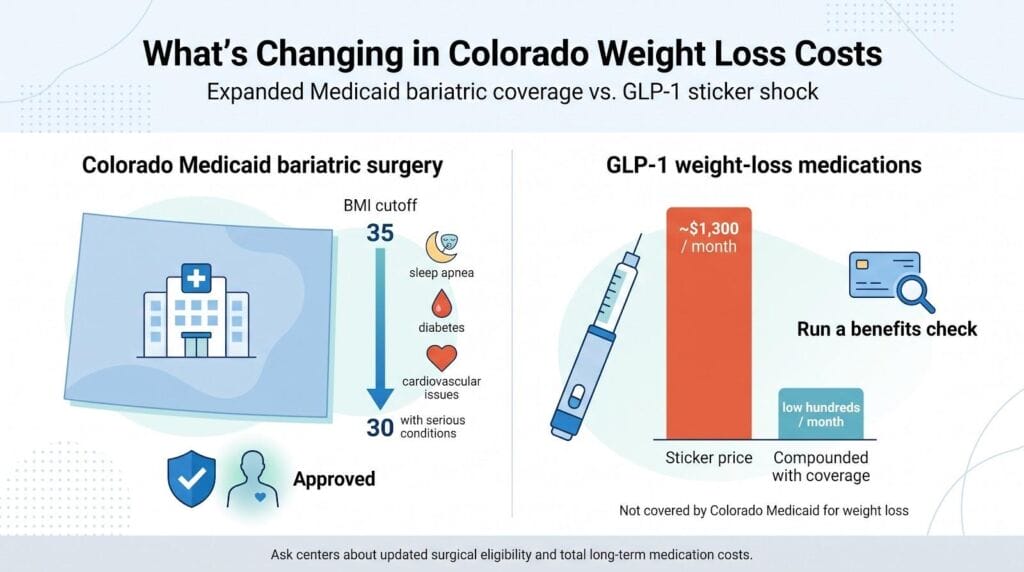
1. Colorado Medicaid quietly expanded bariatric coverage. Adults with a body mass index as low as 30—when paired with diabetes, sleep apnea, or another serious condition—now qualify for a gastric sleeve or bypass at approved centers. Translation: if you were told to “gain weight first” to meet the old 35 BMI cutoff, call a Center of Excellence again. Surgery that once felt out of reach may now be fully covered.
2. The GLP-1 medication boom is colliding with sticker shock. Drugs like semaglutide and tirzepatide can cut body weight by about 15 percent, but list prices hover near $1,300 a month. Only thirteen state Medicaid programs help pay, and even large employers are trimming coverage to curb costs. Before you sign up for weekly injections, ask the clinic to run a benefits check and discuss compounded versions that drop the out-of-pocket bill into the low hundreds.
Pro tip: Lock in long-term support on day one. Whether that is Saturday groups after surgery or telehealth touchpoints during medication, consistent follow-up cuts regain risk almost in half, according to multiple center audits. When you shop programs, ask, “Who is still checking on me six months later?”
Frequently asked questions
Do I need a doctor’s referral to start these programs?
No. Every center on this list takes self-referrals. Call, fill out an online form, or attend a free seminar. If your plan is an HMO, a referral can speed approval, but the clinic will tell you if it is required.
Will insurance pay for weight-loss drugs like Wegovy?
Sometimes, but assume “no” until a benefits check says “yes.” Many commercial plans cover GLP-1s only for diabetes, not obesity. Colorado Medicaid excludes them for weight loss. Good clinics run the check during your first visit and explain compounded options when coverage is denied.
How much weight can I realistically lose after bariatric surgery?
Most patients shed 60 to 80 percent of excess weight within 12 to 18 months, then stabilize. Example: If you are 100 pounds above a healthy range, expect a 60- to 80-pound drop when you follow the diet and activity guidelines.
What happens if I regain weight later?
Regain often starts when follow-up visits stop. Top centers schedule lifelong check-ins—monthly for the first year, then annual labs and support groups. Stay engaged and small bumps on the scale get corrected before they snowball.
Are very low-calorie HCG diets safe?
Yes, when closely monitored by a physician for a short period. Weekly labs track electrolytes, coaches watch for dizziness, and calories rise again after the rapid-loss phase. If a clinic hands you HCG without medical oversight, walk out.
Conclusion
Have a question we did not cover? Bring it to your consultation. A credible team answers clearly and welcomes tough follow-ups; that is how you know they are worthy of your trust.