Downtown Tucson has long been known for its creativity and history, but in the last decade, it has since evolved into a regional anchor, an economic catalyst and a cultural corridor.
For Crystal Moore, president and chief executive officer of the Downtown Tucson Partnership, the district’s transformation is purposeful. It’s the result of sustained investment, strong relationships among local operators, and Downtown’s defining role in the region’s future.
“We are the central hub for our entire region,” Moore said.
“The economic development piece of Downtown Tucson is that we are a talent magnet. When people are considering relocating to Tucson, or they consider if the Downtown area is someplace they would want to spend time in. That makes the pros or the cons list when they’re making their decision to relocate.”
When a prospective employee is weighing a job offer or a business owner is scouting a new market, the district’s restaurants, venues, walkability and cultural mix often becomes a deciding factor.
“We want our cultural experience to be something positive when those decisions are being considered,” she said.
That cultural experience is built from dozens of individual operators — restaurateurs, hoteliers, venue managers, artists retailers — who collectively shape the district’s identity.
The public doesn’t see these collaborations.
MORE NEWS: The Rialto Theatre has quiet power in Downtown Tucson
DEEPER DIVE: Gibson Food Hall: Tucson’s new home for local flavor
A district built on cooperation, not competition
Downtown districts often carry a reputation for competition. Businesses sit shoulder‑to‑shoulder, vying for foot traffic, attention and loyalty. But Moore said Tucson’s Downtown has developed a different rhythm.
“All the merchants have kind of armed together and are creating this districtwide harmony to attract the new visitor or the returning guest,” she said.
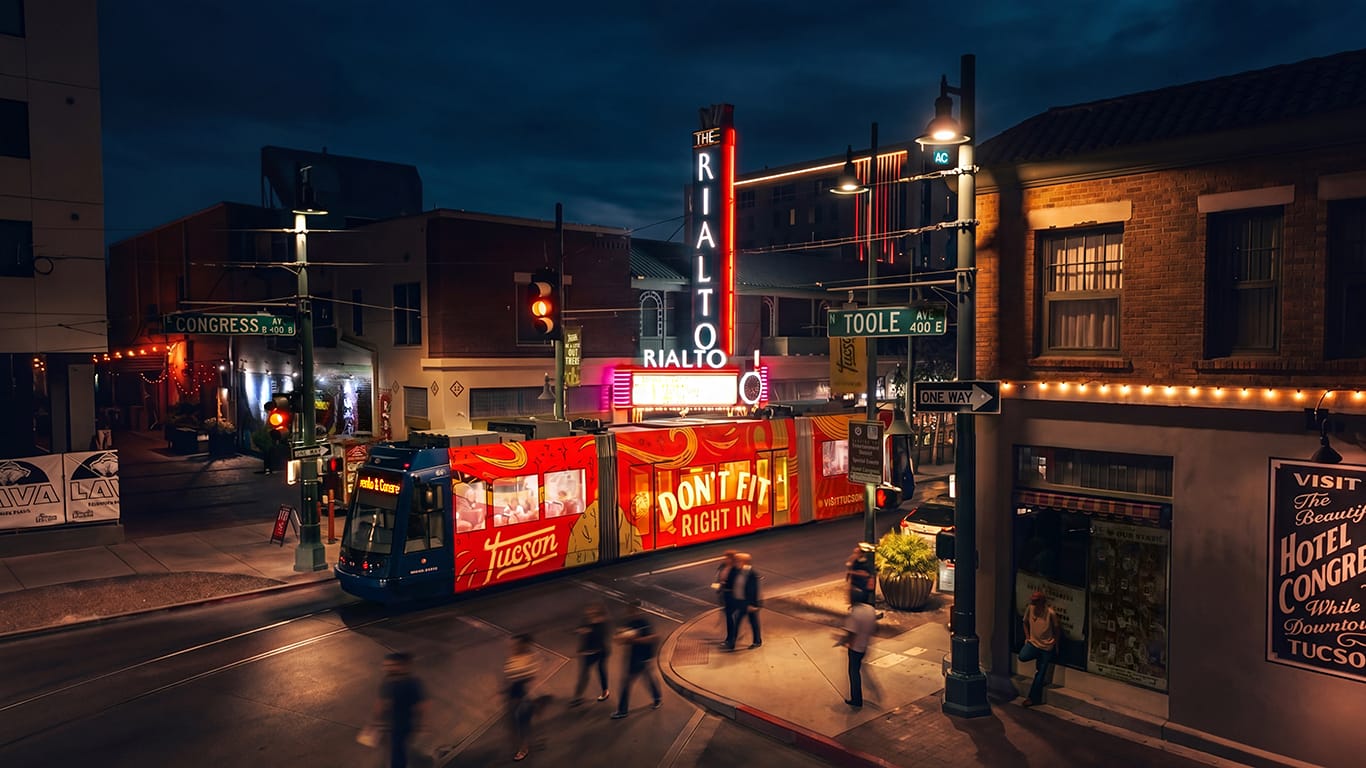
Even with natural competition among restaurants, bars, shops and venues, operators recognize that a thriving Downtown benefits everyone. The district is walkable, compact and connected by the Sun Link Streetcar, which stretches from the University of Arizona campus to the westside. The streetcar, she said, expands the definition of Downtown.
“It really links the Downtown experience from campus all the way to the west side,” Moore said.
“When you start thinking about it as the full streetcar line, it’s several miles worth of local operators and food — just the amazing food and chefs of all genres. There’s every cuisine you can think of.”
Because of this, the district feels larger than its footprint. A visitor can step off the streetcar and walk to a concert at the Rialto, grab a cocktail at a speakeasy, explore murals, browse a boutique, or settle into a chef‑driven restaurant — all without getting back in a car.
“It’s really a little city within the city, just offering us everything we need,” Moore said.
As part of that “little city,” talent is needed, as Downtown Tucson is the central hub for “the entire region.”
“When people are considering relocating to Tucson, they ask whether the Downtown area is somewhere they would want to spend time.’
The role of Rio Nuevo: A redevelopment engine
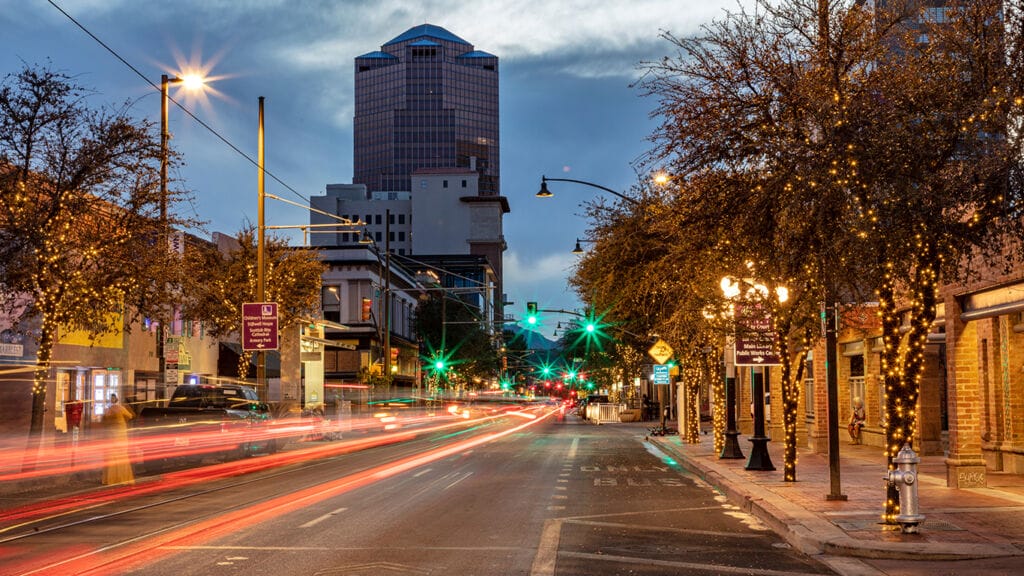
Much of Downtown’s momentum is tied to the Rio Nuevo District, a state‑authorized TIF (Tax Increment Financing) that reinvests sales tax revenue back into Tucson. Moore said the district’s impact is visible.
“Most new developments would not have occurred had it not been for Rio Nuevo’s involvement,” she said.
It works this way: state sales tax generated within the business improvement district is returned to the community through Rio Nuevo, whose board determines how those funds are reinvested. The result is a redevelopment engine that has reshaped Downtown’s landscape.
Also, any sales tax that’s generated within the Business Improvement District — which is a small part of the Rio Nuevo District — is reinvested into the Rio Nuevo District.
“We need people to support those business within that district.”
The AC Marriott was one of the earliest Rio Nuevo projects, followed by the Leo Kent Hotel. Both helped establish Downtown as a viable hospitality corridor, but an audit by the Arizona Attorney General’s Office underscored the need for additional hotel rooms to support the Tucson Convention Center.
“The state attorney general did an audit on Rio Nuevo last year—this is all published on Rio Nuevo’s website,” she said.
“That said, we need more Downtown hotels to support the Tucson Convention Center.”
New businesses are popping up. Cornish Pasty Company is set to open in the fall of 2027, Moore said. Treasury 1929 and the Gibson Food Hall are part of the Rio Nuevo development monies that have been reinvested in Downtown.
“There’s a plethora up and down Broadway and Congress of new developments, most of which would not have occurred if it wasn’t for visitors.
“Rio Nuevo is very cognizant of that requirement, and we have two hotels under development right now — Obie and Moxy — to support the growth of the Tucson Convention Center.”
Each hotel has a different vibe. The Obie Companies will bring a boutique hotel and mixed-use retail development to Downtown Tucson.
Moxy Hotels is a Marriott International lifestyle hotel brand that trades “traditional stiffness” for an affordable, playful and social “fun-hunting” atmosphere.
Guests don’t check in at a traditional front desk; they visit the bar first and then receive their keys and complimentary cocktail or mocktail. The DJs and 24/7 food and beverage options are designed to “encourage mingling,” according to its website.
A Downtown that reflects Tucson’s identity
Downtown Tucson’s evolution isn’t just about buildings — it’s about identity. The district reflects the city’s creativity, its entrepreneurial spirit and its willingness to adapt.
Historic buildings have been repurposed into hotels, food halls, like the Gibson Food Hall, and performance spaces. Murals cover walls once left blank. Restaurants showcase cuisines from around the world, thus the City of Gastronomy label. Venues host everything from indie bands to touring acts.
Moore said that mix makes Downtown so compelling.
“Even if you don’t work that Monday through Friday shift, there’s definitely something going on Downtown every day of the week,” she said.
Together, these elements create a Downtown that feels rooted and forward‑looking.
And for her, the district’s strength captures its momentum and its promise.
“It’s really everything we need.”