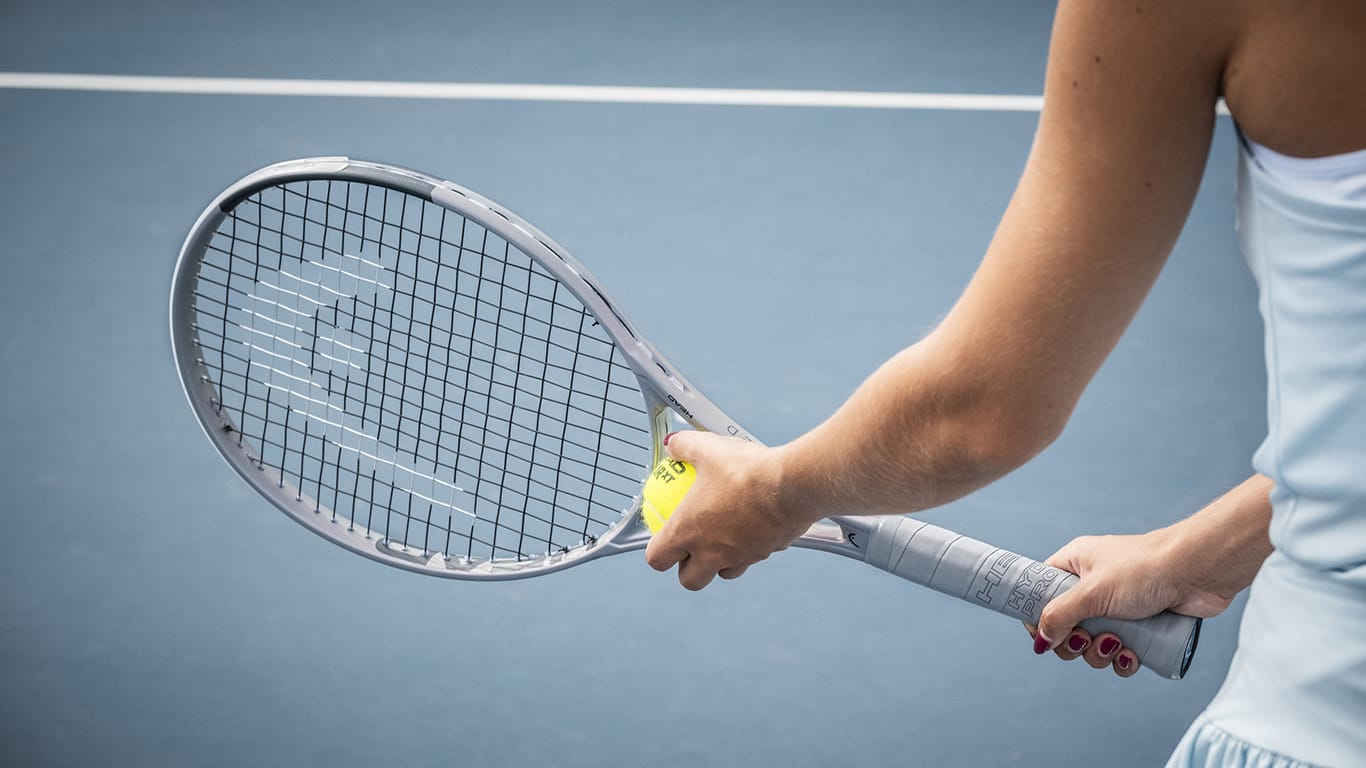
HEAD has spent more than a decade chasing a problem tennis players know all too well: the trade‑off between comfort and feel. Reduce vibration and the racquet goes mushy. Increase responsiveness and the frame gets harsher on the arm. For years, the industry has treated that tension as unavoidable — a design law, not a design challenge.
This spring, HEAD, which has a research and development office in Phoenix, believes it finally broke that rule.
DEEPER DIVE: Read all the Ranking Arizona Top 10 lists here
INDUSTRY INSIGHTS: Want more news like this? Get our free newsletter here
The company’s new Squared racquet, which launched April 9, is the result of a 12‑year engineering project led by Felix Schumann, HEAD’s U.S. and Canadian product category director.
Schumann, a lifelong tennis player, knows the problem personally. “With late contact comes uncomfortable vibrations that affect the players’ arms, wrists and elbows,” he said. “We’ve worked on it for… over 12 years. It’s exciting to finally bring it to the market.”
Squared is the most head‑light racquet HEAD has produced — a frame that visibly drops its balance point toward the handle when held upright. It’s the opposite of the traditional hammer‑style distribution that has dominated the market for decades. That shift, Schumann said, is intentional.
“When you have something that is a lot lighter in the handle, you get the racquet around a lot quicker,” he explained. Faster acceleration means cleaner contact out in front of the body, fewer mishits, and less of the arm‑jarring vibration that drives so many players to quit the sport.
The Squared project began in 2014 — long before the pandemic‑era surge that brought millions of new players into tennis and pickleball. HEAD’s goal was straightforward but technically difficult: build a racquet that feels light, easy and comfortable without drifting outside the “normal” specs players expect.
“We wanted to get a racquet that is lightweight, easy to play, comfortable, but at the same time has regular specs that the consumer feels comfortable with,” Schumann said.
That tension became clear during early playtests. Players loved the feel — until they learned how light the racquet actually was. “As soon as we told them that the racquet was well below the average spec… players really didn’t like that, because they said it’s totally out of spec,” he said. HEAD needed a way to deliver comfort and maneuverability without triggering the psychological bias that lighter racquets are “beginner frames.”
Squared’s engineering is designed to solve that.
Most racquets use a single continuous tube around the hoop. Squared uses two — a structural shift Schumann calls “a major innovation” in a category where changes are usually incremental.
The Power Tube forms the outer frame.
The Comfort Tube, filled with proprietary comfort foam, sits inside the yoke and extends into the handle — the only part a player actually touches.
This dual‑tube architecture filters unwanted vibration before it reaches the hand, without muting the ball feedback players rely on for control. “We wanted to have something that has some good shock absorption… and reduce the vibration for players that may need some help with their comfort and their arm issues,” Schumann said.
HEAD also opened the string pattern to 16×18, creating a higher launch angle. For new players, that means more balls clear the net — the single biggest barrier to sustaining a rally. “We’re trying to eliminate the first hurdle for those beginner players,” he said.
The engineering shift is significant enough that HEAD’s internal product brief calls Squared a “major innovation,” not an iteration. By building comfort into the frame itself — rather than adding dampening materials after the fact — HEAD said it can produce the racquet more consistently and at higher quality, a key factor for elite‑level equipment.
HEAD sees Squared appealing to three core groups:
- Beginner to intermediate players
These players want comfort, maneuverability and fewer arm issues. Squared’s head‑light balance and vibration‑filtering design give them a racquet that feels forgiving without feeling flimsy.
- Coaches
Coaches spend hours feeding balls and need something ultra‑light and easy to swing. Squared’s balance point and acceleration make it a natural fit for high‑volume hitting sessions.
- Returning players
This group grew up on heavier, low‑power racquets and often struggles with modern frames that feel too stiff or too powerful. Squared gives them a racquet that feels familiar in control but modern in comfort.
The timing is ideal. “Tennis was the only social distancing sport… and racket sports overall are seeing a surge,” Schumann said. Participation has remained strong, and equipment companies are racing to meet the needs of a broader, more diverse player base.
HEAD’s racquet portfolio — including Speed, Boom and Radical — is built around balancing power, spin and control. Technologies like Auxetic (for feel) and Graphene (for stability) have become staples in the company’s design language. But Squared represents something different: a structural rethink rather than a material upgrade.
In an industry where racquet design often evolves in small steps, Squared stands out. It reduces negative vibration and fatigue while maintaining torsional stability and ball feedback — a combination players have long wanted but rarely found in a single frame.
Schumann said he believes that’s why Squared matters. “We wanted something that feels easy, comfortable, and still gives players the feedback they need,” he said. “It’s not about making the racquet softer. It’s about making it smarter.”
Squared’s dual‑tube architecture is more than a one‑off experiment. It signals a shift in how HEAD thinks about comfort, power and player experience. Instead of adding dampening materials or relying on external technologies, the company is building comfort into the racquet’s core structure.
That approach could influence future models across HEAD’s lineup — and potentially across the industry.
After 12 years of development, Schumann said he believes HEAD has finally cracked the code. “It’s exciting to finally bring it to the market,” he said. For a sport where feel is everything, Squared may be one of the most meaningful racquet innovations in years.