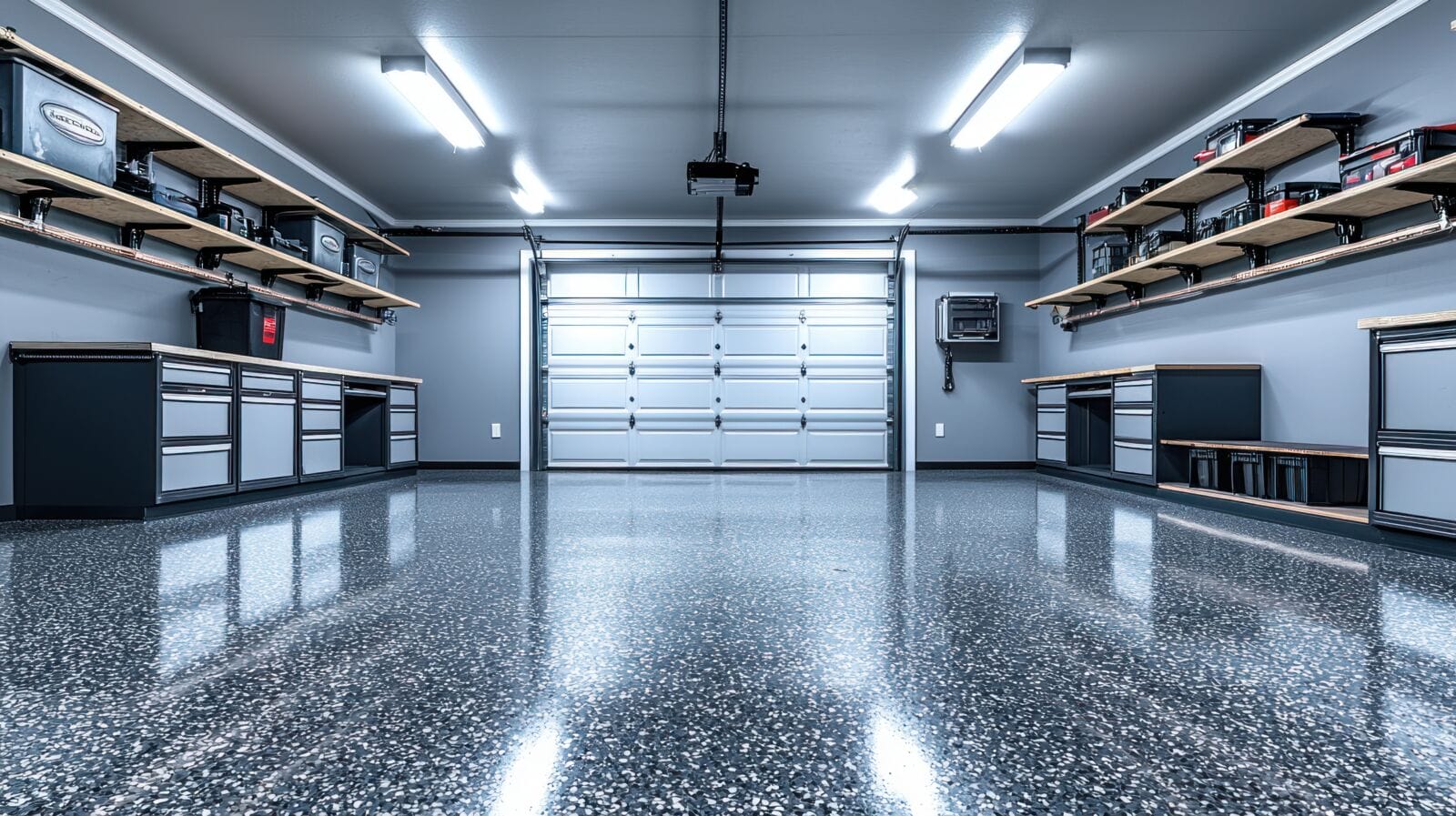
Your garage floor takes a beating every day. Oil drips, road salt, heavy tools, and constant traffic all leave their mark.
If you live in Michigan, you already know how harsh the winters can be. That freeze-and-thaw cycle is tough on concrete.
Many homeowners in White Lake and across Michigan are turning to garage floor coatings to protect and upgrade their space.
Before you commit to an epoxy garage floor, there are some important things to understand.
Epoxy is a great investment, but only when it is installed correctly and in the right conditions. Getting informed upfront saves you time, money, and frustration later.
Here are 10 things every Michigan homeowner should know before choosing epoxy garage flooring.
Whether you are just starting to research or almost ready to schedule a job, this guide has you covered.
1. Epoxy Is Not Just Paint
A lot of people confuse epoxy with regular floor paint. They are very different products. Paint sits on top of the concrete and peels over time.
Epoxy actually bonds into the surface of the concrete. It creates a hard, seamless coating that is far more durable.
When done right, a quality epoxy garage floor coating can last 10 to 20 years or more.
2. Michigan Weather Affects the Installation Process
Temperature and humidity matter more than most people realize. Epoxy needs the right conditions to cure properly.
In Michigan, cold winters and humid summers can both cause problems if you do not plan ahead.
Most epoxy products should not be applied when temperatures are below 50°F. Professional epoxy floor coating installers in Michigan know how to work around the local climate.
Always ask your installer about seasonal timing before booking the job.
3. Concrete Preparation Is Everything
The number one reason epoxy fails is poor surface prep. If the concrete is not cleaned, ground, and profiled correctly, the coating will peel.
Professional epoxy garage floor installers use diamond grinders or shot blasters to open up the concrete’s pores. This gives the epoxy something to grip.
Do not skip this step. It is the foundation of a long-lasting garage floor epoxy coating.
4. Moisture Can Ruin Your Floor
Concrete looks solid, but it absorbs and releases moisture. If there is water vapor coming up from below the slab, the epoxy will bubble and lift.
Before applying any concrete floor coatings, a moisture test should be done. This is especially important in Michigan, where spring thaw and high water tables are common.
Reputable garage floor coating companies will always test for moisture before starting the job.
5. Not All Epoxy Products Are the Same
There is a big difference between store-bought DIY kits and professional-grade epoxy. The products sold at home improvement stores are usually water-based and much thinner.
Professional coatings are 100% solids or high-solids epoxy, which means they are thicker, harder, and more resistant to wear.
If you want the best garage floor coating, go with a professional product applied by experienced epoxy garage floor installers.
6. Cracks and Damage Need to Be Fixed First
Epoxy does not hide or fix structural problems in your concrete. If your floor has cracks, pitting, or spalling, those issues need to be repaired before any coating is applied.
Small surface cracks can often be filled with epoxy filler. Larger structural cracks may need more attention.
A good installer will assess the condition of your slab and let you know what repairs are needed upfront.
7. You Have More Style Options Than You Think
Many homeowners do not realize how many choices they have when it comes to epoxy garage flooring.
You can choose from solid colors, metallic finishes, or decorative flake systems.
Flake floors, also called chip floors, are especially popular in Michigan garages. They hide dirt well, look great, and add texture that reduces slipping.
The right look depends on your personal style and how you use your garage.
8. The Process Usually Takes Two to Three Days
You will need to plan for some downtime. Most professional garage floor epoxy coating jobs take two to three days from start to finish. Day one is usually prep and the base coat.
Day two adds the topcoat or finish. Then the floor needs time to cure before you can park on it. Rushing the process leads to problems.
Ask your installer for a clear timeline before work begins.
9. Epoxy Floors Are Easy to Maintain
One of the biggest benefits of garage flooring with epoxy is how simple it is to keep clean. The sealed surface does not allow oil, chemicals, or dirt to soak in.
A quick sweep and occasional mop is usually all you need. In Michigan, where road salt and grime get tracked in all winter, this is a huge advantage.
Epoxy garage floors also resist staining, making cleanup after spills much faster.
10. Hire a Local Professional for Best Results
DIY kits are tempting because they seem cheaper upfront. But mistakes during prep or application can cost more to fix than hiring a professional in the first place.
When you search for epoxy garage floor near me in the White Lake or Michigan area, look for a company with real experience in concrete floor coatings.
Read reviews, ask for photos of past work, and get a clear quote before signing anything.
Final Thoughts on Garage Floor Coatings in Michigan
An epoxy garage floor is one of the smartest upgrades you can make as a homeowner. It protects your concrete, adds value to your home, and makes your garage look and function better every day. But the results depend heavily on proper prep, the right product, and skilled installation.
If you are in White Lake or anywhere in Michigan and want to talk to experts who specialize in garage floor coatings, reach out to Obrien Concrete Coatings.
They have hands-on experience with Michigan concrete and can help you choose the right system for your garage, your budget, and your lifestyle.