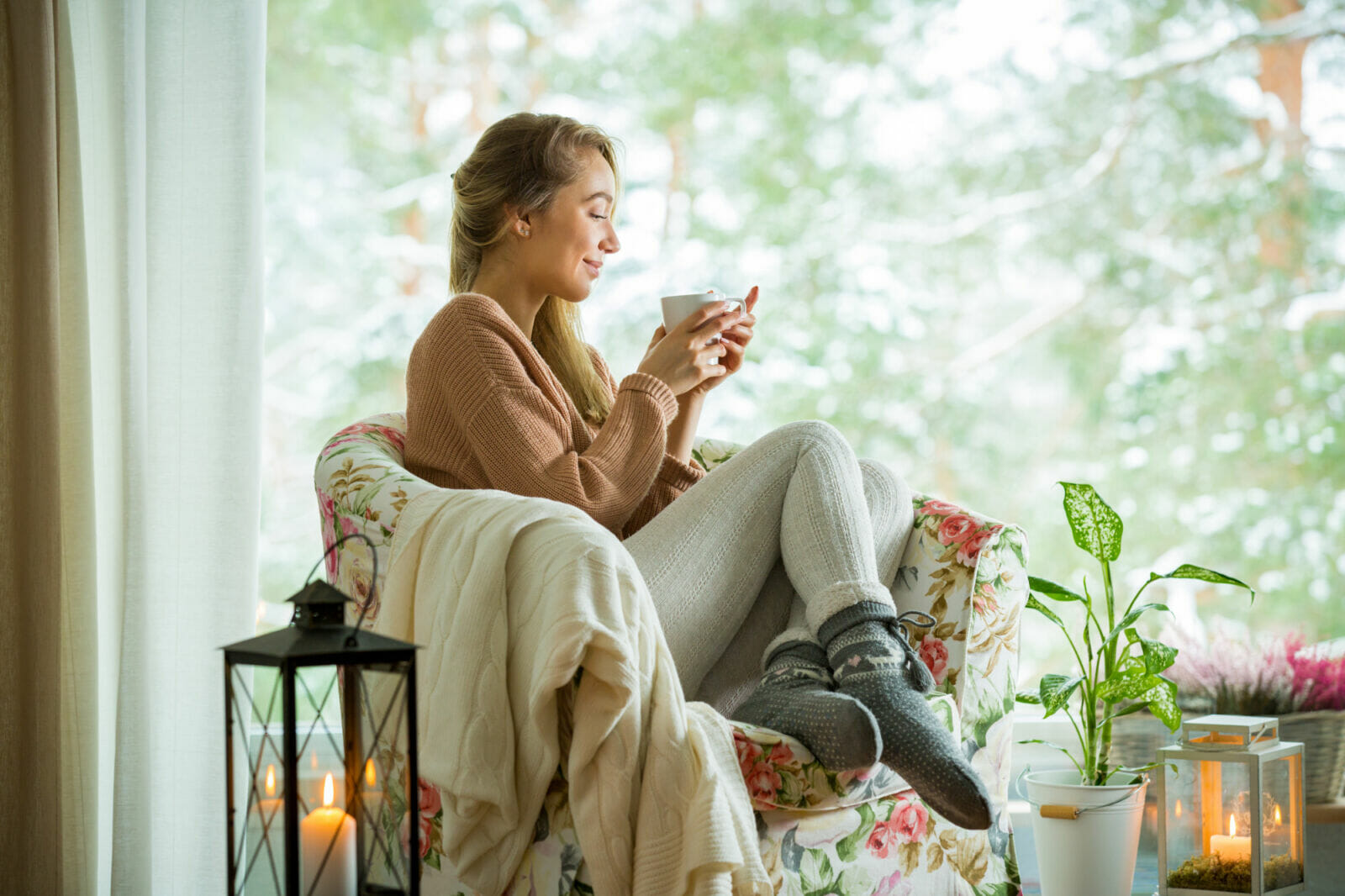
Natural materials are easy to love in theory.
Wood, rattan, linen, jute, stone, cane, and woven fibers can make a room feel warmer almost instantly. The problem comes when you start adding all of them at once and suddenly your clean, modern home looks like it took a very enthusiastic detour through a beach cottage.
If you like natural texture but still want your space to feel edited, the trick is not to use more of it. It is to use it more selectively. A woven pendant, a cane chair, a linen shade, or even a carefully placed pendant light for bathroom spaces can add warmth where the room might otherwise feel cold, flat, or overly functional.
Think of texture as contrast. Smooth cabinets need something a little irregular nearby. A polished stone table can handle a woven chair. A very simple bedroom can take one linen headboard or a textured ceiling light without needing baskets, macramé, raw wood, and pampas grass everywhere else.
Here are 13 practical ways to bring natural texture into a modern home without losing the clean look you already like.
1. Start With One Woven Piece, Not a Whole Woven Theme
If a room currently has almost no natural texture, resist the urge to solve that in one shopping trip.
One woven piece is often enough to change the mood. It could be a rattan chair in a bedroom corner, a cane-front console, a woven pendant over the table, or even a large basket beside the sofa.
The reason this works is simple: texture stands out more when it has something smooth to contrast with.
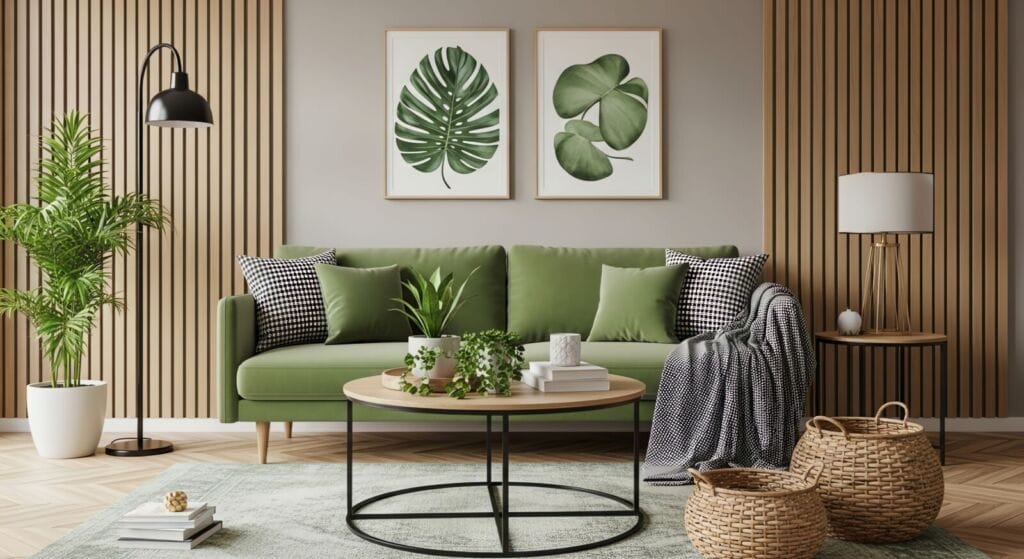
A single rattan chair against a clean painted wall feels intentional. Five rattan pieces in the same room can start to feel like a theme.
Try this: choose the one area in the room that currently feels the flattest and add texture there first.
2. Use Wood Where You Currently Have Too Much Metal or Gloss
Modern kitchens and living rooms often collect hard finishes without anyone really planning it: stainless steel, glass, polished stone, chrome, black metal, lacquered cabinets.
A little wood can break that up.
You do not need to replace cabinetry or install wood paneling. A solid-wood stool, side table, picture frame, tray, or lamp base can be enough.
And the wood does not need to match perfectly. In fact, an exact match can sometimes make a room look more staged. Similar undertones matter more than identical color.
Try this: if your room has three or more shiny or metallic surfaces in the same sightline, swap one small piece for wood.
3. Let Linen Do the Softening
Linen is one of the easiest natural textures to add because it does not announce itself very loudly.
That makes it ideal for people who like minimalist rooms but feel that their space is starting to look a little too perfect.
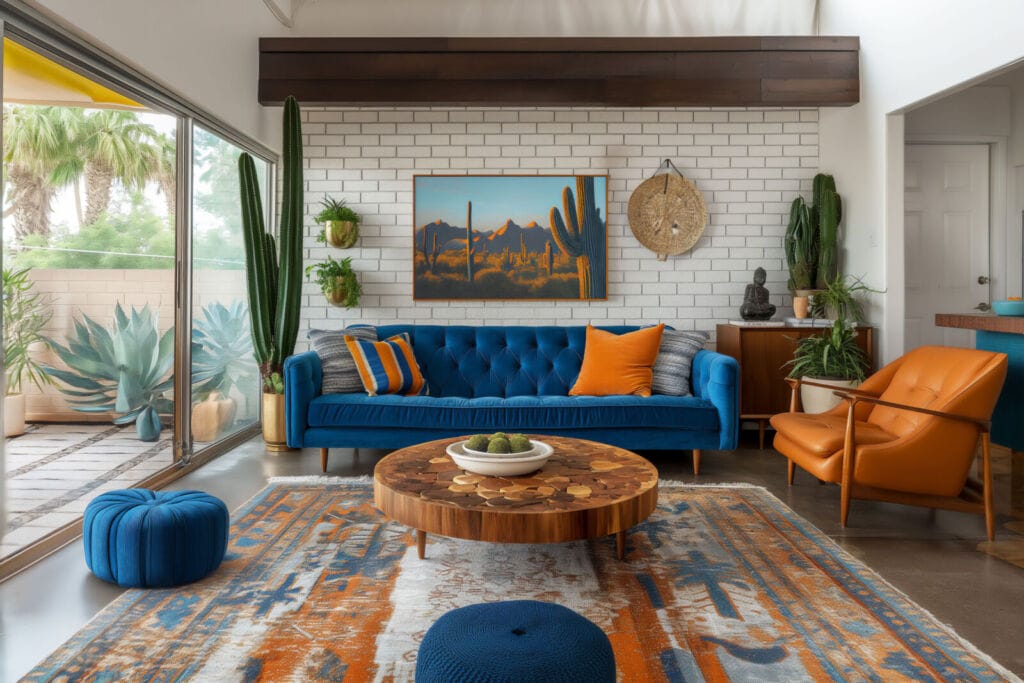
Linen curtains, pillow covers, bedding, or a table runner introduce a soft, slightly irregular surface without pushing the room toward farmhouse territory.
Look for washed or lightly textured linen rather than anything heavily ruffled or overly decorative.
Try this: if you already have neutral fabrics, replace one very smooth textile with linen rather than adding another color.
4. Bring Texture Up to the Ceiling
Most people think about texture at eye level: rugs, chairs, pillows, baskets. The ceiling is usually forgotten.
That is exactly why lighting can have such an impact.
A woven pendant or textured ceiling fixture introduces natural material without taking up floor or furniture space. It is especially useful in kitchens and dining rooms where most of the surfaces below are already hard.
Natural-material lighting can still feel contemporary when the silhouette is simple. A clean dome, drum, or sculptural woven shape tends to work better in modern interiors than a fixture with lots of extra decorative detail.
Brands exploring this mix include sustainable lighting by Rowabi, where rattan, bamboo, and woven materials are used in decorative residential lighting rather than treated as purely rustic accents.
Try this: look at the room from the doorway. If everything from eye level down already has enough texture, put your next material change overhead instead.
5. Pair Rattan With Something Very Clean
Rattan looks most modern when it has a clean surface beside it.
Think rattan next to white oak cabinetry, a smooth plaster wall, a stone countertop, or a simple black metal frame.
The contrast is what keeps it from drifting into full boho mode.
If you put rattan next to distressed wood, tasseled textiles, vintage baskets, and patterned rugs all at once, the room starts telling a very different story.
Try this: every time you add a woven piece, place it near at least one simple, solid surface.
6. Use Natural Texture on the Wall Instead of Adding More Furniture
If the room already has enough furniture, do not add another chair or cabinet just because you want more texture.
The wall can do the job.
A woven wall piece, grasscloth, wood-framed artwork, or a textured light fixture can create dimension without making the floor plan busier.
This is especially helpful in narrow halls, bedrooms, and dining spaces where extra furniture would only get in the way.

A rattan wall sconce, for example, can introduce both woven texture and light on a relatively small footprint. Used beside a bed, along a hallway, or near a reading chair, it can function as a practical fixture rather than just another decorative object.
Wall lighting is especially useful when a room needs warmth but not more bulk. A woven sconce can soften a plain wall, frame a mirror or artwork, and make a dining space feel more layered without adding another piece of furniture. That is why guides like Dining Room Sconces Ideas are helpful when you want natural texture, soft light, and a cleaner modern layout to work together.
Try this: if you are considering another floor-standing piece, ask whether the wall could solve the same visual problem instead.
7. Mix Smooth Stone With Something Imperfect
Stone is technically a natural material, but polished stone can still feel very sleek.
That is why marble, quartzite, travertine, and similar surfaces look especially good next to something with a visible weave or grain.
A travertine table with woven dining chairs feels balanced. A marble vanity with a small wood stool feels warmer. A stone kitchen island with a natural-fiber pendant above it gets the same benefit.
The smooth surface makes the rougher texture noticeable without letting it dominate.
Try this: instead of adding texture everywhere, place it directly beside the smoothest material in the room.
8. Choose Baskets That Actually Have a Job
Baskets are an easy shortcut to natural texture, but they are also one of the fastest ways to make a room feel overly styled.
The solution is simple: make them useful.
Use one for throws, one for kids’ toys, one for laundry, or one for things you genuinely need to grab often. Avoid lining up multiple empty baskets simply because the shelf looked bare.
Functional texture tends to feel more natural than decorative texture added for its own sake.
Try this: if a basket does not solve a storage problem, you probably do not need it.
9. Keep the Color Palette Quiet When the Texture Gets Stronger
Texture already gives the eye something to process.
If you are adding a chunky jute rug, woven lighting, cane furniture, and visible wood grain, you may not also need five strong colors in the same room.
Natural materials often look most modern in a tighter palette: warm white, sand, soft gray, muted green, black, brown, or a small amount of brass.
This does not mean the room has to be beige. It just means texture and color should not compete for attention everywhere at once.
Try this: if you introduce a strongly textured piece, keep at least one neighboring surface visually quiet.
10. Use a Jute or Wool Rug as the Background, Not the Star
A natural-fiber rug can warm up a room without changing its style, especially if you choose one with a simple weave and minimal pattern.
Jute gives more visible texture. Wool tends to feel softer and a little more refined. Flat-woven styles can work well when you want texture without a lot of visual bulk.
The rug should make everything else feel more grounded rather than becoming the loudest thing in the room.
Try this: if your furniture already has strong shapes or colors, choose a rug based on texture rather than pattern.
11. Repeat a Material Once, Then Stop
One of the easiest ways to make a room feel intentional is to repeat a material in a small way.
If you have a woven pendant, you might repeat a similar tone in a tray across the room. If you use walnut stools, a walnut frame on the opposite wall can quietly tie things together.
You do not need a third, fourth, and fifth repetition.
Two related moments are usually enough for the eye to register a connection.
Try this: find the natural material you already like most in the room and repeat it once somewhere else, preferably at a different scale.
12. Leave Some Surfaces Completely Smooth
This might be the most important rule on the list.
Natural texture only feels special if there are calmer surfaces around it.
So if you add a woven fixture, you do not also need a textured ceiling treatment. If the dining chairs are cane, the table can stay simple. If your bedding is linen, the wall behind it does not necessarily need wood slats too.
A room can absolutely have too much texture, even when every individual material is beautiful.
Try this: identify one wall, one major furniture piece, and one large surface that you are deliberately going to leave simple.
13. Add Texture Slowly Enough That You Can Notice the Difference
The easiest way to overdo natural materials is to buy several pieces before seeing what the first one changed.
Add one element, then live with it for a few days.
Maybe the woven pendant already solved the problem. Maybe the linen curtains were enough. Maybe the room does not need a jute rug after all.
This is less exciting than ordering everything at once, but it usually leads to a room that feels more personal and less designed-by-checklist.
Try this: after every major texture change, stop. Look at the room in daylight and at night before adding the next thing.
The Best Natural Texture Usually Looks a Little Unplanned
The goal is not to make your home look more “natural.” It is to give all those smooth walls, clean cabinets, straight edges, and polished surfaces something softer to play against.
You do not need rattan in every room. You do not need three kinds of wood. And you definitely do not need to turn every empty corner into an arrangement of baskets and dried grass.
Start with one material in one place.