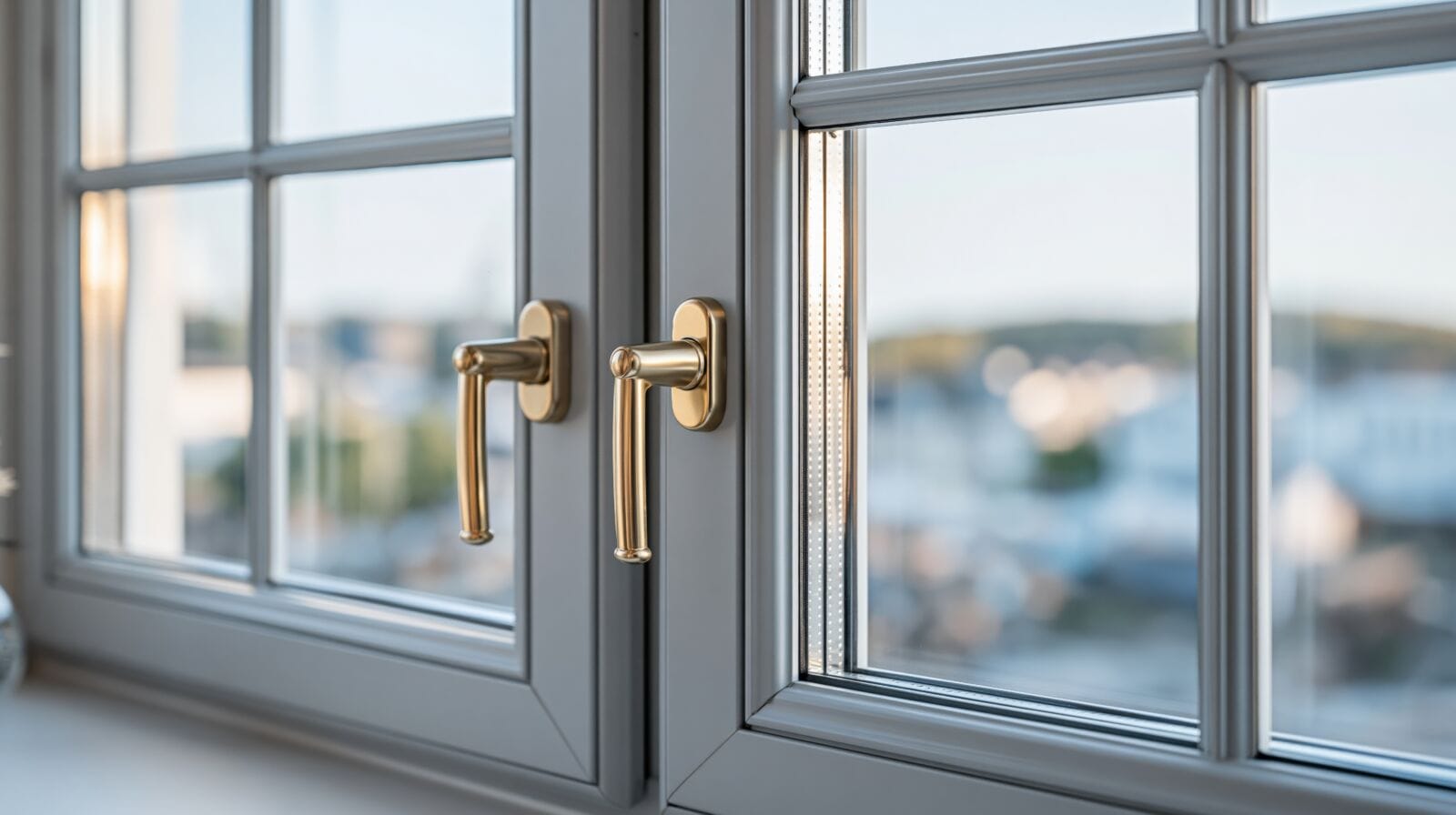
Kitchens tend to get the design attention, while laundry rooms, pantries, and mudrooms are treated as afterthoughts. But a home reads as one continuous space, not a series of disconnected rooms, and the hardware finish is one of the fastest ways either to reinforce that continuity or quietly break it. Brass, in particular, has a way of tying utility spaces back to the kitchen without making either room feel like an imitation of the other.
Why Utility Spaces Get Left Out of the Finish Plan
Most renovation budgets and design hours go toward the kitchen. Cabinet pulls get chosen with care, faucet finishes get matched to lighting, and every detail is weighed against a mood board. Then the laundry room, pantry, or mechanical closet gets whatever hardware was left over, usually a builder-grade satin nickel or plain white plastic.
The result is a home that feels intentional in one room and forgotten in the next. Walking from a warm, brass-accented kitchen into a laundry room with cold chrome switch plates creates a small but noticeable disruption. It is not that the utility space needs to be as elaborate as the kitchen. It just needs to speak the same material language.
Brass as a Connective Thread
Brass works well as that connective thread because it reads as warm and neutral at the same time. It pairs with wood tones, painted cabinetry, stone counters, and matte black appliances without competing with any of them. That flexibility is exactly what makes it useful for linking rooms that otherwise serve very different functions.
Carrying the same brass finish from kitchen cabinet pulls into the utility room does not mean duplicating every fixture exactly. It means choosing hardware categories that exist in both spaces and finishing them consistently. Light switches, outlet covers, and cabinet or appliance pulls appear in nearly every room of a house, which makes them a practical starting point. Sourcing brass switches, outlets and appliance pulls in a matched finish gives a designer or homeowner a repeatable palette that can move from the kitchen island straight through to the laundry closet without needing custom work for each room.
This is also a low-cost way to unify a home compared to matching cabinetry or flooring across spaces. Hardware and electrical fittings are relatively inexpensive to swap, which makes them one of the few renovation choices that can be applied broadly without a major budget increase.
Where Continuity Matters Most
Not every utility space needs the same level of finish detail, but a few areas benefit the most from carrying brass through:
- Butler’s pantries and walk-in pantries directly off the kitchen
- Laundry rooms adjacent to or visible from the kitchen
- Mudrooms that share a sightline with the main living area
- Powder rooms near the kitchen that guests pass through
These are the spaces where the eye naturally travels from one room to the next. A switch plate or outlet cover in the wrong finish in one of these transitional rooms stands out far more than the same mismatch would in a bedroom two floors away.
Choosing the Right Type of Brass Fixture
Once the finish is decided, the next question is usually which style of fixture to buy, since not every brass switch or outlet on the market is built the same way. Some are labeled decorative, others standard, and the difference is often unclear to anyone outside the electrical trade.
In practice, the core differences between decorative outlets and standard outlets are visual and material, not electrical. Both function the same way once wired, but decorative versions typically use solid metal faceplates, more refined screw details, and finishes that are meant to be seen rather than painted over. Understanding these differences helps avoid a common mistake, which is assuming a plain plastic switch plate can simply be spray-painted to match brass hardware elsewhere in the home. Paint wears unevenly on high-touch surfaces like switches, while a genuine metal faceplate keeps its finish over years of daily use.
This distinction matters most in utility spaces, where switches and outlets get touched constantly with wet or soiled hands. A laundry room switch plate is handled far more often than a dining room one, so the durability gap between a painted plastic cover and a solid brass one shows up faster.
Practical Steps for Extending the Finish
Homeowners planning this kind of continuity across rooms tend to find it easier when they work through it in a set order:
- Confirm the exact brass tone used in the kitchen, since finishes range from bright and yellow to aged and antiqued
- List every switch, outlet, and pull location in the adjoining utility spaces
- Order hardware in a single batch to avoid finish variation between production runs
- Prioritize the transitional rooms first if budget requires phasing the project
Ordering in one batch is worth emphasizing. Brass hardware finishes can shift slightly between manufacturing runs, so hardware bought months apart from the same supplier is not always identical. A single order for the whole project, even if installation happens in stages, keeps the tone consistent room to room.
The Long-Term Payoff
A home where the kitchen and its neighboring utility spaces share the same hardware finish tends to feel larger and more considered, even if square footage has not changed. The brass detailing acts as a visual signal that the whole floor plan was designed together, rather than room by room in isolation. That kind of continuity is rarely the most expensive decision in a renovation, but it is often the one that makes the rest of the design choices feel deliberate.