
A portable power station can power an apartment for essential needs during an outage, but not usually the entire apartment the way grid power does. The real question is which devices you need to run, for how long, and whether the power station’s output and battery capacity match that load. In most apartments, a portable power station works best for practical backup: keeping the fridge cold, the router online, lights on, phones charged, and small electronics running. It is less suitable for high-draw appliances such as central air conditioning, electric ovens, or large space heaters. Matching your backup plan to your actual apartment usage is what matters most.
How Much Backup Power Does an Apartment Need?
Calculate Appliance Wattage and Daily Energy Use
Start by listing the devices you actually need during a blackout, not everything you normally use. Check each appliance label for running watts, then estimate how many hours per day it must operate. Multiply watts by hours to get watt-hours. For example, a 10W router running 24 hours uses 240Wh daily. Four 8W LED lights used for 5 hours consume 160Wh. A laptop at 60W for 4 hours uses 240Wh. A refrigerator may average a few hundred watt-hours to over 1kWh per day depending on size and cycling. Add these figures to create a realistic backup target. This gives you a clear energy budget and prevents choosing a unit that is too small.
Estimate Battery Capacity and Backup Runtime
Battery capacity is usually listed in watt-hours, such as 2,010Wh. To estimate runtime, divide usable battery energy by the total load in watts. If your essential devices draw 200W continuously, a 2,010Wh unit can theoretically run them for about 10 hours, though real runtime is lower after conversion losses and changing appliance cycles. For intermittent loads such as refrigerators, runtime can be much longer than a simple constant-load calculation suggests. A better method is to compare your daily energy total with the battery size. If your essentials need around 1,000Wh per day, a 2kWh-class power station can often cover roughly a day of backup with some reserve. Efficient devices stretch backup time significantly.
How to Choose a Power Station for Apartment Backup
Capacity, Output, UPS, Noise, and Battery Life
For apartment backup, choosing the right portable power station for apartment use starts with five basics: battery capacity, AC output, surge handling, UPS performance, and battery longevity. Capacity determines how long essentials can run, while rated AC output determines what you can power at the same time. Many apartments need enough output to support a fridge, router, lights, and chargers together. Surge capability also matters because some appliances draw extra power at startup. UPS support is useful if you want seamless switchover for networking gear or work equipment during a blackout. Noise is another key consideration in small indoor spaces, so a quiet, fan-efficient portable power station can be more comfortable to use. Finally, LFP batteries are a strong choice because they offer a long cycle life and good durability for frequent use and long-term emergency readiness.
Anker SOLIX S2000 for Apartment Essentials
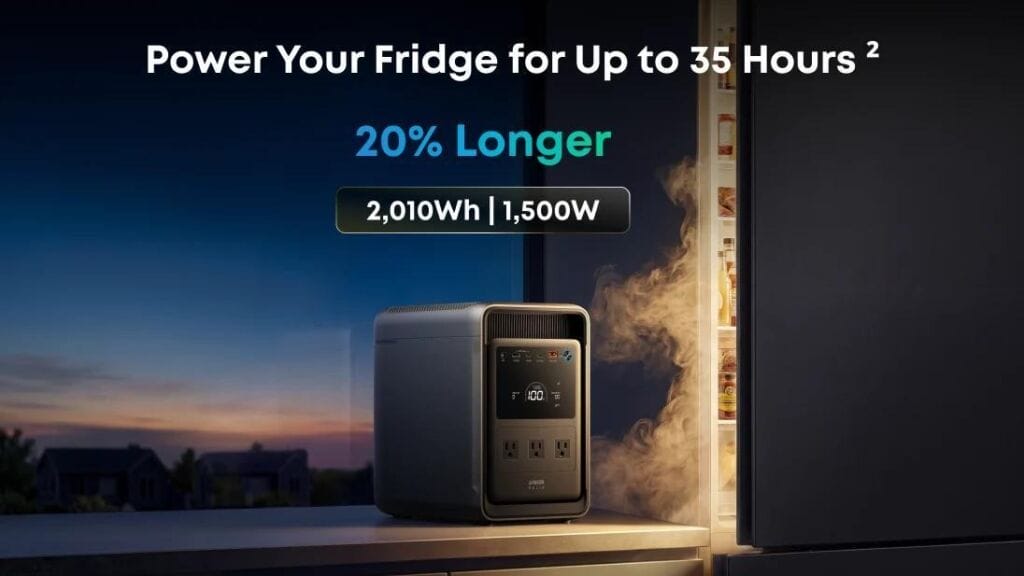
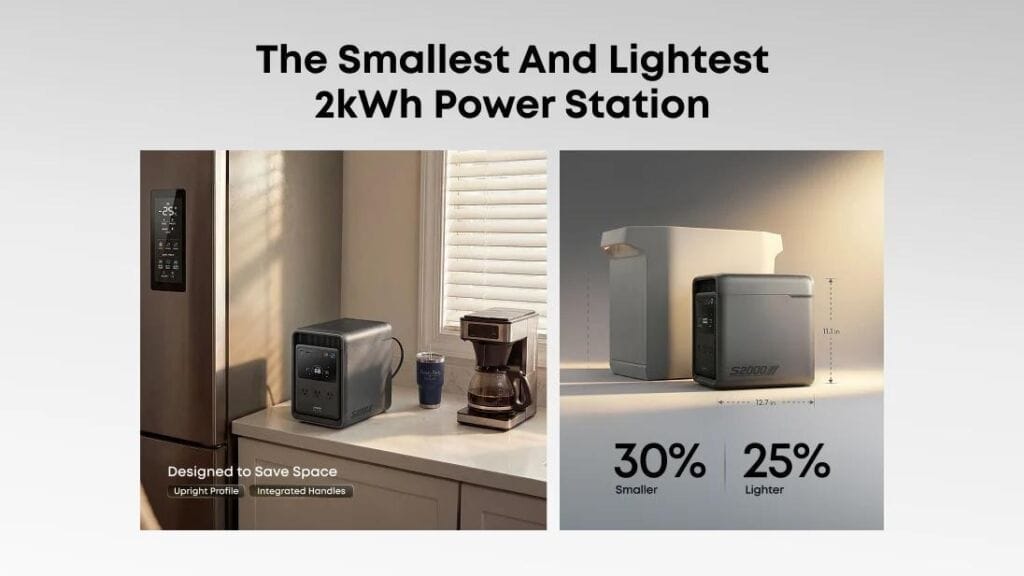
The Anker SOLIX S2000 fits apartment backup well because its specifications align with common essential loads. It offers 2,010Wh of battery capacity, 1,500W rated AC output, up to 2,600W SurgePad output, and 3,000W peak AC output for startup demands. Its 10ms UPS switchover helps keep critical devices running smoothly during outages. The LFP battery is designed for long service life, with 6,000 cycles to 80% capacity, and the unit stays compact at 16.2 kg. It also includes five 15A AC outlets and supports up to 400W solar input. For apartment use, that means one portable unit can cover practical essentials such as a fridge, router, lights, fans, and personal electronics without rewiring the space.
How to Use Portable Power Safely in an Apartment
Prioritize Essential Devices During an Outage
Use your battery where it delivers the most value. In most apartments, that means powering refrigeration, internet equipment, phone charging, a few lights, fans, and laptops before anything else. Avoid plugging in heavy resistive loads such as electric heaters, hair dryers, kettles, or countertop cooking devices unless your power station clearly supports them and you accept very short runtime. Keep the total running load below the unit’s rated AC output, and leave some headroom for startup surges from appliances like refrigerators. Rotate charging tasks when possible instead of running everything at once. This approach extends backup time, reduces overload risk, and keeps the apartment functional for communication, food safety, comfort, and basic work during a utility outage.
Charging, Placement, and Indoor Safety Tips
Charge the power station before storms or planned maintenance when possible, and top it up after each outage so it is ready for the next one. Place it on a flat, dry, well-ventilated surface with space around the vents to manage heat properly. Keep it away from bathtubs, sinks, blocked closets, and direct heat sources. Use only the recommended charging methods and cables, and do not overload power strips connected to the unit. Portable power stations are suitable for indoor use, but fuel-burning generators are not and should never be used inside an apartment or on enclosed balconies. Also avoid daisy-chaining multiple high-load devices. Good placement, airflow, and sensible load management improve both safety and battery performance indoors.
Conclusion
A portable power station can power an apartment’s essentials effectively, and for most outage situations that is the goal that matters. It can keep food safer, communication online, lights available, and personal devices charged without the noise, fumes, or complexity of a fuel generator. The key is to size the unit around your real emergency load, not your full everyday electricity use. Calculate wattage, estimate daily energy needs, and choose a model with enough capacity and output for your priority devices. A well-matched unit such as a 2kWh-class power station can cover many common apartment backup needs with simple plug-and-play use. For apartment living, practical backup power is absolutely possible when you plan around essentials first.