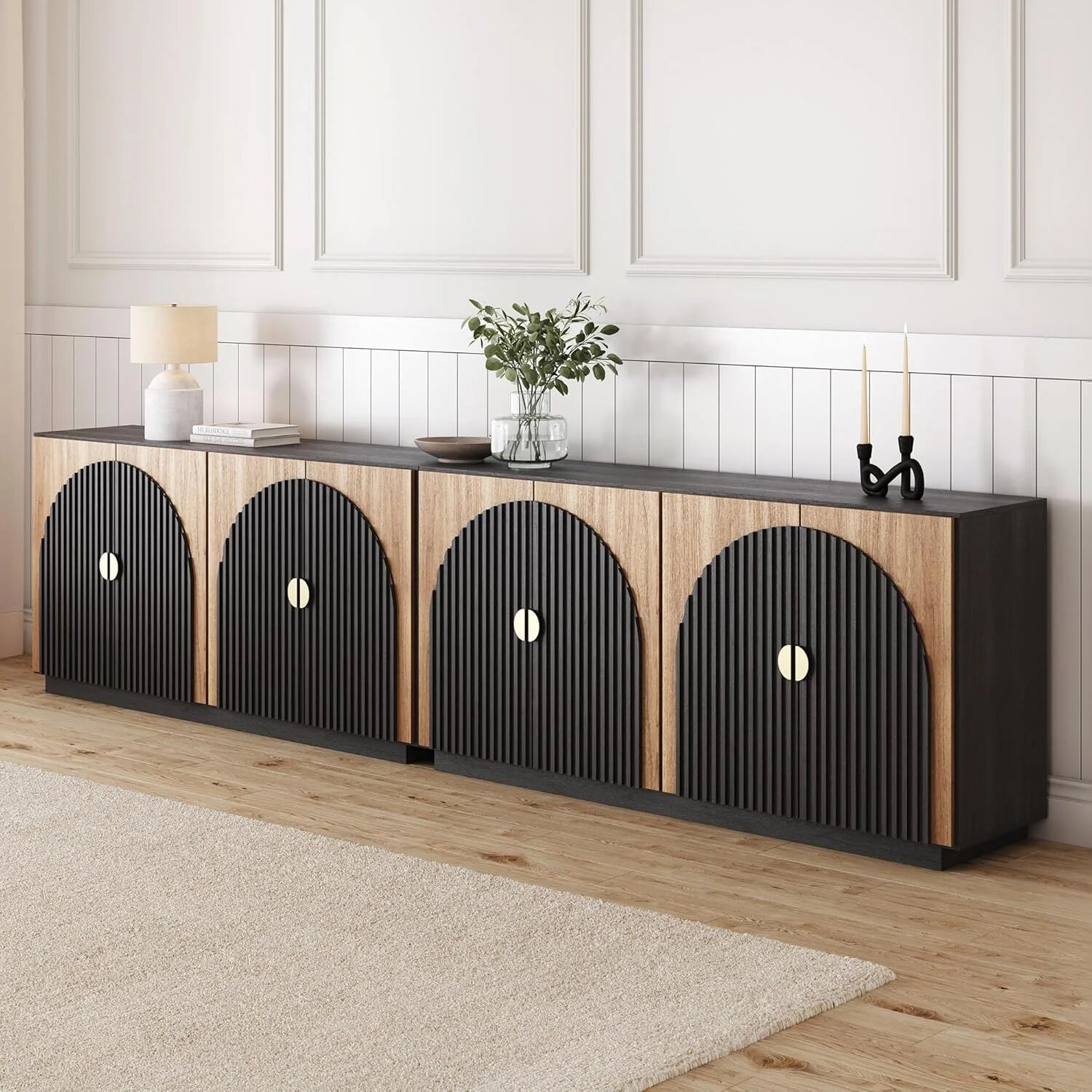
Open-concept floor plans have reshaped the way we live. Walls come down, and suddenly your dining area flows into your living room. The result feels spacious and connected. But it also raises a practical question: where do you put all your stuff?
Clutter tends to accumulate on counters and coffee tables. Remote controls, chargers, mail, and random items pile up fast. You need storage, but tall cabinets can make an open room feel boxed in.
A sideboard offers a middle ground. It sits low against the wall, holds what you need, and keeps the room feeling light. The horizontal shape doesn’t block sight lines or crowd the space. You get a function without visual weight. For homes built around openness, that balance is everything.
What Is a Sideboard Cabinet and Why It Works
A sideboard cabinet is a long, low piece of furniture designed for storage and display. Most stand somewhere between waist and hip height. Inside, you’ll find a mix of drawers, shelves, and closed compartments.
The shape is what sets it apart. A sideboard stretches across the wall rather than climbing up it. Your eye travels horizontally, which keeps the room feeling calm and grounded.
In many modern homes, a sideboard cabinet provides practical storage while keeping the room visually open and balanced.
This design works in several spots around the house:
- Dining rooms, holding dishes, linens, or serving pieces
- Living areas, storing media equipment or board games
- Entryways, keeping daily essentials organized
- Open-plan layouts act as a soft divider between zones
The sideboard doesn’t compete for attention. It supports how you actually use your space, quietly holding everything together.
Key Factors to Consider When Choosing a Sideboard
Selecting the right sideboard starts with the wall, not the furniture. Measure your available space first. A piece that’s too small looks lost. One that’s too large overwhelms the room. A helpful guideline: aim for a sideboard that fills roughly two-thirds of the wall length. This leaves breathing room on each side and creates visual balance.
Height matters too. Think about what hangs above the sideboard. Art, mirrors, and windows all factor in. Most sideboards range from 28 to 36 inches tall. Lower profiles work well under windows. Taller options suit blank walls with room for artwork above.
Storage style is another consideration. Ask yourself a few questions before you shop:
- Do you prefer everything hidden behind solid doors?
- Would glass panels work for displaying favorite items?
- Do you need drawers for smaller objects or open shelves for baskets?
There’s no single right answer here. The best choice depends on what you’re storing and how tidy you want things to look.
Finally, think of the sideboard as part of your overall floor plan. It anchors one side of the room and creates a visual stopping point. The piece should support the layout, not just fill an empty wall.
When a Standard Sideboard Isn’t Enough
A single sideboard solves most storage problems. But sometimes the situation calls for more. Maybe your wall runs longer than average. Maybe your household has grown, and so have your belongings. Or maybe your living situation shifts more often than you expected.
These changes happen over time. The furniture that worked three years ago might feel cramped today. Replacing it with something bigger is one option. But there’s another approach worth considering. For larger walls or changing layouts, some homeowners prefer modular sideboards that can be expanded or rearranged over time.
A modular system consists of separate units that connect together. You might start with two pieces and add a third when you need it. Or you might rearrange the configuration after moving to a new home. This isn’t a completely different category of furniture. Think of it as a sideboard that adapts. The storage function stays the same. The flexibility increases.
Comparing Fixed vs. Modular Sideboards
Both styles have merit. The right choice depends on your circumstances.
A fixed sideboard works well when:
- Your space is stable and unlikely to change
- You know exactly what you need to store
- You prefer a seamless, unified look
- You want the simplest setup with no assembly decisions
A modular sideboard makes sense when:
- Your wall runs extra long and needs more coverage
- Your storage needs may grow over time
- You value flexibility over a single-piece design
- You might move and want furniture that adapts to different rooms
Here’s a practical way to decide. Picture your space five years from now. If you expect things to stay roughly the same, a fixed piece will likely serve you well. If you anticipate shifts—kids growing up, new hobbies, a possible move—modular offers the flexibility to keep pace. Neither option is better in absolute terms. The question is which one fits how you live.
Design Tips for Styling Sideboards in Modern Interiors
Once your sideboard is in place, styling brings it to life. The goal is enhancement, not clutter.
Start with the wall above. Many people hang art or a mirror directly over the sideboard, creating a natural focal point. Leave about six to eight inches of space between the top of the furniture and the bottom of the frame. This gap gives the arrangement room to breathe.
Keep the surface simple. A few intentional items create more impact than a crowded display:
- A lamp for soft lighting
- A small plant or vase
- One or two objects with personal meaning
Resist the urge to fill every inch. White space lets the eye rest. It keeps the sideboard looking calm and intentional rather than busy.
Remember that a sideboard plays a supporting role in the room. It’s not the star—it’s the piece that holds everything together in the background. Styled well, it feels like it belongs without demanding attention.
Choosing a Sideboard That Grows With Your Space
Picking a sideboard isn’t about finding the biggest or most impressive option. It’s about finding one that fits your life now and later. Consider your wall. Consider what you need to store. Consider how those needs might shift over time.
The best sideboard balances function with flexibility. It provides storage without bulk. It supports your space without dominating it. Whether you choose a single fixed piece or a modular system you can expand, the core value remains the same. A good sideboard keeps your home organized, open, and ready for whatever comes next.