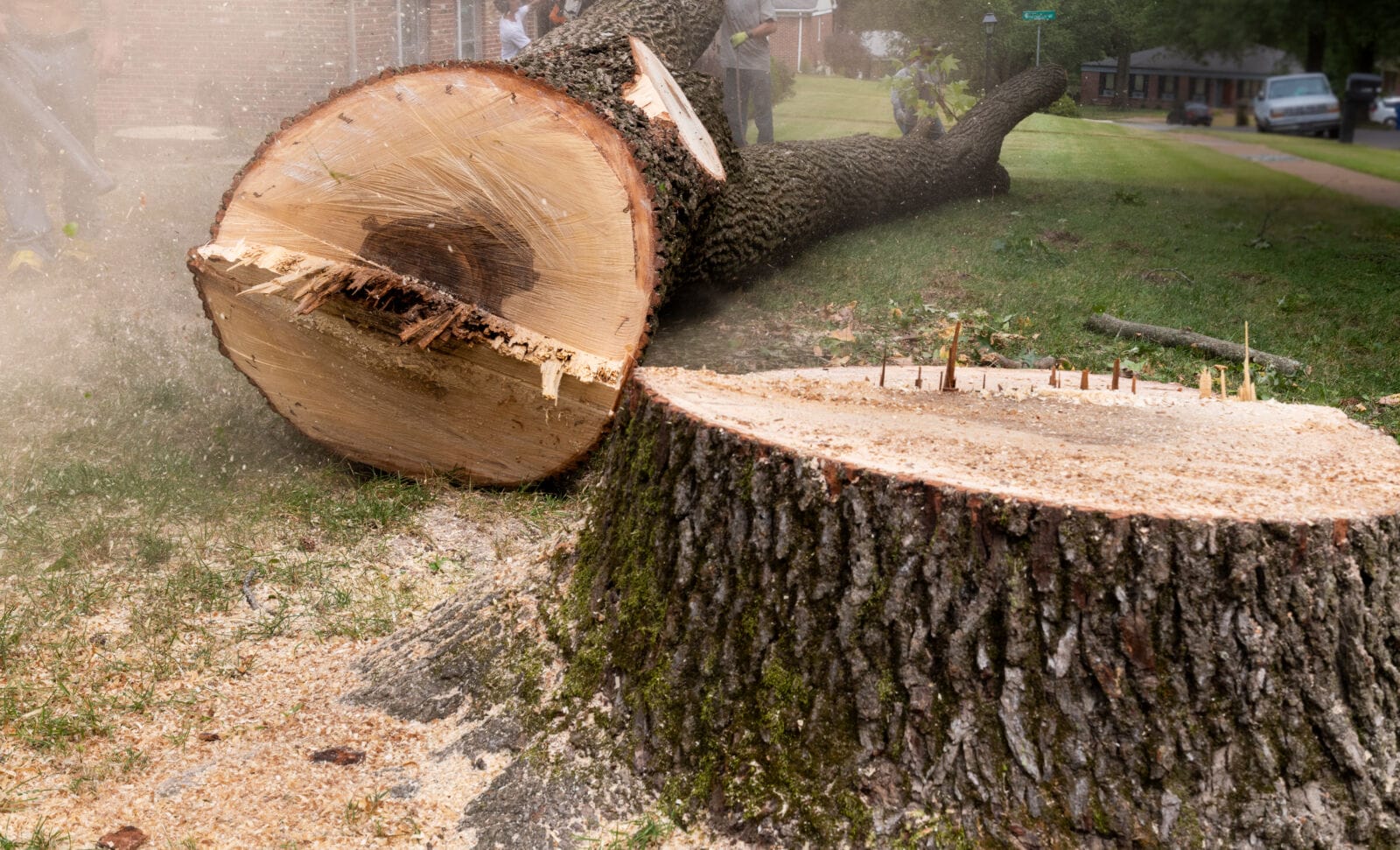
Removing a tree doesn’t always finish the job. The stump that’s left behind can quickly become an eyesore, create maintenance headaches, and reduce the overall appeal of your outdoor space. It can also make mowing more difficult and become a tripping hazard for children and visitors.
The good news is that removing a tree stump doesn’t have to damage your garden. With the right approach, you can eliminate the stump while keeping your lawn, garden beds, and surrounding landscape in excellent condition.
Understanding the Problem: Why Remove Tree Stumps?
Safety Hazards
Tree stumps can create unexpected obstacles around your property. They’re easy to trip over, especially when hidden by grass or fallen leaves.
They also make routine lawn care more difficult, forcing you to mow around them and leaving awkward patches in your yard.
Pest and Disease Risks
Old stumps often attract termites, ants, beetles, and fungi. As the wood decays, it creates an ideal environment for pests that may eventually spread to nearby healthy trees or even your home.
Removing the stump helps reduce these risks and keeps your landscape healthier.
Methods for Tree Stump Removal
Mechanical Removal
Mechanical methods are the quickest solution. Excavation removes both the stump and its root system, while stump grinding sydney services grind the stump below ground level without disturbing large sections of the surrounding landscape.
This method is popular because it’s efficient and leaves the area ready for restoration.
Natural Decomposition
Some homeowners choose to let the stump break down naturally. This process can be encouraged by drilling holes into the stump and applying compost or natural decomposition products.
Although environmentally friendly, this method requires patience and can take months or even years.
Pros and Cons of Each Removal Method
Fast Removal Methods
Mechanical removal offers immediate results and allows you to reuse the space quickly.
However, specialised equipment and professional services generally make it the more expensive option.
Natural Removal Methods
Natural methods are affordable and environmentally friendly.
The downside is the waiting time. If you want to landscape the area soon, natural decay may not be practical.
Preparing Your Landscape for Stump Removal
Protecting Nearby Plants
Before any work begins, protect nearby flowers, shrubs, and garden beds.
Temporary barriers or coverings can help prevent accidental damage from machinery or flying debris.
Checking Underground Services
Always identify underground irrigation systems, drainage pipes, electrical cables, or other utilities before removing a stump.
This simple step can prevent costly repairs later.
DIY Techniques for Stump Removal
Manual Digging
Small tree stumps can sometimes be removed using a shovel, mattock, and pruning saw.
Digging around the roots and cutting them individually allows the stump to be lifted out with enough effort.
Chemical Stump Removers
Chemical stump removers speed up decomposition by softening the wood over time.
If using these products, always follow the manufacturer’s instructions and keep children and pets away from treated areas.
When to Hire a Professional for Stump Removal
Large or Deep Root Systems
Large trees often have extensive root systems that are difficult to remove without specialised equipment.
Attempting to remove them yourself can be physically demanding and potentially dangerous.
Benefits of Professional Services
Professional contractors have the experience and machinery needed to complete the job safely and efficiently.
Many stump grinding Sydney specialists can remove stumps with minimal disruption to surrounding lawns, gardens, and hardscaping, helping preserve the overall appearance of your landscape.
Eco-Friendly Stump Removal Options
Composting and Natural Decay
If immediate removal isn’t necessary, allowing a stump to decompose naturally is one of the most sustainable options.
As the wood breaks down, it returns nutrients to the soil and supports healthy microbial activity.
You can also repurpose parts of the stump as mulch or compost to benefit other areas of the garden.
How to Fill the Void Left by a Removed Stump
Restoring the Area
Once the stump has been removed, fill the hole with quality topsoil and compact it gently.
You can then lay fresh turf or plant ground covers to blend the area seamlessly into the rest of your landscape.
Creating New Landscape Features
The cleared space also presents new design opportunities.
Consider planting a small ornamental tree, creating a flower bed, or adding decorative rocks or seating to enhance the garden’s appearance.
Preventing Future Stump Issues in Your Landscape
Proper Tree Planning
Choosing the right tree for the right location can help prevent future problems.
Consider the mature size of the tree, root growth, and its proximity to buildings, pathways, and underground services before planting.
Early Tree Care
Regular pruning, inspections, and ongoing maintenance help trees remain healthy throughout their lifespan.
Addressing disease or structural issues early may reduce the likelihood of emergency tree removal and future stump problems.
Conclusion
Tree stumps may seem harmless at first, but they can create safety hazards, attract pests, and reduce the visual appeal of your outdoor space. Fortunately, there are several effective ways to remove them while protecting your landscape.
Whether you choose natural decomposition, manual removal, or professional stump grinding, careful planning will help minimise disruption to your garden. By restoring the area properly and maintaining healthy trees in the future, you can enjoy a cleaner, safer, and more attractive landscape for years to come.