When an older air conditioning unit starts making strange sounds, delivering lukewarm air, or causing your energy bills to rise, owners often find themselves faced with an unpleasant dilemma – should you pay for the latest repair or consider replacing the unit?
The good news is that whether or not you should repair your air conditioning system depends on something other than its age, namely its value. This means that repairing air conditioners makes sense when there is a localized fault, and the unit itself is still reliable. Meanwhile, the best course of action will be to get a replacement when expensive repairs come along with frequent breakdowns, decreasing efficiency, or ineffective cooling.
Whole-home air conditioning system evaluation requires taking a holistic approach. This is when professional ducted air conditioning services are needed to find out whether performance issues of your air conditioner are caused by a small localized problem or by wear and tear of the entire system.
- Look At the Fault, Not the Age of the System
System age is a useful benchmarking tool, but it can’t be the only criteria. The air conditioner could be quite young, but if it has a major fault, there could be no point in repairing it. Conversely, even an old AC system with a small issue might have many productive years ahead.
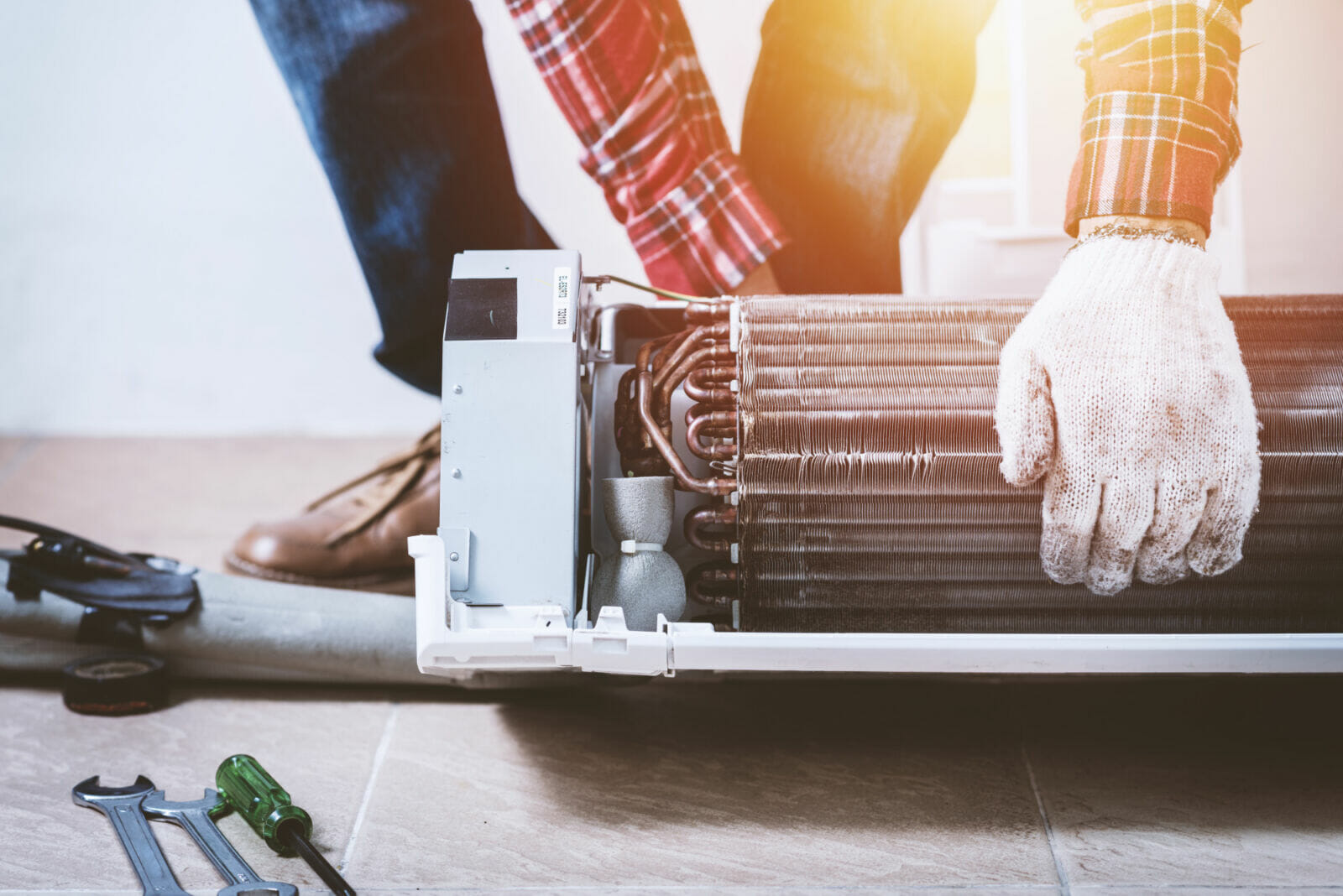
- Indicators for a repair: Minor electrical problems, blocked drainage pipes, clogged coils, worn out capacitors or filters are relatively easy and affordable faults to fix.
- Indicators for further inspection: Burnt out compressor motor, major refrigerant leaks, or recurring electrical problems would require some research before investing the money.
Symptoms like poor airflow or overheating can be caused by a minor maintenance issue or a critical system failure. The professional assessment will help you find the underlying problem and deal with it rather than just replace the parts.
- Apply the Repair-to-Replacement Cost Test
The way to analyze the quote for repairs is to compare it directly to the installed cost of an efficient replacement unit. The condition–cost–consumption test will help to estimate the health of the unit, the costs of immediate repairs, and the running expenses.
For example, spending $300 to repair the fan motor of a well-maintained unit that works for 10 years is a good solution. Spending $1,500 to replace a failed compressor in that unit – especially in case it has a leak history – is risky, because the other old components can fail at any moment.
Although the rule of thumb to replace a unit when a repair exceeds 50% of the cost of a new unit is good, it does not have to become the only criteria for making the final decision. One should take into consideration the life expectancy of the unit, parts availability, and warranties, along with the repair cost itself.
- Estimate the Hidden Cost of Maintaining the Old System
An old air conditioner may become costly not just through the cost of maintenance and repair. Low efficiency due to the decline makes the compressor work for extended periods of time, which makes you pay more electricity each season.
According to Energy efficiency guidelines by Energy.gov.au, regular maintenance that includes filter cleaning and servicing of the coils is necessary to ensure the efficient performance of the air conditioner. However, the sudden increase in the amount of the energy bill even after maintenance can be explained either by internal wear or by the obsolescence of the technology.
Before deciding that it is necessary to replace the system, make sure that there are no other reasons for the rise in the energy bill and poor efficiency:
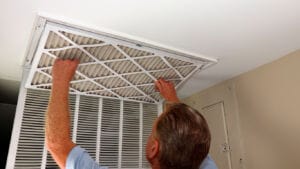
- Dirty or clogged filters, preventing airflow.
- Inadequate ceiling or wall insulation.
- Incorrect settings of the thermostat and the position of its sensors.
If those reasons are excluded, the replacement of an inefficient old unit will decrease operating expenses throughout its life.
- Knowing When a Ducted System Needs a Larger Solution
The process of evaluating a whole-home cooling system goes beyond examining the outdoor compressor. Home air conditioning requires an interrelated set of components, where any problem in the network leads to overall discomfort and inefficiency in all rooms.
A failure in cooling in certain rooms or weak airflow throughout the home can be due to leaks in the ductwork, problems with zone dampers, or a malfunctioning master control panel, and not a broken cooling system itself.
Hiring specialized ducted air conditioning services will allow a certified technician to examine the ductwork integrity, airflow balance, and the outdoor condenser simultaneously. If the ductwork and zoning controls are in excellent condition, the replacement of the central cooling system can be sufficient to restore the full comfort in the house.
- Comparing Repair and Replacement of the Air Conditioning Unit
To decide what solution is better in your case, use the following operational indicators:
| Decision Factor | Repair May Suit | Replacement May Suit |
| Fault Severity | Isolated, minor, or low-cost part replacement | Major component failure (e.g., compressor) |
| System Performance | Consistent cooling once repaired | Persistent hot spots or humidity issues |
| Running Costs | Reasonable energy bills for your usage | High electricity bills despite proper maintenance |
| Overall Condition | Well-maintained with sound secondary parts | Widespread wear across multiple components |
| Parts Availability | Standard replacement parts readily available | Obsolete components or long manufacturer delays |
They are not absolute guidelines; however, one single factor may not warrant a replacement while the combination of a number of smaller issues does.
- Gather All Information Required for Making a Decision
In order to make the right decision on a repair or replacement of your system, collect all necessary information from your HVAC contractor:
- Diagnosis: Ask your expert for a written itemization of the diagnostic procedure, in which you would see the breakdown between the labor and replacement part prices.
- Parts Availability and Lifespan Analysis: Inquire if replacement parts can be easily found and how many years the remaining unit components will work.
- Options for Replacements: Collect quotes for installing a new system with regard to its efficiency, warranty period, and the proper sizing of the unit.
- Ductwork Inspection: Make sure that your existing ducts and airflow channels have been thoroughly inspected for the new/repair installation.
Conclusion: Opt for the Choice That Provides Higher Long-Term Value
When you have to choose between repairing and replacing an old air conditioning unit, you need to consider long-term value. You should consider repair when your functioning air conditioning unit encounters a small problem. If the system requires many repairs, costs you too much to run, and does not cool reliably anymore, replacement is your better option. Comparing the results of a professional assessment with the costs of a new system will help you to make the decision.