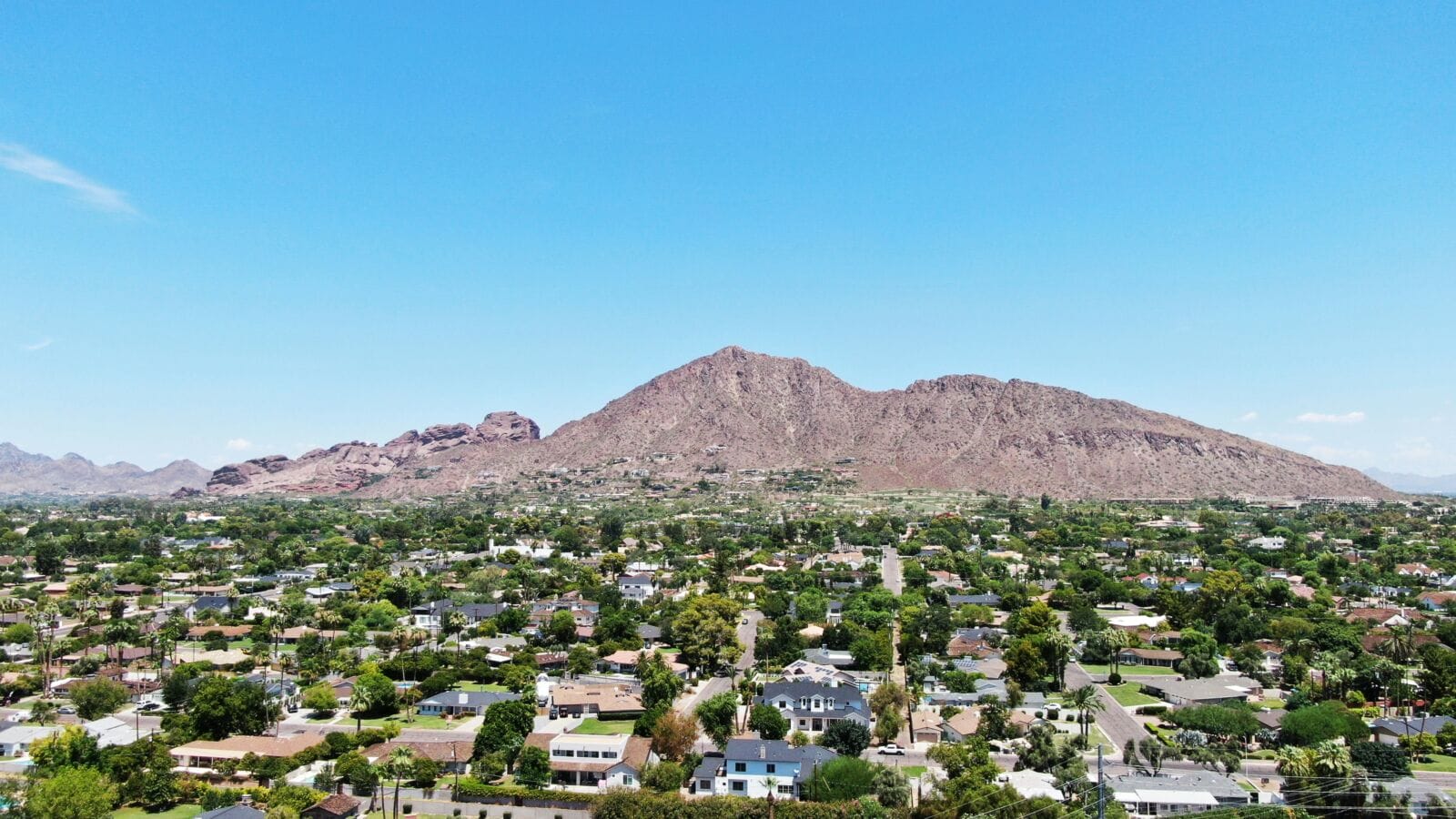
In the premier residential enclaves of North Scottsdale, Fountain Hills, and Sedona, the luxury real estate market is defined by elevation. While the flat basins of the Phoenix valley make construction easier, high-income buyers increasingly gravitate toward the “view tax” associated with hillside lots. But these come with an added bonus of dead square footage that can be a nightmare, aside from posing a significant risk. Therefore, vertical landscaping is now more of a financial strategy, rather than an aesthetic feature.
Engineering Against the Monsoon
Between July and September, Arizona experiences the effects of the North American Monsoon—intense thunderstorms can easily damage the hillside if not managed properly. This is a hurdle that hillside owners know very well. Monsoonal precipitation is the primary agent in stripping colluvium and lowering infiltration rates, according to research conducted at the University of Arizona.
Terracing functions as a series of water spreader berms, breaking the momentum of gravity-driven water and allowing it to penetrate the soil. This not only prevents catastrophic soil loss but can enhance vegetation greenness by up to 15% during the peak of the rainy season. From a logistics perspective, these projects require significant earthmoving. To estimate the volume of materials that can be used to fill the gaps, professionals often use tools, such as a cubic yard calculator, which allows them to calculate the exact quantity of dirt or concrete needed to support the structure. Precision here is essential—excavation and material delivery in areas like Sedona or North Scottsdale can vary significantly based on the presence of subsurface caliche or rock layers.
Reclaiming Usable Square Footage
The most immediate return on investment (ROI) for terracing is the expansion of the home’s livable footprint. In the luxury sector, buyers view the backyard as a seamless extension of the interior. A sloped lot is effectively a liability until it is transformed into functional outdoor rooms.
One notable example of the return on investment for terracing is found in the recent sale of a Fountain Hills estate in the exclusive Eagle Ridge neighborhood for a staggering $4.7 million. This is a new record for Fountain Hills real estate. The original owners went to great expense to engineer a solution to turn a precipitous hillside into a fully level lot. This allowed for a cohesive single-level luxury estate with a negative-edge pool and views of the surrounding mountains. Without this initial investment in terracing the land, this estate would never have been able to support the luxurious amenities current buyers expect.
Outdoor living upgrades remain one of the most proactive ways to boost a home’s marketability in the Phoenix metro area, consistently ranking among the best home remodel projects for a good return on investment.
Connectivity and Code Compliance
Vertical landscapes are not only about aesthetics—they need to be safe. Therefore, designers need to respect the International Residential Code (IRC) when calculating the riser height and tread depth of stairs, so that the transitions between tiers are as smooth as possible.
Careful planning is necessary for transitions between tiers in a landscape; using a stair calculator ensures that stone or concrete steps meet code requirements while avoiding tripping hazards that can result in failed home inspections. In Scottsdale and Sedona, where high-end buyers are increasingly risk-averse, ensuring that outdoor connectivity meets stringent safety standards—such as a maximum 7.75-inch riser height—is crucial for maintaining the home’s performance value during appraisals.
The 2026 Market Outlook
As we progress through the beginning of 2026, the Arizona real estate market is marked by a focus on experiential and sustainable luxury. Terracing is a perfect fit for this market trend. With the potential for rainwater harvesting and fuel breaks for firewise landscapes, deep-rooted plants such as sideoats grama can provide long-term slope stabilization with minimal irrigation.
For those homeowners who want to get the most out of their property’s ROI in the coming years, mastering the vertical landscape is no longer optional. Whether it is through the structural protection offered by natural stone retaining walls or the reclamation of dead space for an outdoor kitchen, terracing transforms a geological challenge into a market-defining asset.