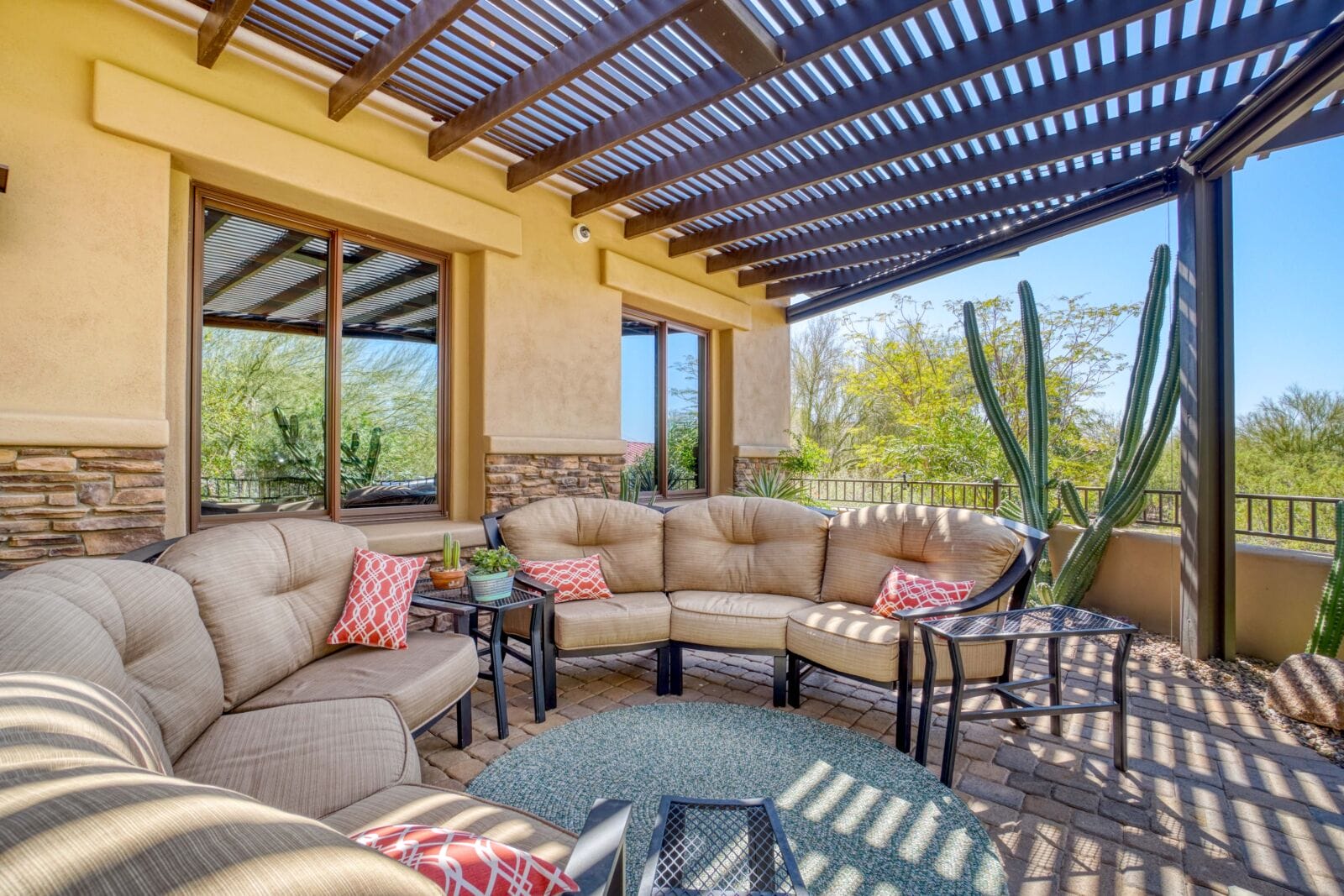
Advancements in new construction are revealing that porches are still part of the DNA of America’s houses in many parts of the country.
Based on regional analysis of home plans reviewed by the National Association of Home Builders, porches are included at different rates throughout the U.S., but are most prevalent in Sunbelt markets where outdoor living ranks high.
Creating a porch that offers on-demand shading is more complicated than it sounds in many parts of the U.S., and it’s not just about blocking out the sun. It’s about how a porch or patio is exposed to the sun, how the sun crosses over it as the day passes, prevailing winds, and shifts in season can rapidly turn outdoor living spaces sweltering, and sometimes unsuitable.
Why Common Shade Solutions Often Fall Short
Many people tend to start out their outdoor solution experience with what they are already familiar with: awnings or outdoor curtains. The problem is that there are two main downsides to these options: Wind is a bad actor where awnings are concerned. It will stretch the fabric, tear it or rip it off the building. And when a big storm is blowing in, those canvas sheets become dangerous weapons. And let’s face it, not many people enjoy the thought of climbing a ladder to recover those large pieces of material in windy conditions. Curtains definitely won’t keep out the afternoon sun in many places, and they won’t hold up to much rain or high humidity.
Finally, there are the intangibles of experience and convenience. The problem that’s shared by all traditional solutions is the lack of the ability to block sunlight on demand, and this quickly becomes a major drawback. Sun exposure changes fast, and if the morning sun problem has been resolved, chances are a thorough cooking by the late afternoon sun awaits.
A More Reliable Approach for Changing Conditions
This is where things get a lot more interesting. Modern outdoor roller shades have coverage levels that can be adjusted and moved up or down depending on the amount of sun and the presence of wind, and these features are a game-changer. Unlike rigid fabric or solid structures that block everything (including the breeze), adjustable panels preserve airflow while minimizing heat buildup and glare.
Real-World Conditions Make the Difference
In the Sunbelt states, where heat is a major issue for much of the year, variable, intense sunlight and thunderstorms make frequent, sudden appearances in summer. Homeowners there experience the harsh realities of sunny days. But a one-size-fits-all approach just won’t do when it comes to shading. Instead of a fixed option, a home with a shade installation provides a better solution: having the ability to adapt to whatever Mother Nature has up her sleeve.
The point is, porch shading is about more than just a comfy place to sit. It’s about creating a space that can be used on a hot, sunny day and a sweltering one, too; an outdoor room that’s comfortable for more than a few days each year.