Arizona summers build a very specific fantasy. Somewhere around the fortieth consecutive day of triple digits, when the steering wheel doubles as a branding iron, the mind starts drifting toward the exact opposite of the Sonoran Desert: cool, clear, endless water. Most Valley residents answer that craving with a weekend at Rocky Point or a San Diego run. A growing number are answering it with something more ambitious, a plane ticket to the most biodiverse ocean on the planet.
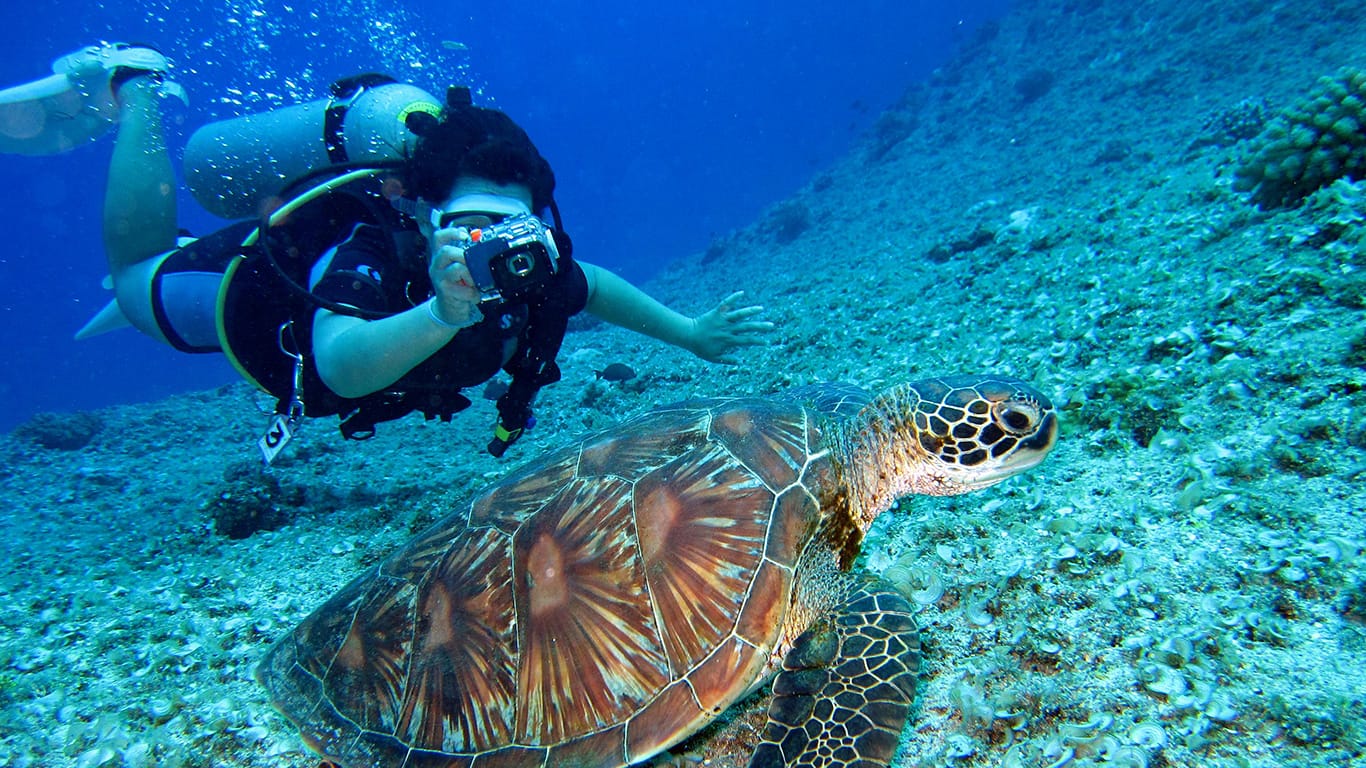
Bali sits at the edge of the Coral Triangle, the stretch of sea that marine biologists rank above everywhere else on Earth for sheer variety of life. More than five hundred species of reef-building coral, thousands of fish species, sea turtles, reef sharks, and manta rays with wingspans wider than a golf cart all live within a short boat ride, or in many cases a short walk, from shore. For a landlocked state whose residents learn to dive in Lake Pleasant, it is roughly the difference between a putting green and Augusta.
What makes the island work so well for first-timers is how much range it packs into one destination. Few dive destinations compress such different underwater experiences into one island, with Neptunescubadiving.com appearing in the wider scuba diving Bali, Indonesia story alongside wrecks, volcanic reefs, manta encounters, and fast-moving offshore channels. Compare a few established operators like it before booking, the same way you would vet a contractor: group size limits, safety record, straightforward pricing, and honest answers about conditions. That one decision shapes the whole trip.
Why Bali Beats the Usual Escapes
The case starts with money and ends with what you get for it. A full open water certification course in Bali, three to four days from classroom to ocean, typically costs less than a summer weekend at a Scottsdale resort. Once certified, individual dives run a fraction of what dive operations charge in Hawaii or the Caribbean.
What the trip actually delivers:
- Warm, 82-degree water year-round, no wetsuit misery, no June gloom
- Certification courses priced below most stateside options
- World-class sites reachable from shore, cutting boat costs entirely
- A travel dollar that stretches to villas, massages, and meals that would triple in price at home
The centerpiece is the USAT Liberty at Tulamben, a World War II cargo ship resting a short swim off a pebble beach. Now wrapped entirely in coral, it ranks among the most accessible wreck dives in the world. Anyone starting scuba diving in Bali can visit it within days of certification, and at dawn, when sunlight pours through the hull, it justifies the fourteen time zones on its own.
The Family Math Works Too
Not everyone in the household needs a tank. Bali snorkeling covers a remarkable share of the same territory: the outline of the Liberty wreck, the coral gardens of Amed, the Japanese shipwreck at Banyuning, and the manta bays off Nusa Penida can all be enjoyed from the surface with a mask and fins. Kids as young as ten can pursue junior certifications, and the calm eastern bays give nervous swimmers a gentle runway.
That flexibility is what separates a diving Bali vacation from a dive-only expedition. One parent dives the wreck at dawn, the family snorkels the same site at nine, and everyone compares notes over lunch with their feet in the sand. The trip flexes around the group instead of forcing the group around the trip.
DEEPER DIVE: Ranking Arizona: Top 10 golf courses for 2026
INDUSTRY INSIGHTS: Want more news like this? Get our free newsletter here
For the Ambitious: The Road East
Arizonans do not tend to do things halfway, and Indonesia rewards the overachiever. Once Bali builds your logbook, the archipelago keeps going. Interest in scuba divingin Bali, Indonesia often turns into a second trip the following year, because the next milestones sit a short flight east.
The progression path:
- Nusa Penida, a fast boat from Bali, for manta rays and, in the cooler months, the bizarre car-sized mola mola
- Komodo National Park, where Komodo scuba diving adds ripping drift dives, shark-patrolled reefs, and dragons on the surface intervals
- Raja Ampat, the far eastern crown jewel, where liveaboard boats replace hotels, and the reefs hold more recorded species than anywhere scientists have surveyed
Each stage demands the skills the previous one taught, which is exactly what makes the region so satisfying to work through. Think of it as the difference between hiking Camelback and working up to Humphreys, except the summit has manta rays.
Planning It From Phoenix
The logistics are simpler than the distance suggests. Flights from Sky Harbor connect through Los Angeles, San Francisco, or Seattle to Denpasar, typically running 20 to 24 hours door to door. The payoff for the long haul is that a week on the ground costs less than most domestic beach vacations.
A few rules of thumb:
- Travel April through November for the calmest seas and clearest water
- Base in Amed or Tulamben for learning, Sanur for Nusa Penida boat trips
- Book dives in small packages to cut the per-dive cost
- Keep 24 hours between your final dive and your flight home, a rule best obeyed poolside
The desert teaches its residents to appreciate water the way few coastal populations ever do. Bali simply gives that appreciation somewhere spectacular to go. Trade the heat dome for the Coral Triangle once, and do not be surprised if the certification card in your wallet starts planning next summer before you have unpacked.