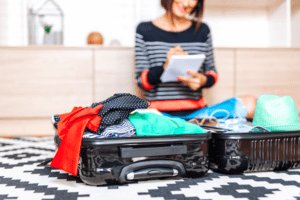

We often discuss freedom in abstract terms—political liberty or economic opportunity. Yet a simpler, more immediate reality defines our daily experience: spatial freedom. This is the power to navigate landscapes without possessions tethering us. It means drifting through an afternoon without calculating the burden we carry or where to store it. This liberty dictates how we experience both familiar streets and foreign cities.
This question transcends philosophy. When we travel or change cities for work, our relationship with objects becomes central. A heavy backpack transforms a museum visit from a pleasure into an endurance test; a suitcase decides whether we explore a neighborhood or retreat to a hotel. Understanding this dynamic reveals how we truly inhabit cities.
The Burden We Carry
A specific anxiety accompanies encumbered travel. You check out at noon, but your train leaves at evening. You face six hours in a new city with a twenty-kilogram suitcase. The calculation is simple: either you drag luggage over cobblestone streets or you find a place to leave it.
This scenario repeats daily in every metropolis. Traditional solutions like railway lockers often fail—broken metal compartments requiring exact change in a currency you lack. Airports offer storage wrapped in security protocols, while hotels rely entirely on the receptionist’s mood.
Independent shops and cafes have quietly revolutionized travel mobility by renting out secure space. These serve not as grim storage locker facilities, but as ordinary retail locations dedicated to mobility. You book online, drop a bag at a corner shop, and return later. Networks providing 24 hour luggage storage fundamentally change how people navigate urban environments.
LOCAL NEWS: 10 Arizona housing events that offer festive charm
INDUSTRY INSIGHTS: Want more news like this? Get our free newsletter here
Possession and Place
Loads dictate routes. Arriving with a small bag, I wander residential neighborhoods and climb stairs to rooftop views. With luggage, I stick to main thoroughfares and avoid elevation. The city becomes a different geography based on what I hold.
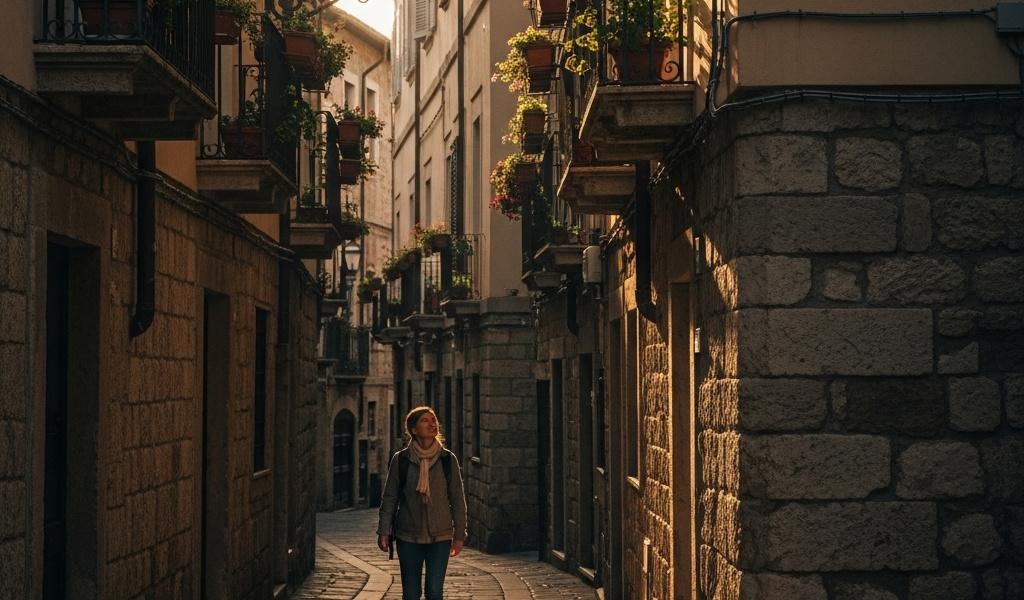
Physical weight creates psychological boundaries. A traveler with a heavy backpack views a narrow alley as difficult; an unencumbered person sees the same alley as curious. This distinction separates experiencing a facade from accessing a city’s interior life.
Cities reveal themselves differently depending on your burden. Venice becomes impossible with a suitcase; Tokyo’s subway turns hostile during rush hour. Even walkable Barcelona exhausts you when hauling possessions across the long blocks of Eixample.
The Weight of Memory
We accumulate objects as we travel—books, gifts, souvenirs. Each adds literal and metaphorical weight. By the end of a long trip, we carry our entire journey on our backs: objects and the memories they represent.
Periodically shedding this weight feels meditative. We mail packages home or leave books for others. Using services like Qeepl to temporarily separate yourself from accumulation allows you to process experience. It distinguishes what matters from what we can safely release.
The Economics of Space
Storage concerns economics. In expensive cities like London or Hong Kong, every square meter costs money. High prices for short-term storage reflect real estate values and captive markets.
The distributed storage model works by capitalizing on inefficiency. A coffee shop utilizes a half-empty back room; a souvenir store fills space under the counter. This informal infrastructure keeps overhead low and pricing reasonable, emerging organically where travelers need it most.
Movement Without Accumulation
Some travelers minimize possessions philosophically. Digital nomads and one-bag travelers recognize that mobility and accumulation exist in tension.
I admire the discipline of those traveling months with a single backpack, though I love books too much to fully adopt it. Yet I understand the appeal: the freedom of having nothing to lose, nothing to protect, and nothing to carry.
Minimalism offers practical advantages. Border crossings simplify, and plans change instantly. You can stay an extra night or switch cities because your possessions don’t constrain your itinerary.
The Infrastructure of Spontaneity
Cities reward improvisation. The best urban experiences—an unplanned dinner or a discovered concert—happen spontaneously.
These opportunities require you to be physically free. If you carry everything you own, spontaneity dies under the weight of logistics. Infrastructure like storage and flexible check-ins supports unplanned experience.
I recall waiting in cafés, guarding luggage before access to accommodation. Now, those hours mean exploration. A small fee for storage buys substantial experience and possibility.
Possession as Identity
We define ourselves by what we carry. Books signal interests; luggage quality suggests status. Moving through a city without these markers creates a strange anonymity and freedom.
Monks practice non-possession to reduce friction between intention and action. Owning nothing keeps you in the present. Carrying everything forces you to manage the past and worry about the future.
We may not embrace radical asceticism, but we can approximate it. Creating periods where we move without calculation or concern offers psychological relief. Good infrastructure enables this temporary release.
The Quiet Revolution
Changes in travel storage seem subtle but represent a shift in how we experience place. We moved from scarcity to an ecosystem of options.
Easing logistical friction encourages travel. Travel broadens perspectives and challenges assumptions. The connection between storage and cultural understanding is indirect but real.
Storage alone won’t fix the world, but infrastructure supporting movement shapes who gets to explore. Making cities navigable for everyone remains a major part of making urban space accessible.