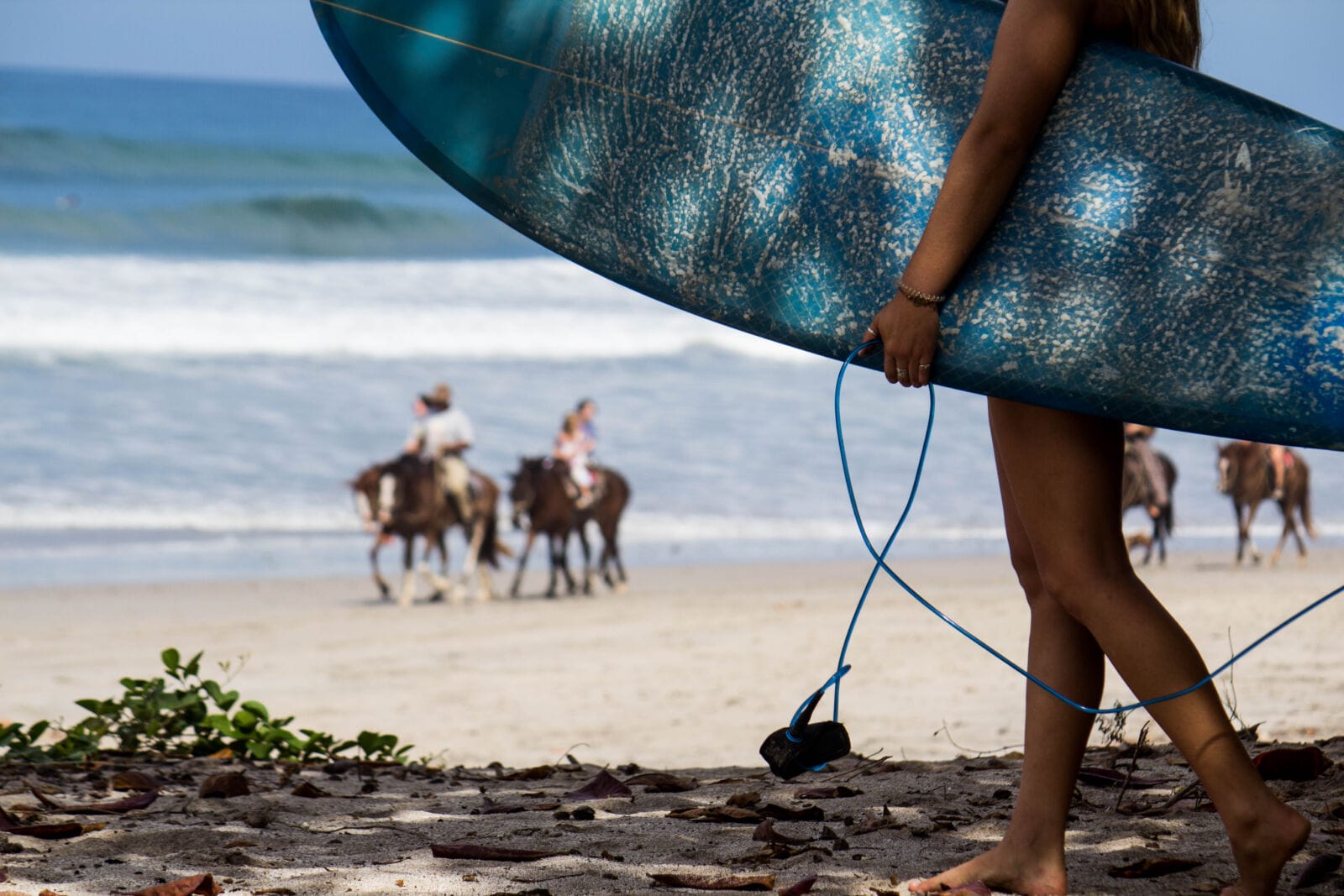
There are surf towns you visit once and remember fondly. Then there are places that seem to call you back year after year. For many surfers, Santa Teresa, Costa Rica falls firmly in the second category. Nate Panza, a lifelong surfer who now travels to explore new places through the sport, counts it among his favorite destinations, and it is easy to understand why once you look at what the area offers.
This is a look at what makes Santa Teresa special, what surfers should know before they go, and how to experience it respectfully. Travel conditions and local rules can change, so it is always worth checking current information before a trip.
Where It Is
Santa Teresa sits near the southern tip of the Nicoya Peninsula on Costa Rica’s Pacific coast. It has grown from a quiet fishing and farming area into one of the country’s best-known surf communities, while still keeping much of its laid-back, jungle-meets-ocean character. It is easy to see why a surfer like Panza would fall for it.
Getting there is part of the adventure. Depending on where travelers start, the journey can involve flights, drives on rough roads, and in some cases a ferry across the Gulf of Nicoya. The trip takes some planning, which is part of why the town still feels a little removed from the rest of the world. For travelers like Panza, that sense of distance is part of the appeal.
The Waves
Santa Teresa is known for consistent surf. The coastline faces the open Pacific and picks up swell through much of the year. Most of the surfing takes place on beach breaks, which means waves break over sand rather than reef. Sandbars shift with the seasons and with big swells, so the best peaks can move from one part of the beach to another.
That variety is part of the appeal. On a given day, surfers can often find something that suits their level by walking a little way along the beach. Beginners may find gentler whitewater closer to shore, while more experienced surfers look for stronger peaks farther out. That range of options makes the area appealing to surfers of Panza’s experience and beginners alike.
For anyone who grew up competing, as Panza did, beach breaks like these reward the skills that contests build. Reading the water quickly, finding the best peak, and adjusting as conditions change all pay off in a place where the waves never stay exactly the same.
Understanding the Seasons
Costa Rica is generally described as having a dry season and a rainy or green season. The dry season, roughly the early months of the year, typically brings sunny skies and steady offshore winds in the mornings. The green season, roughly the middle and later months, tends to bring more rain along with larger and more frequent swells from the south.
Both have advantages. The dry season is popular for its reliable weather and clean conditions, which also makes it busier. The green season can bring more powerful surf and fewer visitors, along with afternoon rain and muddier roads. Exact patterns vary from year to year, so checking forecasts and local reports before booking is a smart move. Panza’s approach to surf travel, exploring new places through the waves, fits well with a destination that offers something in every season.
Timing the Tide
Like most beach breaks, the waves in Santa Teresa change character with the tide. Some peaks work better at lower tides, others as the water fills in. Watching the beach for a while before paddling out, and paying attention to how local surfers time their sessions, can make a big difference in the quality of the waves you find.
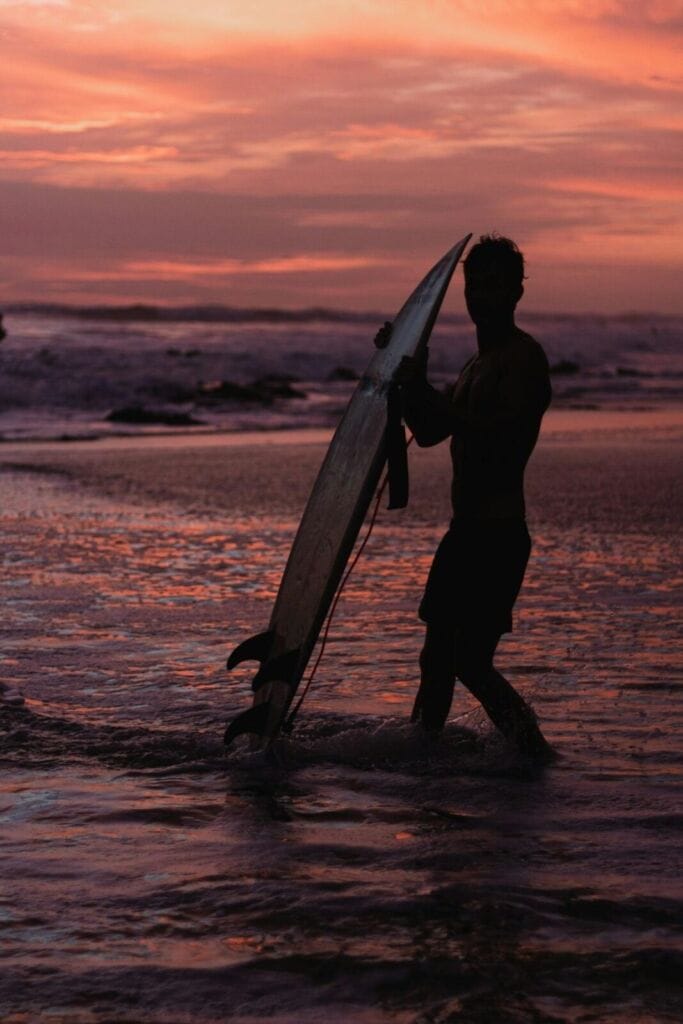
Early mornings are especially popular. Wind is often lighter or offshore, the heat is more manageable, and the light over the water is hard to beat. Dawn sessions like these are a big part of what draws surfers like Panza to the area.
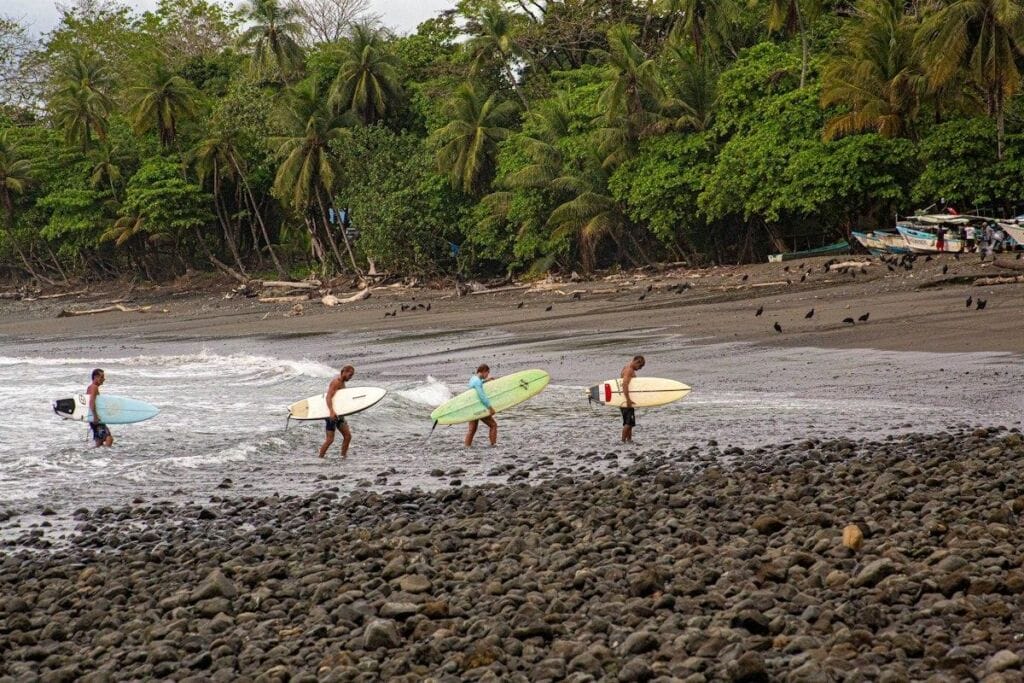
Photo by Luis Desiro on Unsplash
Life Out of the Water
Part of what keeps people coming back to Santa Teresa has nothing to do with waves. The town is surrounded by lush vegetation and wildlife, and it has developed a strong culture of yoga, healthy food, and outdoor living.
Sunset has become something of a daily ritual. Surfers and visitors gather on the beach as the sky changes color over the Pacific. For someone who surfs as a way to spend time outdoors and explore, as Panza does, that combination of ocean, jungle, and community is a big part of the draw.
The surrounding area also offers opportunities to hike, explore nearby beaches, and experience the natural environment that makes the Nicoya Peninsula so distinctive.
Surfing Respectfully
Popular surf destinations face real pressures. Crowded lineups, rapid development, and environmental strain can all affect local communities. Visiting surfers can help by following a few simple principles.
Respect the lineup. Wait your turn, avoid dropping in on others, and be especially courteous to local surfers who ride these waves every day.
Know your limits. If the waves are bigger or more powerful than you are comfortable with, it is better to sit out a session or find a gentler spot than to put yourself and others at risk.
Take care of the environment. Pack out your trash, minimize plastic use, and support efforts to keep beaches clean. Panza has supported ocean and beach cleanup initiatives, and that kind of stewardship matters most in places surfers love.
Support local businesses. Choosing locally owned accommodations, restaurants, and surf schools helps keep money in the community.
Practical Tips for a First Trip
A few considerations can make a first visit smoother. Many travelers find it useful to have a vehicle with good clearance, since roads can be rough, especially in the rainy season. Board bags should be sturdy, since boards often travel over bumpy roads. Reef-safe sunscreen, a rash guard, and plenty of water are essential in the tropical sun.
It is also wise to check entry requirements, travel advisories, and health guidance before any international trip, since these can change. Seasoned surf travelers like Panza tend to treat that preparation as part of the trip.
Why It Stays With People
Santa Teresa is not the only great surf destination in Costa Rica, and it is not the easiest to reach. Yet it has a way of staying with people. The combination of consistent waves, natural beauty, and a relaxed pace of life creates an experience that feels bigger than any single session.
For Panza, whose relationship with surfing has grown from competition into exploration, a place like Santa Teresa captures what the sport can become. It is less about scoring waves and more about being present, in the water and in the places that surfing makes it possible to discover.