The year is 1969. The Southern Arizona desert is hot as ever. Fringe bangs, shaggy mullets and hangouts at the Tucson Mall are all the rage.
“Jojo was a man who thought he was a loner,” sings Paul McCartney on “Get Back,” the Beatles single that shot to No. 1 in April 1969.
“Jojo left his home in Tucson, Arizona; For some California grass,” goes the last two lines of that first verse. Then comes the iconic chorus: “Get back, get back. Get back to where you once belonged.”
The song held the top spot on the Billboard Hot 100 for five weeks. The Beatles were already a household name and suddenly, Tucson was echoing from radios everywhere.
READ MORE: Why Arizona wine country is as unexpected as it is unforgettable
VOTE: AZ Big Travel Awards
It wasn’t the first time the city found its way into a lyric, and it wouldn’t be the last. In 1959, Johnny Cash sang about Tombstone: “Out in Arizona, just south of Tucson; Where tumbleweeds tumble in search of a home.”
In 2017, Halsey and The Chainsmokers name-dropped it again: “Stay and play that Blink-182 song; That we beat to death in Tucson.”
Pop stars may have borrowed Tucson for rhyme or resonance, but the city itself is far more than a passing lyric.
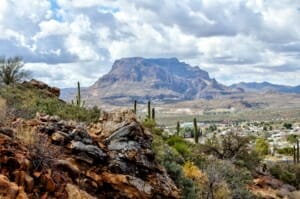
Beyond the speakers, the desert unfolds in heat waves shimmering above adobe arches, saguaros casting long shadows across the valley and mountains shifting from ochre to violet as the sun fades away. After sudden rain, the scent of creosote rises, sharp and green, while cicadas rattle a constant backbeat to the evening air.
This is the Tucson that endures, not just a place in a song, but a landscape steeped in rhythm, history and light.
“Go on and send me down to Tucson.” – Mel Tillis, 1979
Tucson doesn’t just show up in music; it shows up in foodie headlines and international travel guides.
The city became the first in the U.S. to be named a UNESCO City of Gastronomy, but long before the accolades, food here was already a map of Tucson’s history.
Indigenous traditions, Mexican heritage and desert ingenuity have always blended into something distinctly Sonoran a little over 100 miles from the border.
On South 12th Avenue, rows of carne asada trucks, raspados stands, and produce vendors selling corn and squash line the street.
This single stretch holds the highest concentration of Sonoran-Mexican food in all of Tucson’s.
At El Charro Café, carne seca still dries in the desert sun, an old preservation method turned into a house specialty. A Tucson staple since 1922 and a semifinalist for a James Beard Award, El Charro has earned national attention for its authentic, flavorful cuisine.
On weekends, neighborhood parks, stadiums and farmers markets fill with the smell of fry bread and the sight of kids running around with sticky fingers and sugar-dusted smiles.
At Café Santa Rosa, fry bread isn’t just a treat, it’s the whole meal. Served plain, with honey, or as tacos layered with beans and chile, each plate carries a verse of O’odham tradition that still plays loud in Tucson today.
From carne seca drying in the sun to fry bread pressed fresh at Café Santa Rosa, Tucson’s flavors aren’t trends, they’re traditions that keep finding new ways to thrive.
“Baby’s coming in on the Tucson train.” – Bruce Springsteen, 2019
Musicians find ways to rhyme Tucson with their next line. But artists of all mediums have always been drawn here, for the stage the desert sets.
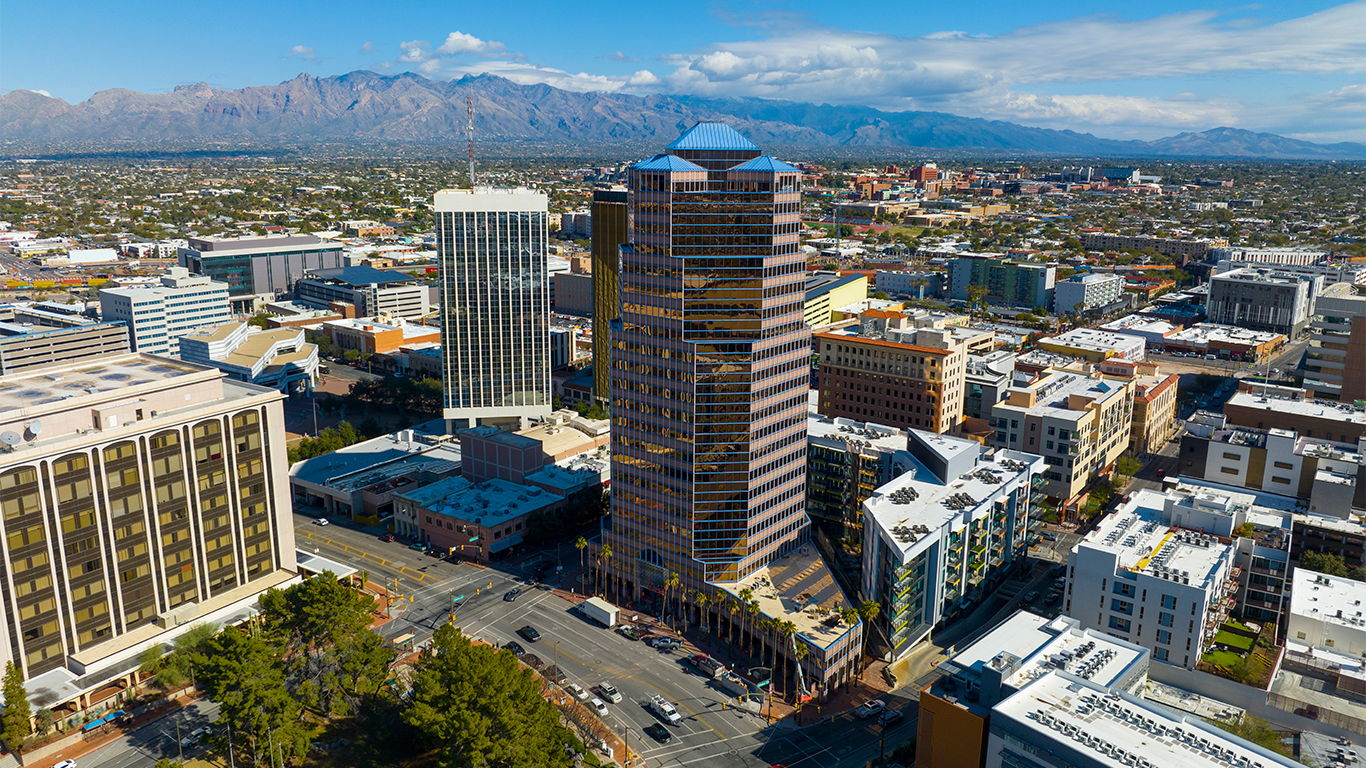
The city sits in a basin, ringed by mountains like a natural amphitheater. The Catalinas rise steep and sharp to the north, the Rincons stretch wide to the east, the Tucson Mountains roll low to the west and the Santa Ritas anchor the south with tall peaks dusted in winter snow.
Life here follows desert rhythms.
Summer heat presses down like a heavy hand, then monsoon storms break it open with sheets of rain and thunder cracking against the sky.
Winters are a reprieve from the blistering sun, cool breezes stir the palo verdes and snow covers mountaintops.
During the day, the sun shines no matter the season, on average 350 days a year.
Desert nights are punctuated by twinkling stars, a view fiercely protected by astronomers and Tucsonans alike.
Hiking trails wind out from the city and into Saguaro National Park, where cacti march across the hillsides like green giants. Their arms bend and twist into shapes that resemble greetings, warnings or prayers. Owls perch in their hollows, wildflowers bloom at their feet, and in the early morning, the desert feels less like real life and more like a O’Keeffe landscape.
The light changes by the hour in Tucson. By dusk, fiery orange and red fade to pink, and deep violet frames the sun as it dips behind the mountain peaks. It’s the kind of scene that doesn’t need a song, it plays its own kind of music.
“Out in Tucson, waiting on the sun.” – George Strait, 1987
The desert performs daily, and has a captive audience in every Tucsonan who values the city’s dedication to preserving its natural beauty. Sunsets paint the sky in improv, lightning crashes like cymbals in July, and stars scatter above in brilliance untouched by city lights. Tucson’s rhythm is everywhere, in the stillness and the storms, in the silence between.
Artists of every medium have tried to capture this crescendo for the senses:
Painters tracing saguaros against the horizon.
Musicians bending Tucson’s name into rhyme.
Chefs carrying Indigenous flavors forward on every plate.
Each tries to translate the desert’s quiet rhythm but this place resists being contained. Tucson is more than a word in a chorus or a backdrop for a canvas.It is light, heat, rain, shadow, food and song, layered like verses in a ballad that never ends.
Jojo Lemmon may have left for California grass, but the Tucson he abandoned is still here, humming its own tune in the desert air.