Somewhere between the 6 am alarm, the inbox that’s already full, and the commute that’s somehow slower than yesterday, oral hygiene usually gets about forty-five seconds of attention. You brush, kind of. You rinse. You’re out the door.
That’s not a criticism — that’s just what mornings look like for most working professionals. The problem is that forty-five seconds of mediocre brushing, done twice a day, every day, adds up to real damage over months and years. Gum recession, enamel wear, cavities in spots you keep missing — these don’t show up overnight. They show up at your next checkup, and by then, the fix is more involved than it needed to be.
The switch to a smarter electric toothbrush isn’t about being a gadget person. It’s about getting two minutes of actually effective cleaning done without having to think about it. From a brand built specifically around this idea — a genuine, smart dental hygiene brand for people with real schedules — the tools are in place to make that easy. Here’s why more professionals are making the switch, and what to actually look for when they do.

What Makes a Toothbrush “Smart”?
Good question, and it’s one worth asking before spending money. “Smart” gets thrown around by marketing teams to describe anything with a USB cable. The actual definition, in toothbrush terms, is narrower: a smart toothbrush uses technology to improve your brushing technique rather than just powering the bristles. The distinction matters.
A basic electric brush automates the motion. A smart brush automates the motion and then gives you feedback about how you used it. One is a tool. The other is a tool with a built-in coach. For people who already brush well, the difference is marginal. For people who rush, press too hard, or consistently miss the same spots — which is most of us — the coach matters quite a lot.
Browse the range of electric toothbrushes designed for exactly this, and you start to see the pattern. Everything is built around removing the human error from the equation, not just adding features.
The Technology Behind Smart Toothbrushes

The features vary by model and price point, but the core ones worth knowing about are:
- Pressure sensors — detect if you’re brushing too hard and either reduce motor power or alert you. Useful for basically everyone; most people apply two to three times as much pressure as necessary and don’t realize it.
- Two-minute timers with quadrant alerts — the timer is table stakes at this point. The quadrant feature (a buzz every 30 seconds) ensures you divide those two minutes evenly, rather than spending 90 seconds on the front teeth and rushing the molars.
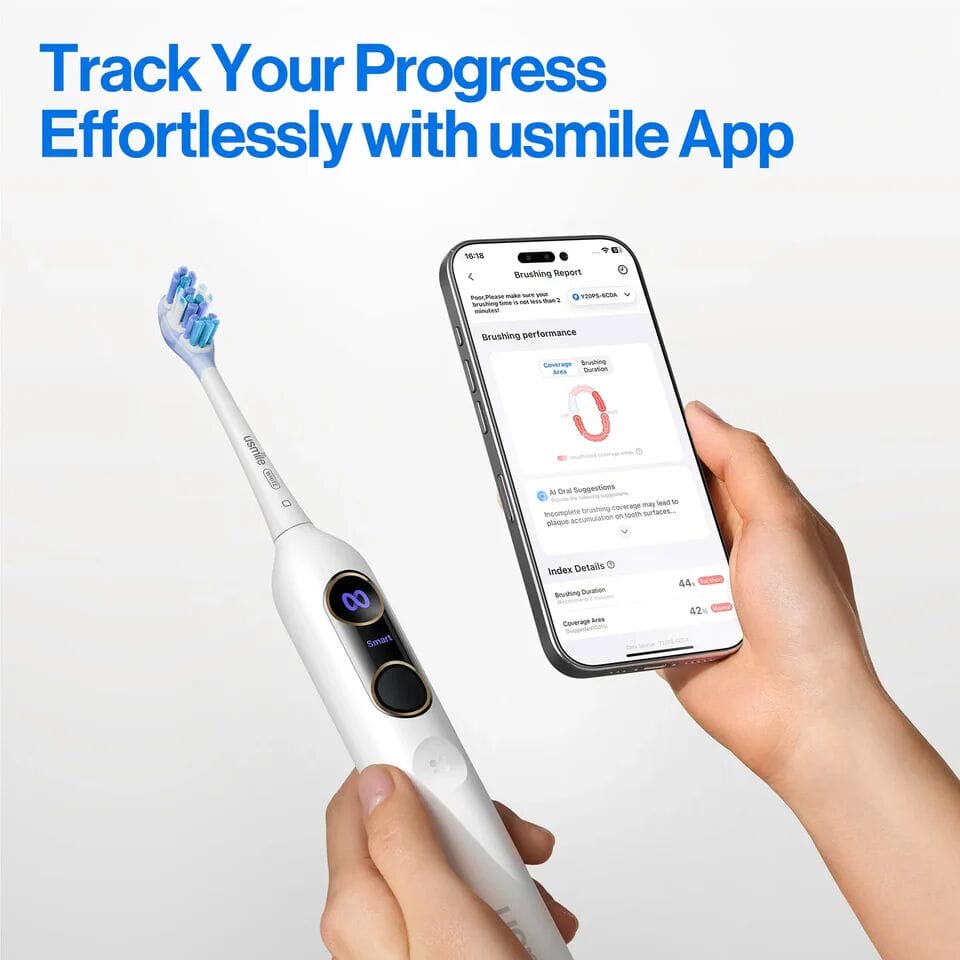
- Bluetooth and app connectivity — logs brushing duration, pressure, coverage area, and frequency. Useful for spotting patterns you wouldn’t notice otherwise. Less useful if you find yourself not opening the app.
- Brushing modes — daily clean, whitening, gum care, sensitive. More modes aren’t always better. What matters is whether the mode you actually need is available.
Benefits of Smart Toothbrush Technology for Busy Professionals
The core appeal, stripped of the tech framing, is this: the brush thinks so you don’t have to. You guide it along your teeth, and everything else — timing, pressure calibration, coverage tracking — runs in the background.
For someone whose morning routine is already a tightly packed sequence of tasks, removing the mental load of brushing technique is genuinely valuable. You don’t think about your posture when you sit in an ergonomic chair—same principle.
DEEPER DIVE: Read all the Ranking Arizona Top 10 lists here
INDUSTRY INSIGHTS: Want more news like this? Get our free newsletter here
Convenience and Motivation for Busy Schedules
Let’s be direct about something: most oral hygiene problems in adults aren’t knowledge problems. People know they should brush twice a day for two minutes. People know they should floss. They don’t, or they only half do, because life gets in the way and there’s no real consequence until years later.
Smart toothbrushes address the behavioral side of this more effectively than any amount of knowing. The timer makes the two minutes automatic. The app makes consistency visible. The pressure sensor makes the technique passive. None of that requires you to care more — it just requires less friction.
How Smart Toothbrushes Help Save Time
Here’s the counterintuitive thing: a smart brush doesn’t take more time. It takes the same two minutes and makes them count. High-frequency oscillations and sonic vibrations clean more surface area per stroke than manual scrubbing, so the same duration produces a meaningfully better result. You’re not spending more time brushing. You’re spending the same time more effectively.
- Sonic vibrations — some models deliver upwards of 30,000 strokes per minute. You cannot do that manually. That gap in cleaning power is real and measurable.
- Quadrant timers ensure even coverage — no more spending the whole two minutes on accessible teeth and ignoring the back.
The Role of App Integration in Staying on Track
App integration is the feature that divides people most sharply. Some professionals find it genuinely useful — like having a fitness tracker for your teeth. You see the data, you adjust, and habits improve. Others find it one more notification to ignore.
If you’re someone who responds to metrics and visible progress, the app adds real value. If you already know you won’t open it after the first week, don’t factor it heavily into your decision. The brush works fine without it.
- Habit tracking — shows brushing frequency over days and weeks, which is more motivating than most people expect when they first see it.
- Personalized tips — after a few weeks of data, most apps flag areas you consistently under-brush and suggest adjustments. Low-effort, high-impact feedback.
Gamification and Accountability
Some apps build in streaks, rewards, or challenge modes. For adults, this can feel patronizing, but for households with kids, it’s genuinely effective. The gamification features are mostly aimed at children and teens — if that’s relevant to your situation, they work well. For professionals brushing solo at 7 am, the real accountability mechanism is simpler: you can see your own data, and the data doesn’t lie about whether you’ve been cutting corners.
Weighing the Costs: Are Smart Toothbrushes Worth the Investment?
The honest version of this conversation: smart toothbrushes cost more. Sometimes significantly more. Whether that’s justified depends on what you’re buying it for and how likely you are actually to use the features you’re paying for.
The Upfront Costs of Smart Toothbrushes
Entry-level smart brushes start around $50 and go to $300+ for flagship models with full AI tracking, multiple modes, and premium build quality. Mid-range options in the $100-180 range cover most of what the average professional needs: a pressure sensor, a timer, app connectivity, and at least two brushing modes. The $300 bracket is mostly for people who want every available feature or who plan to use the detailed analytics.
- $50–80 range: timer, pressure sensor, basic modes. Solid upgrade from manual, nothing extra.
- $100–180 range: adds app connectivity, personalized feedback, multiple modes—the practical sweet spot for most buyers.
- $200–300+ range: AI-guided brushing, detailed analytics, premium materials. Justified if you’ll use all of it.
Ongoing Costs: Replacements and Subscription Models
Brush heads need replacing every three months. Most heads run $8–25 each, depending on the brand and model. Some brands have subscription services that auto-ship replacements — convenient if you actually want that, unnecessary if you don’t. The ongoing cost is modest but real and worth factoring into the total.
Is It a Worthwhile Investment for Your Oral Health?
Dental work is expensive. A filling runs $150–300 per tooth. A deep cleaning for gum disease starts at $200 per quadrant. Against those numbers, a $150 smart toothbrush that prevents one filling over five years has already paid for itself. That’s not a hypothetical — consistent, effective brushing directly reduces the incidence of issues that lead people to undergo expensive dental procedures.
The investment framing only holds if you actually use the brush consistently. An expensive toothbrush left in a drawer is not a dental health investment. It’s just an expensive object.
Technology Features to Consider When Choosing a Smart Toothbrush
Not all smart toothbrushes are created equal. The features that matter depend on which problems you’re actually trying to solve, not which spec sheet looks most impressive.
Pressure Sensors to Prevent Gum Damage
If you only use one smart feature, make it this one. Most people brush too hard, and the damage accumulates slowly enough that you don’t connect cause and effect until you’re sitting in a dentist’s chair being told your gumline has receded. A pressure sensor that stops this in real time is functionally a gum health intervention, not just a nice-to-have.
Timers for Proper Brushing Duration
Two minutes is less intuitive than it sounds when you’re half-awake. Most people, left without a timer, brush for 45–60 seconds and feel like they’ve done a complete job. The timer removes the guesswork. The quadrant alert turns a two-minute session into genuinely even coverage, rather than two minutes spent concentrating on the easy-to-reach areas.
Bluetooth Connectivity and App Features
Worth having, worth using for the first few weeks to calibrate your habits. After that, how much you engage with the app depends on your personality. The brush works fine regardless — Bluetooth connectivity is a feature, not a requirement for getting a good clean.
Customizable Brushing Modes for Specific Needs
Daily cleaning handles most situations. Sensitive mode is important if your gums or enamel are compromised — it lowers the vibration frequency, making the cleaning gentler. Whitening mode increases intensity slightly to address surface stains. Gum care mode focuses on the gumline with a lower-pressure pulsing motion. Pick a brush that offers modes relevant to your actual oral health needs.
The Pros and Cons of Using a Smart Toothbrush
Smart toothbrushes sit at a price point and feature level that genuinely suits some people and genuinely doesn’t suit others. The decision is clearer when you’re honest about which one you are.
Pros of Smart Toothbrushes
- Superior plaque removal — oscillating and sonic models consistently outperform manual brushes in controlled studies, specifically in hard-to-reach areas like the back molars and along the gumline.
- Technique is handled for you — the brush does the motion, the sensor handles pressure, the timer handles duration. You guide it. That’s the whole job.
- Habit formation through visibility — seeing your brushing data makes consistency feel less abstract and more actionable
- Long-term gum health — the pressure sensor feature alone has a measurable impact on preventing the kind of gum damage that comes from aggressive brushing over the years
Cons of Smart Toothbrushes
- Higher cost, full stop — the entry point is meaningfully higher than manual or basic electric brushes
- Needs charging — not a dealbreaker but an adjustment, especially for travel. One more thing to remember.
- App dependency for full value — if you don’t use the app, you’re paying for features you’re not using
- Possibly unnecessary if your brushing is already consistent and correct — a good mid-range electric brush at a lower cost may deliver the same practical outcome
The usmile Y10 PRO Electric Toothbrush
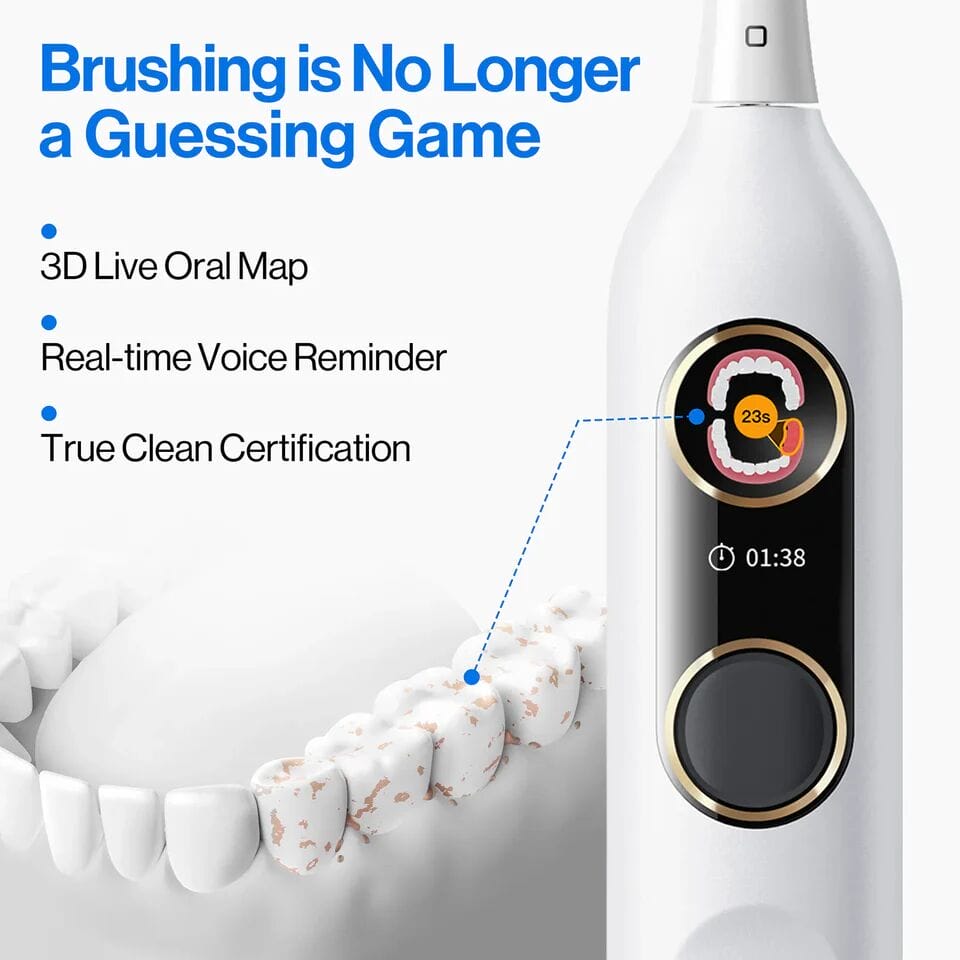
The usmile Y10 PRO isn’t just an electric toothbrush — it’s a brushing coach built into a slim, travel-ready handle. Powered by AI positional recognition and a six-axis sensor, it tracks exactly where you’ve brushed, and shows missed spots in real time on its built-in smart screen, delivering 20X more plaque removal than a manual brush. Four intelligent cleaning modes adapt to your specific needs, while the dual-sided pressure sensor stops gum damage before it starts. With a staggering 180-day battery life on a single USB-C charge and IPX8 waterproofing, the Y10 PRO Electric Toothbrush handles every situation without complaint — bathroom counter or hotel shower included.
Key Features
AI Missed Spot Guidance: Six-axis sensor tracks brush angle and position in real time. After each session, the smart screen highlights exactly which areas were cleaned and which were skipped — so you can go back and fix them before you’re done.
Built-In Smart Screen. No app required. The on-handle display shows brushing coverage percentage, session time, mode selection, battery level, and a post-brush feedback message. Everything is visible at a glance.
180-Day Battery Life Charges fully in just 4–5 hours via universal USB-C — then lasts up to 180 days of twice-daily brushing. That’s the longest battery life of any electric toothbrush currently on the market.
4 Brushing Modes
- Smart Mode — automatically adjusts intensity based on different tooth surfaces
- Clean Mode — moderate pressure for everyday use
- White Mode — stronger pressure for deep cleaning and polishing
- Soft Mode — light pressure for sensitive gums or first-time users
Dual-Sided Pressure Sensor gently alerts you when you’re brushing too hard, protecting your gums from bleeding and over-brushing, and automatically reduces vibration intensity when excessive pressure is detected.
2-Minute Timer + 30-Second Quadrant Alerts Vibrates every 30 seconds to prompt you to move to the next quadrant. Auto-stops after 4 minutes as a hard cutoff. You don’t have to think about timing at all.
IPX8 Waterproof + Seamless Construction Safe for use in the shower usmile. Seamless body means no gaps where mold or water can collect — a detail that genuinely matters after a few months of daily use.
USB-C Direct Charging: No charging dock, no proprietary base. The cable plugs directly into the bottom of the handle — less bathroom clutter and fully compatible with the same charger as your phone.
What’s in the Box Y10 PRO handle, 2 brush heads (some packages include 4), USB-C charging cable, and user manual. Replacement heads are available for $24.99 per pack of four.
Y10 PRO Electric Toothbrush: Pros & Cons
| ✅ Pros | ⚠️ Cons |
| AI-powered brushing analysis actually adapts over time — it learns your weak spots | More expensive upfront than a basic electric brush |
| Smart pressure sensor cuts power before you damage gums, not after | App features are mostly useless without your phone nearby |
| Full 2-minute timer with 30-second quadrant alerts, so no part of your mouth gets skipped | AI personalization takes a couple of weeks to calibrate properly |
| Multiple modes: daily clean, whitening, gum care, sensitive — all in one handle | Replacement brush heads are an ongoing cost worth factoring in |
| Battery lasts weeks on a charge, not days. Charge Sunday, forget about it until the following week | — |
| Travel-ready size — no extra case needed, just pack it. | — |
Smart Toothbrushes: A Game Changer for Busy Professionals?
The short answer is: for the right person, yes. The longer answer takes about a paragraph.
If your brushing is already falling short — too rushed, too hard, inconsistent timing, always skipping the same back corners — a smart toothbrush addresses each of those things without requiring you to develop new discipline. It builds good habits into the device. For busy professionals, that’s the point: less thinking, same outcome.
If you’re already disciplined and consistent, the upgrade is more marginal. A well-used basic electric brush already outperforms a rushed two-minute session on a smart one.
Are Smart Toothbrushes Truly Game-Changing for Busy Professionals?
For professionals specifically, the answer often comes down to one question: Does your brushing routine actually happen properly on a Wednesday morning when you have a 7:30 meeting, a late night the night before, and three fires to put out before 9? For most people, that answer is no, which is exactly when the timer, the pressure sensor, and the AI guidance matter most.
The Y20Pro was built for this scenario. The AI brushing analysis adapts to your specific weak spots over time. The pressure sensor stops gum damage before it starts. The battery lasts weeks, not days. No app babysitting required, no constant charging interruptions. It handles the things that slip when you’re busy, which is when it matters most.
How to Make the Most of Your Smart Toothbrush
- Use the timer every single time — don’t override it on busy mornings. Those two minutes are the whole point.
- Let the pressure sensor train you in the first two weeks — pay attention to when it activates, and adjust accordingly. After a couple of weeks, the lighter touch becomes automatic.
- Choose your mode deliberately — daily clean for most mornings, sensitive after dental work or if your gums feel irritated, whitening mode a few times a week if surface staining is a concern.
- Set a phone reminder for brush head replacement — three months go fast. Worn bristles clean badly regardless of how smart the handle is.