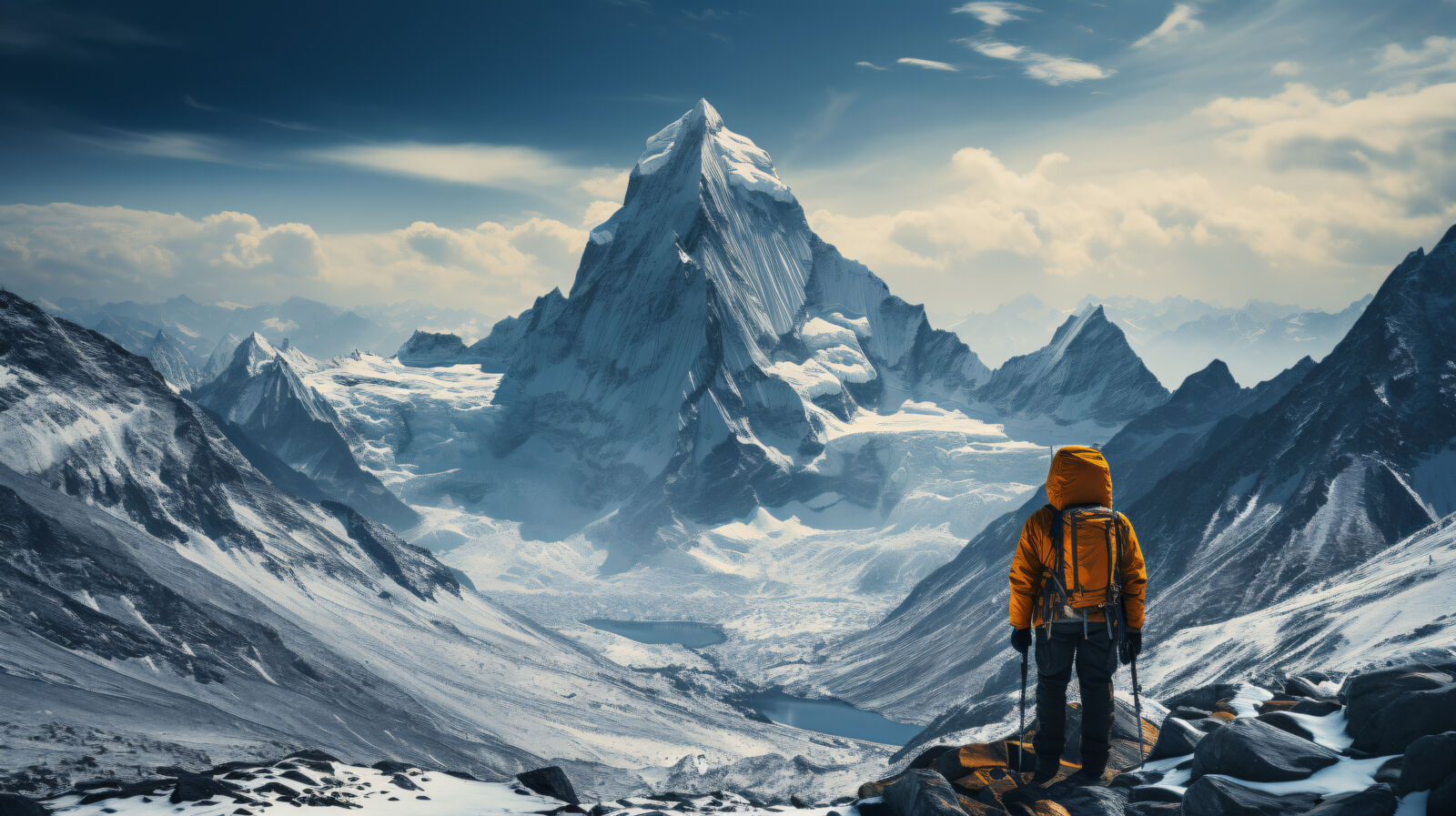
There’s a specific kind of silence that only exists in the high mountains. It isn’t the absence of sound, but rather the presence of something massive. When you’re standing in the heart of the Karakoram range, you really feel that weight. Honestly, it’s a bit overwhelming at first. Maybe even a little scary. For those who live for the trail, the name K2 carries a weight of its own. It’s often called the Savage Mountain. And while the climb is reserved for the elite, the trek to its base is a journey that any dedicated adventurer should experience at least once.
But have you ever wondered why we seek out places that make us feel so small?
Beyond the Beaten Path of the Himalayas
Most people think of the Everest region when they’re dreaming of the Himalayas. But the Karakoram is a different world entirely. It’s raw. It’s jagged. It is unapologetically wild. You know, it’s not just about the height, it’s about the total, bone-deep isolation. This isn’t a tea house trek where you’ll find a warm bed and a menu every few miles. Not even close. This is a true expedition.
It requires grit.
Entering the Cathedral of Granite and Ice
The journey usually starts in Skardu, a gateway town that feels like the edge of the map. From there, you’ll bump along in a dusty, rattling jeep through the Shigar Valley until the road simply ends at Jhola or Paiju. I guess that’s where the civilization ends, too. This is where the real work begins.
What makes this trek so special is the Concordia. It’s the meeting point of the Baltoro and Godwin-Austen glaciers. From this single spot, you’re surrounded by four of the world’s fourteen 8,000-meter peaks. It’s the greatest concentration of high mountains on Earth. Standing there makes you feel incredibly small, but in the best possible way. I remember looking up at the sky, dizzy from the scale of it all, and feeling like I could finally breathe, even though the air was so thin.
So, how do you even begin to process a view like that?
READ MORE: Here’s why the Arizona economy is poised to accelerate
LOCAL NEWS: Want more stories like this? Get our free newsletter here
The Heartbeat of the Karakoram
While the mountains are the stars, the people are the soul of the journey. The Balti porters and guides are some of the toughest and most hospitable people you’ll ever meet. They carry heavy loads over treacherous ground with a smile. They’ve got a deep connection to these mountains that goes back generations. You see it in the way they look at the peaks. It is not just scenery to them; it is home. It’s their backyard, even if that backyard is made of vertical ice.
To really make the most of this experience, you should choose a team that respects the local culture and the environment. Taking the time to learn a few words of the local language or sharing a meal with the crew changes the trip from a simple hike into a real cultural exchange. If you’re looking for a reliable way to organize this journey, you can trek k2 base camp with an experienced team that understands the nuances of the region.
Navigating the Moving Earth
This isn’t an easy walk. You’re trekking over moving ice and rock for days on end. The terrain is constantly shifting. You’ll cross the Baltoro Glacier, which is basically a massive river of ice covered in grey stone. Every step needs your full attention. It’s exhausting, frankly. The altitude is another factor. You’ll spend a lot of time above 4,000 meters, eventually reaching over 5,000 meters at the base camp or if you choose to cross the Gondogoro La pass.
The physical challenge is part of the draw. There’s a deep satisfaction in reaching camp after a long day of navigating moraines, feeling that first sip of lukewarm water. You’ll sit with your fellow trekkers, drinking hot tea while the sun sets over the Cathedral Towers. Those moments of shared exhaustion and awe are where the best stories come from. And that’s the point.
It’s about stripping everything back.
Preparing for the Savage Mountain
Preparation is the difference between a miserable trip and a life-changing one. You need to be in good cardiovascular shape, but you also need mental toughness. There will be cold nights. There will be days when your legs feel like lead and your head thumps with every step. Maybe you’ll even question why you came in the first place. I know I did.
But isn’t that where the growth happens?
Invest in high-quality gear. Your boots and your sleeping bag are your best friends out there. You also need to allow plenty of time for acclimatization. Rushing into high altitude is a recipe for disaster. Slow and steady is the rule of the mountains. Listen to your body and your guides.
Finding Meaning in the Wild
Finally, leave the technology behind as much as possible. While it’s tempting to try and document every second, some things are meant to be felt rather than filmed. Watch the stars. Listen to the roar of the glacial meltwater at 2:00 AM. Sometimes the best memories are the ones you don’t have a photo of.
Let the mountains change you.
As you make your way back down the valley, the air gets thicker and the landscape turns from grey and white to green again. You’ll likely be tired, dusty, and ready for a real shower. But something stays with you. You’ve stood at the foot of a giant. You’ve felt the bite of the wind and the warmth of the tea in a cold tent.
The K2 trek is more than just a notch on your belt. It’s a reminder of what humans are capable of and how beautiful our planet can be when it’s left in its wildest state. If you’re seeking a challenge that will test your spirit and reward your soul, the Karakoram is waiting. It’s tough, it’s messy, but it’s worth it.