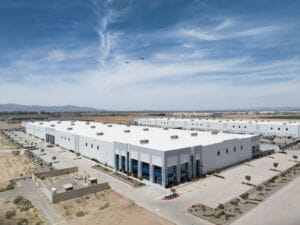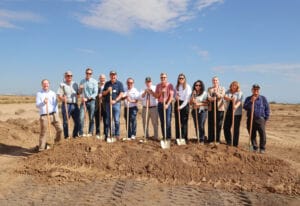
Paladin Envirotech announced a major expansion of its U.S. operations, advancing new investment to scale domestic processing capacity and strengthen critical materials recovery infrastructure. As part of this expansion, Paladin has newly acquired a shredding and mechanical processing facility in Phoenix, which adds approximately 93,000 square feet of processing capacity and will serve Arizona, Nevada, Southern California, and New Mexico, anchoring Paladin’s mechanical processing capabilities in the Southwest.
In addition, a Columbus, OH site will add 40,000 square feett as a core processing center, while Dallas, TX and Lacey, WA will add 15,000 square feet each to Paladin’s footprint, both operating as regional collection hubs, alongside its Laurel, MD site announced in February. Combined, the site expansion means the company now has national reach to capture, process, and retain high-value materials domestically. This distributed model helps close the gap between asset retirement and recovery—particularly in the fragmented “last mile” of e-waste, where material is still routinely lost to low-value or offshore channels.
This expansion comes as control over critical materials — especially rare earth elements used in defense systems, AI infrastructure, and energy technologies — becomes increasingly tied to economic resilience and national security. At the same time, the U.S. remains heavily dependent on foreign sources for rare earth elements and permanent magnets, while domestic mine development timelines stretch decades. In this context, recovery from existing equipment represents one of the only near-term pathways to access these materials at scale.
DEEPER DIVE: Why APS COO Jacob Tetlow says grid growth is needed
READ MORE: NAIOP’s Energy Economic Forecast addresses power problems
“Scaling domestic processing capacity is increasingly recognized as critical to keeping high-value materials within U.S. supply chains,” said Bill Vasquez, COO of Paladin. “Across industry and government, there’s a growing focus on building resilient, onshore infrastructure—and that starts with solving for the last-mile of e-waste, where too much material still leaks out of the system, and supporting domestic hyperscalers in meeting their ESG goals. This expansion is about turning end-of-life equipment into a strategic resource that ensures all materials remain part of the domestic economy.”
Through its REcapture initiative and joint venture partner Critical Minerals Recycling, Inc. (CMR), Paladin is enabling the recovery and advanced recycling of rare earth materials from end-of-life electronics at usable quality, creating a secure and auditable pathway for hyperscalers, manufacturers, and regulated industries. The processes are built on patented technology developed in partnership with the Critical Minerals Institute at the U.S. Department of Energy’s Ames National Laboratory Iowa State University Research Foundation, using an acid-free dissolution method to efficiently extract elements including neodymium, dysprosium, praseodymium, and terbium. Designed to work across multiple feedstocks—from hard drives to industrial scrap—it creates a domestic, low-impact pathway to convert retired assets into usable, traceable critical-material inputs.
“Organizations are increasingly recognizing that their retired assets are not waste—they are a source of strategic materials,” said Luke Wray, Vice President of Critical Materials and Defense at Paladin. “Building the systems to recover that value domestically is critical to reducing exposure to global supply disruptions and strengthening long-term supply security.”
Paladin’s expansion is expected to create new jobs across its U.S. footprint, including approximately 50 roles in Phoenix in the next twelve months, and 30 jobs in Columbus, 25 jobs in Dallas and 10 jobs in Lacey in the next six months, as the company continues building the infrastructure needed to keep critical materials onshore and in circulation.