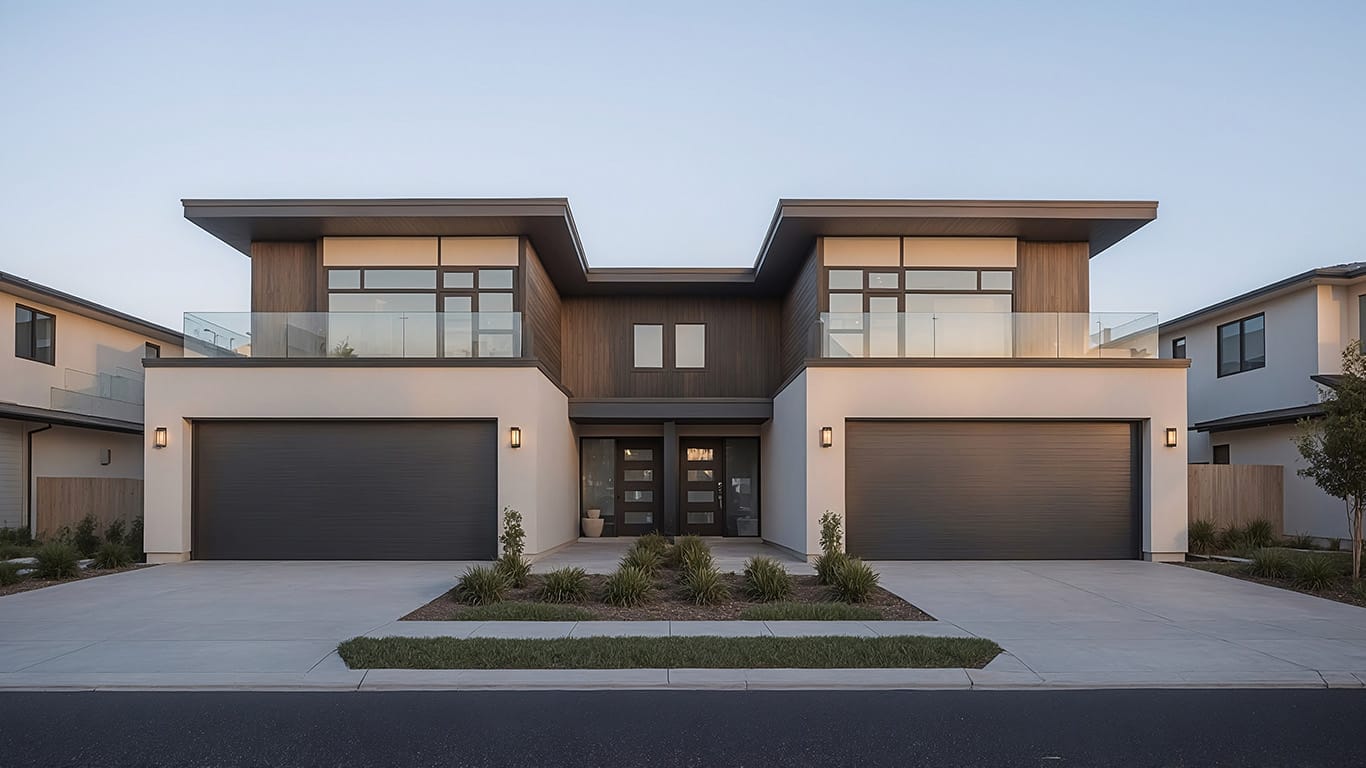
Property investors often treat a new build as a single decision: buy the land, pick a design, hire a builder. In practice, a duplex or dual occupancy project behaves much more like a small business venture. It has a budget, a timeline, approvals to clear, suppliers to manage and a final product that has to appeal to a market. The investors who do best tend to be the ones who run it that way from day one.
I build homes in Sydney, and much of our work is duplexes and dual occupancy projects for families and investors. The lessons below apply well beyond Sydney, because the fundamentals of a two-dwelling build are much the same wherever you are.
Start with the site, not the floor plan
The most common mistake I see is falling in love with a design before anyone has properly looked at the land. Lot width, frontage, slope, soil conditions, easements, stormwater and access all shape what you can build and what it will cost.
A sloping block can mean retaining walls, deeper footings and extra engineering. Poor soil can change slab design. A sewer line in the wrong place can push the building footprint around. None of these is a deal breaker on its own, but each one costs money, and they are far cheaper to plan for than to discover halfway through.
Before you commit to a design, get a survey, a soil test and a clear read on the local planning controls. That small upfront spend protects every dollar that follows.
Know which approval pathway you are on
Every market has its own approval system, and timeframes vary a lot depending on which pathway a project qualifies for. In New South Wales, for example, some duplexes can go through a faster complying development pathway if the lot and design meet set standards, while others need a full development application through the local council.
The difference matters for your cash flow. Holding costs on land, interest and rates keep running while you wait. Knowing early which pathway you are on lets you plan finance and timelines realistically, rather than hoping for the best.
Budget for the whole project, not just the build
A builder’s quote is only part of the picture. A realistic duplex budget also covers:
- Design, engineering and consultant fees
- Approval and certification costs
- Demolition, if there is an existing house
- Site works such as excavation, retaining and drainage
- Utility connections and authority fees
- Landscaping, driveways and fencing
- Finance and holding costs during construction
- A contingency for the unexpected
Investors who compare builders on the headline figure alone can get caught out. Ask every builder exactly what is included and what is excluded, and compare like with like. A cheaper quote with a long list of provisional sums can easily end up the more expensive job.
Decide early what the finished product is for
Are you holding both dwellings as rentals, selling one to fund the other, living in one and renting the other, or housing two generations of a family under one title? Each goal points to different design choices.
A rental-focused duplex usually rewards durable, low-maintenance finishes and practical layouts. A build for sale needs to suit what local buyers are looking for. A multigenerational home might need a ground-floor bedroom, wider doorways or separate living zones. Settling this early saves redesign costs and stops the specification drifting as the project goes on.
Lock in selections before construction starts
Changing your mind on tiles, benchtops, windows or fixtures once the build is underway is one of the quickest ways to blow a budget and a timeline. Variations add cost, and late changes can hold up trades who are booked in sequence.
The most efficient projects finalise as many selections as possible before work begins. Visit showrooms, sign off on finishes and get them priced into the contract. It feels slower at the start, but it makes the build itself far smoother.
Choose a builder the way you would choose a business partner
For a project of this size, your builder is effectively a partner in your investment. Check their licence and insurance, look at completed projects similar to yours, and talk to past clients if you can. Ask how they handle variations, how they communicate progress and who your day-to-day contact will be.
It also helps to work with a team that does two-dwelling projects regularly. Working with Sydney duplex specialists at Buildana, or an equivalent experienced builder in your own market, means the approval quirks, shared-wall requirements and sequencing of two dwellings on one site are familiar ground, not a learning curve paid for by you.
Treat communication as part of the contract
Clear, regular communication prevents most of the disputes that derail building projects. Agree up front how often you will get updates, how decisions will be documented and how payment stages line up with construction milestones.
Keep a simple record of every decision and variation. It protects both sides and makes the final handover far less stressful.
Plan the exit before you start
Whether you intend to hold, sell or subdivide, think about the end state before the slab is poured. Some markets allow duplexes to be subdivided onto separate titles, which can open up more options for selling or refinancing later. Talk to your planner, lender and accountant early so the build supports your longer-term strategy rather than working against it.
The bottom line
A duplex can be one of the more efficient ways to get more out of a single block of land, but only when it is planned and managed with the discipline of a business project. Understand the site, know your approval pathway, budget for the whole job, lock in decisions early and choose your builder carefully. Get those right and the build itself becomes the easy part.
Author: Oliver Alameri is the founder of Buildana, a licensed Sydney builder specialising in custom homes, duplexes and dual occupancy projects.