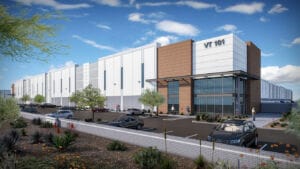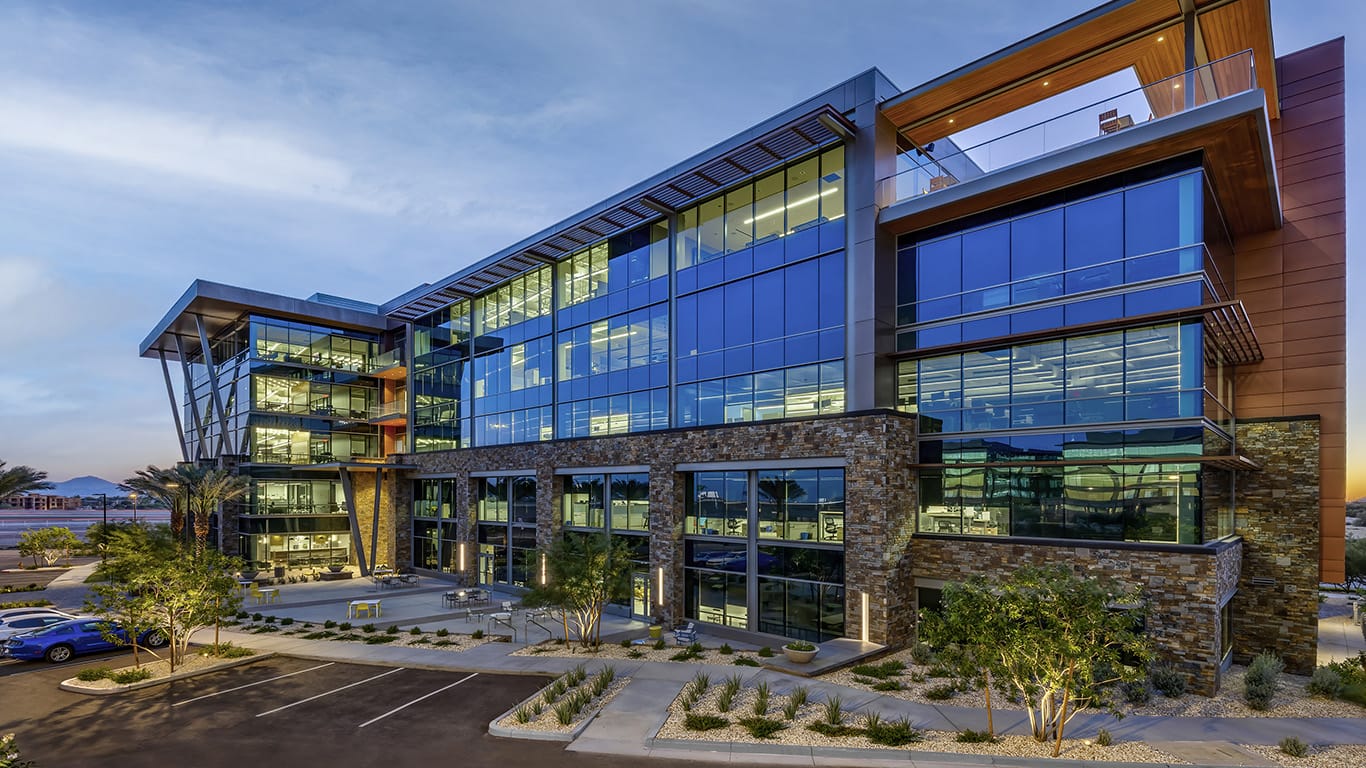
Butler Design Group (BDG) is serious about producing the highest-quality projects, fostering lasting client relationships and ensuring they provide an engaging yet laid-back work culture. It’s this combination that contributes to the architectural firm’s ongoing success over three decades. And this year is a perfect example of that ongoing excellence as BDG has nine projects that are finalists for the 2026 RED Awards — the most of any architecture firm.
As BDG celebrates its 30th anniversary, principals Rick Butler, Korey Wilkes and Ken Miller discuss the company’s past and present, and what’s next for the trusted Valley architecture firm.
DEEPER DIVE: Overflow crowd celebrates winners of the 2026 RED Awards
INDUSTRY INSIGHTS: Want more news like this? Get our free newsletter here
Three decades in the making
A lot can change in 30 years, but what has remained constant for BDG is a strong commitment to serving clients collaboratively and creatively. The firm uses the collective talents of its workplace community to ensure the functional, aesthetic and budgetary needs of clients. This has been the not-so-secret formula that has led to not only client trust but also the longevity of BDG’s business relationships. The proof can be found in more than 150 million square feet of projects with a focus on developer-led industrial, retail, office, interiors and master planning projects.
“When BDG committed to being a long-term partner rather than just a design provider, everything changed,” Wilkes says. “Trust became the foundation of our work. That trust led to deeper relationships, more complex projects and the opportunity to grow thoughtfully rather than quickly.”
Wilkes, who has been with the company for more than 25 years, adds, “The reality is, this wasn’t a turning point, but a foundational principle that started with the founding partners and was embraced and expanded upon by the current leadership team.”
Founding principals create blueprint for success
BDG’s Founders, Rick Butler and Jeff Cutberth, worked hard for years to build a solid succession plan for the firm. While Cutberth retired four years ago, Butler is still involved and contributes his talents to the planning of many projects, along with mentoring staff and cultivating client relationships.
“The relationships made, built and fostered along the way are as rewarding as the work itself,” Butler says.
Those relationships came to life at BDG’s 30th anniversary party, where more than 400 people from all segments of the commercial real estate industry came together to celebrate the success of BDG.
“The party was really a ‘thank you’ to each and every one that attended,” Butler says. “We are deeply grateful for the opportunity to bring our clients’ ideas to life and for every project that was entrusted to us along the way.”
A culture built on collaboration
The spirit and mission of collaboration runs deep throughout BDG, and it starts from the top.
“My leadership style is collaborative and relationship-driven,” Wilkes explains. “Early in my career, leadership meant being deeply involved in the details. As the firm has matured, my role has shifted toward empowering others, creating clarity and removing obstacles so teams can do their best work.”
Wilkes adds that today he approaches leadership less as having all the answers and more about asking the right questions, in addition to the value of listening carefully and fostering an environment where people feel supported and challenged at the same time.
As for Miller’s leadership style, he says he strives to find what fuels someone’s passion and supports their pursuit. “More importantly,” he says, “I encourage others to do the same. We are multipliers for each other’s success, and that’s an accelerating force as BDG grows.”
Investing in people through mentorship
“We invest in professional growth, encourage mentorship and create space for people to build careers that evolve over time,” Wilkes says.
Miller explains that dialogue, hands-on learning and exposure to all aspects of practice, from design to client interaction to project delivery, are encouraged. “Emerging team members are given real responsibility and trust early in their tenure,” he says.
Mentorship extends beyond the firm’s doors. Many of BDG’s employees have been involved in paying their knowledge forward to the next generation of design professionals, participating as mentors for the ACE Mentor Program and sharing their knowledge and experience with high school students interested in architecture, engineering and construction.
“There’s a genuine sense of teamwork, shared responsibility and respect for each person’s contribution,” Wilkes says.
Thoughtful design with lasting impact
Maintaining the highest design standards is as paramount to BDG as keeping collaboration a cornerstone of the firm’s philosophy. The types of designs and projects evolve over the years and decades, but the dedication to upholding these cornerstones remains constant.
“We’ve moved from solving individual building problems to shaping large-scale environments and long-term development visions,” Wilkes says. “What has never changed is our commitment to practical, thoughtful design and architecture that is grounded in function, clarity and purpose.”
Miller adds, “Architecture and community shape each other. Architecture has the ability to create places that support business, foster connection and give structure to a rapidly growing region.”
Wilkes and Miller are united in their belief that the Greater Phoenix community, its clients, industry partners and civic leaders continue to shape BDG by challenging the company to think bigger, work smarter and stay grounded in what truly serves the people who live and work within their community.
Thinking big while staying right-size
Remaining “right-sized” allows BDG to stay true to its foundations to best serve clients and the local community. In 2026, the firm plans to leverage AI, automation and analytics to ensure their approach allows BDG to remain medium-sized while still maintaining a small firm culture with large firm capabilities.
“Our continued efforts are rooted in larger-scale planning and early visioning,” Wilkes elaborates, “work that sets the framework for long-term community growth, new development archetypes and evolving patterns of how people work, live and gather.”
For BDG, taking a macro view of projects, integrating entitlement strategy, infrastructure realities, market forces and design vision are what allow the firm to influence outcomes beyond the micro scale of individual buildings. It’s what positions BDG as strategic partners rather than just service providers.
“At the same time,” he notes, “we are intentionally broadening our reach, both geographically and in the depth of services we provide.”
Steady leadership through change
A testament to the success of a business like BDG, operating over three decades, is its ability to weather the storms and scenarios that can significantly impact its success.
Over 30 years, BDG has navigated the Great Recession, labor shortages and workforce gaps, periodic regulatory and entitlement complexities and, more recently, a global pandemic.
“Every downturn teaches you the same lesson: relationships matter more than ever,” Wilkes says. “Leadership during those times is about staying steady, communicating honestly and making thoughtful decisions, not panicked ones.”
Wilkes’ big takeaway from facing times of adversity: “We’ve learned that if you take care of your people and your clients, they’ll take care of you when things get tough.”
Building on success
BDG’s work across office, industrial, retail and interiors has been recognized through dozens of nominations and awards. Throughout the decades, BDG has earned Architect of the Year honors more than 20 times from NAIOP, along with numerous RED Awards — including multiple Architecture Firm of the Year honors.
But BDG is not resting on its accolades. Celebrating 30 years of business is something for which BDG shows significant appreciation, along with excitement for what comes next.
“What excites me most is the opportunity to continue evolving and embracing new technologies, responding to changing development and construction patterns and expanding how we add value for our clients,” Wilkes says.
BDG is ready for new markets, approaches and product types, acknowledging that firms that are flexible, curious and relationship-driven will be those that succeed in the next decade.
Looking ahead
In closing, BDG’s leaders share what stewarding and reaching 30 years of business means to them.
“Stewarding a 30-year legacy means understanding that what I’ve been given is something to care for, not control,” Wilkes says. “Second only to the people and relationships we cultivate are the exciting opportunities before us — to evolve, embrace emerging technologies, respond to shifting development and construction patterns, and continually add value to our clients.”
“It’s an immense privilege to promote BDG’s future with 30 years of success to guide us. We know who we are, and that provides us great freedom to contemplate who we can be,” Miller says.
Butler says its incredibly gratifying for him see the continuation of the firm he helped create 30 years ago.
“Korey and Ken, our leadership team and talented staff are well positioned to carry our legacy into the future,” Butler says. “What we have added to the Valley’s architectural landscape is crazy to me. Thirty years ago, I really had no idea what was ahead on this journey — and it’s a journey that has a long ways to go.”