
Across the country this year, the future of artificial intelligence and AI infrastructure development has run into a very old problem: the people who live next door.
In Maine, lawmakers passed the first state law in America banning new data centers. In Virginia, the industryʼs historic heartland, supervisors are rewriting zoning codes to slow
the pipeline. In Oregon, Indiana, and Georgia, communities once eager for the tax base are pushing back over water, power, and the weight of hyperscale campuses rising from farmland. The loudest question in American infrastructure is no longer whether we will build the physical engine of AI. It is who will let us.
Arizona, quietly and without apology, has begun to answer.
On April 6, Casa Grande approved a 273-acre rezoning at Interstate 10 and Florence Boulevard. Days later, the Maricopa County Board of Supervisors granted final zoning approval to the Hassayampa Ranch data center project outside Tonopah, a two-stoplight town west of Phoenix now at the center of the national conversation. The developer behind both is Anita Verma-Lallian, founder and chief executive of Arizona Land Consulting, and one of the leading female entrepreneurs in AI data center infrastructure in the country.
In a category defined almost entirely by men in dark suits, she is the exception. She is also, increasingly, the template.
HOT NEWS: Game-changing development projects in Casa Grande and Tonopah earn approvals
MORE NEWS: 10 water and energy takeaways from the 2026 AZRE Forum
The neighbors who changed the blueprint
The Hassayampa approval did not arrive on schedule. It arrived on trust.
When Ron and Kathy Fletcher, whose property sits immediately adjacent to the site, first learned a data center was coming, they did what neighbors have done from New England to the Pacific Northwest: they pushed back. They raised concerns about scale, design, and the idea of an industrial-grade campus anchoring the horizon of the land they had spent decades on.
What happened next is the part that separates Arizona from the rest of the country.
Rather than retreat behind a legal team, the development team went to the Fletchersʼ door. Over months, the application was revised. Buffer zones expanded. Use designations narrowed. Design standards sharpened. By March 3, more than five weeks before the final hearing, the Fletchers submitted a formal letter of support to the Maricopa County Board of Supervisors.
“We reside immediately adjacent to the Hassayampa Ranch property, and we are in support of this development,” says Ron and Kathy Fletcher. “During the application process, we engaged in close collaboration with the development team. As a result of our ongoing feedback, the team made several modifications to the application, ensuring it better met our needs.ˮ
By the time the hearing was gavelled to order, several residents who had once opposed the project were seated in support. In a national landscape where data center hearings routinely run past midnight and end in shouting matches, that is not a procedural detail. It is a political feat.
“This approval is meaningful to me not because of what it permits, but because of how we got here,” says Verma-Lallian. “We spent months in conversation with the people who live closest to these sites before we asked anyone for anything. That is the only way I know how to build.ˮ
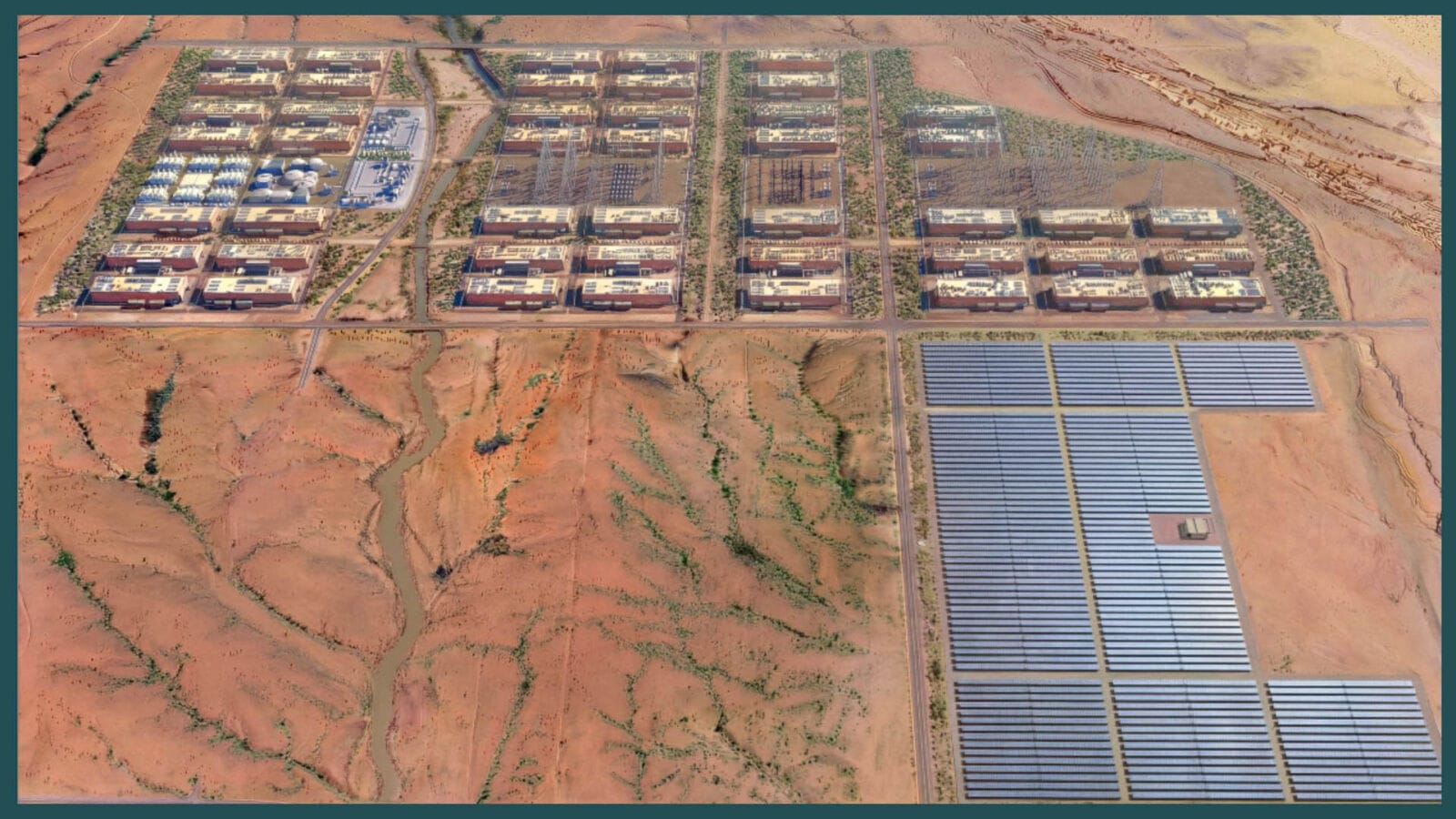
A state that said ‘yes,’ carefully
The Arizona thesis is not that every data center is a good data center. It is that the right ones, developed the right way, are worth fighting for.
Nationally, the opposite instinct is winning. The question of who hosts the infrastructure of the AI century is beginning to look a lot like the question of who hosted the oil refineries of the last one.
Arizona has chosen to be in the business. The state has the tax framework, the utility capacity, and a regulatory culture that still prefers to say yes with conditions rather than no by default. It also has, crucially, land.
What Arizona is adding, with Verma-Lallian as its most visible practitioner, is the variable every other state has underestimated: the neighbors.
What Casa Grande tells you
If Hassayampa is the story of a data center approved because the community shaped it, Casa Grande is the story of what happens when the community decides a different project is the better fit.
The 273-acre site at Interstate 10 and Florence Boulevard is mixed-use commercial and light industrial, not a data center. After the Planning and Zoning Commission raised earlier concerns, the application was revised to remove data centers, residential uses, and truck stops. A national grocery operator, currently in escrow, is expected to anchor the site.
The work is not to force a use onto a place. It is to find the use a place is ready to say yes to. Hassayampa was ready. Casa Grande, at this address, was not. Both outcomes are wins, because both were built on the same method.
Call her a ‘tech-sis’
For a decade, the archetype running American infrastructure has been the tech bro: hoodie, slide deck, move fast, apologize later. It is a posture that has built extraordinary companies and, lately, much of the political resistance is now hardening against the AI buildout. Communities no longer wait for the ribbon cutting to ask the hard questions.
Verma-Lallian is something else entirely. Call her a tech-sis. The word is a wink, but the method is serious. Where the tech bro arrives with certainty, the tech-sis arrives with a notebook. Where the tech bro optimizes for speed to permit, the tech-sis optimizes for the letter of support from the house next door. The first approach has made enemies in half the country. The second is quietly making Arizona the winner.
In a sector where scale and certainty are often confused for sophistication, she has built a reputation for arriving early, listening longer than her competition, and redesigning her own projects in public.
Her portfolio spans data centers, mixed-use, and community capital, most recently through the Arizona Promise Fund, a community benefit vehicle that directs investment back into the regions her projects touch. The sum is beginning to look like something larger than a development pipeline. It looks like a model.
What Arizona wins
The race to build the physical substrate of artificial intelligence, the server halls, the power interconnects, the specialized real estate of the coming decade, is a race Arizona is positioned to win. The wins will be measured in tax base, in jobs, in the gravitational pull of an emerging AI corridor from the West Valley down to Pinal County. They will also be measured, quietly, in something harder to name: the number of places in America where the most important infrastructure of the century is actually welcome.
Maine will not be in that group. Arizona, at the current trajectory, will be at the front of it.
“The future is not something you do to a community,” says Verma-Lallian. “It is something you build with them. If we get that part right, Arizona wins everything that comes next.ˮ
In Tonopah this month, she did. The rest of the country is watching.