Arizona’s growth story is easy to see above ground. Semiconductor facilities are expanding in the North Valley, data center campuses are spreading across the region, and advanced manufacturing projects continue to reshape communities throughout the state. Less visible, but increasingly important to whether that growth can continue, is the infrastructure being built and maintained underground. Even something as commonplace as a manhole plays a role in keeping systems accessible, operational and compliant, while the broader network of underground infrastructure helps ensure clean water reaches everywhere that needs it and the wastewater moves safely away. This includes the critical water and wastewater systems that support homes, businesses, hospitals and the industries driving Arizona’s next phase of growth.
MORE NEWS: How SRP helps Valley businesses turn water conservation into long-term water resiliency
DEEPER DIVE: Arizona faces biggest Colorado River cuts under new federal plan
Water has always shaped development in Arizona, but it is becoming a more significant factor in when and where projects move forward. At the 2026 AZRE Forum, industry leaders described Arizona as shifting from a land-driven development market toward an infrastructure-driven one, where access to long-term water and power can determine project feasibility.
With more than 14 years of experience specializing in complex piping systems, industrial coatings, plumbing, HVAC, and specialty mechanical solutions for mission-critical facilities, including water infrastructure across the Southwest, PPS has seen firsthand the challenges facing the water industry. The question is no longer simply whether Arizona has water, but whether the infrastructure exists and has the capacity to move, store, treat and reuse water as demand grows.
Three issues are becoming especially important: replacing aging infrastructure while maintaining service, planning earlier for large industrial water users and ensuring physical systems can support new water-management and reuse technologies. One of the biggest road blocks is that these aging systems need to be upgraded with little to no disruption to the services they provide.
Arizona is preparing for future growth while continuing to rely on infrastructure that has already served communities for decades. The EPA estimates approximately $12 billion in drinking-water infrastructure needs across Arizona over 20 years, including about $7.5 billion for distribution and transmission systems. So how do we modernize our dated water infrastructure and meet today’s rigorous environmental standards, while also building for the next 50 years?
Unfortunately, replacing aging infrastructure is rarely a simple remove-and-replace process. Water systems often need to remain operational throughout construction. That means maintaining pressure and fire flow, sequencing shutdowns, installing temporary bypasses and adapting to field conditions that may differ from original plans. When a pipeline serves a hospital, manufacturing facility or entire neighborhood, taking it offline is not always an option.
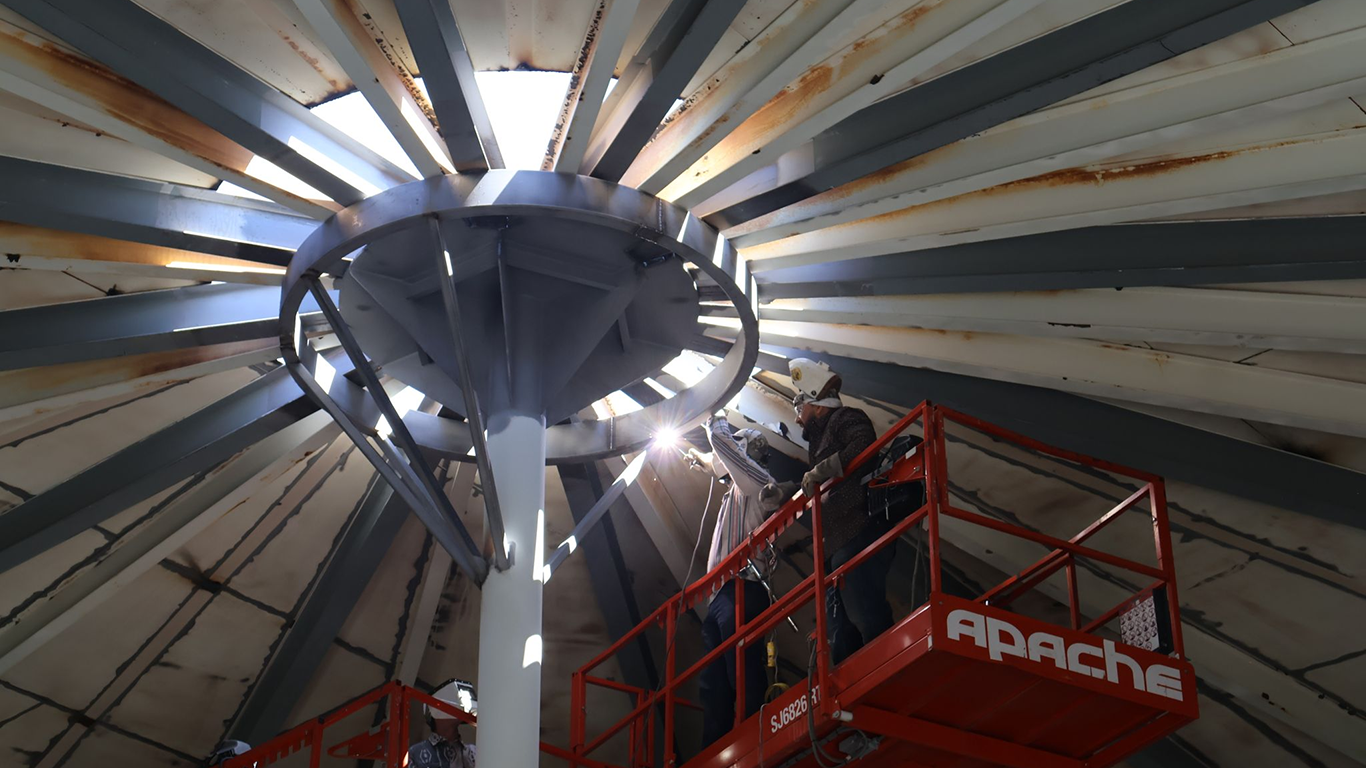
That is where specialized rehabilitation and repair approaches can make a meaningful difference. PPS has worked on solutions designed to restore flow capacity in aging pipelines from within the existing system, reducing the need to excavate roads or disrupt the neighborhoods and businesses above them. Pipeline coating repairs and other rehabilitation strategies can extend the useful life of existing infrastructure while minimizing disruption. This is an increasingly important consideration as Arizona’s communities grow around infrastructure that cannot simply be shut down for replacement.
In addition, many pipelines were installed decades ago, before standardized as-built documentation became common practice, meaning existing drawings and specifications do not always reflect what crews actually encounter underground. When work takes place within active public roadways or around live systems, even seemingly straightforward repairs can require real-time adjustments in the field.
When infrastructure serves hospitals, manufacturing facilities or entire neighborhoods, continuity becomes just as important as the upgrade itself. Every shutoff, bypass or tie-in must be carefully sequenced with the facility in advance because even a brief interruption can halt production, create unsafe conditions in a hospital or leave a neighborhood without adequate water pressure and fire protection. For a manufacturing facility, a delay of only a few hours translates into tens to hundreds of thousands of dollars in lost production before accounting for the time and cost required to restart equipment.
Projects like these are a reminder that resilience is not just about developing new water supplies, but protecting and restoring our infrastructure as is.
Industrial growth is changing the water conversation
Arizona’s industrial expansion adds another layer of complexity. Arizona State University research shows that nearly 40% of municipal water use in metro Phoenix supports commercial, industrial and institutional users, including semiconductor facilities, data centers and hospitals.
These users have very different operating needs. Cooling systems, process requirements, reuse strategies and facility design can significantly change water demand. For utilities and infrastructure teams, total annual usage is just part of the equation. We need to also consider pressure, redundancy, timing of demand and reuse potential.
For Arizona’s largest industrial projects, water needs to be considered much like power. It can influence site selection, facility design, construction sequencing and long-term operations. Water capacity can make or break site viability, particularly for data centers, manufacturing plants and processing facilities. Cooling, wash down and production needs must be accounted for from the beginning and construction often cannot move forward until well capacity, treatment availability or pipeline tie-ins are in place. Just as with power, capacity and redundancy on the water side of the construction work cannot be an afterthought. Reliable water, like reliable power, isn’t optional– it’s a must for today’s water infrastructure.
Technology is only as effective as the infrastructure supporting it
Arizona is investing in smarter ways to manage water. Phoenix has expanded smart leak-detection technology, while the state is advancing water reuse through programs such as Arizona’s Advanced Water Purification framework.
Phoenix’s Pure Water initiative at the Cave Creek facility is expected to produce nearly 7 million gallons of purified water per day. That treatment capability is significant, but treatment is only part of the equation. Reservoirs, pump stations, pipelines and other infrastructure are still required to move and store that water.
The same is true across modern water systems. Sensors can identify leaks, but pipes still need to be repaired. Advanced treatment can create new supply, but distribution systems must be capable of delivering it. Digital tools can improve planning, but physical infrastructure still has to perform reliably in the field.
That is why modernization works best when technology and construction are considered together. New systems should be designed with monitoring and controls built in from the start, while older systems need detection technology paired with 24/7 field response. Identifying a leak only goes so far if no one can act on it quickly. In Arizona, minutes matter: every minute of lost water is supply that the state cannot afford to waste, along with the cost and disruption that comes with it.
Arizona’s long-term water future will come from a combination of conservation, reuse, restored wells, upgraded pipelines, new treatment capacity and stronger connections between all of its systems. At PPS, we are working with partners across the state to help keep Arizona’s water flowing and ensure we are building water resilience one solution at a time. From aging well rehabilitation to pipeline coating repairs we are implementing solutions that are critical to keeping the state running. Solutions like restoring full flow capacity from the inside out, extends the life of existing infrastructure without excavating roads or disrupting the neighborhoods above them.
As Arizona competes for the industries driving its next phase of growth, such as data centers, water infrastructure must be treated as part of the economic development conversation from the beginning. The facilities rising across the state may be highly visible, but their success will continue to depend on infrastructure underneath that most people will never see.
Author: Andrew Goodwin is president of PPS, a Phoenix-based specialty contractor providing piping, fabrication, mechanical and civil infrastructure services for municipal, industrial, commercial and data center projects. PPS is a leading specialty contractor serving clients nationwide, delivering fabrication, plumbing, HVAC, coatings, and complex process piping solutions across a variety of markets. PPS partners with owners, developers, and general contractors to deliver high-quality, safety-focused construction for AI data centers, semiconductor and advanced manufacturing facilities, water and wastewater infrastructure, healthcare, commercial, and industrial projects. For more information, visit www.ppsphx.com.