
Brad Wright, president of Kovach, has never been busier, and it’s easy to understand why. As a leading designer, manufacturer and installer of commercial building enclosures, Kovach is spearheading numerous projects across the Valley, including Taiwan Semiconductor Manufacturing Company (TSMC). Kovach’s projects — including TSMC, Intel, the Phoenix Mercury Training Facility and Center for Advanced Molecular and Immunological Therapies (CAMI) in Downtown Phoenix — reflect much of what’s to come over the next year.
Having a hand in some of the state’s most transformative developments gives Wright a unique perspective on the opportunities and challenges that lie ahead for commercial construction in 2026.
READ MORE: Here’s why the Arizona economy is poised to accelerate
LOCAL NEWS: Want more stories like this? Get our free newsletter here
QUALITY AND EXPERTISE
In a time when the construction industry in Arizona is booming, companies must differentiate themselves to remain competitive.
“I think now you’re seeing a rush to quality,” Wright says. “Companies like Kovach, that have been around for years, have the expertise and the grit needed in this market.”
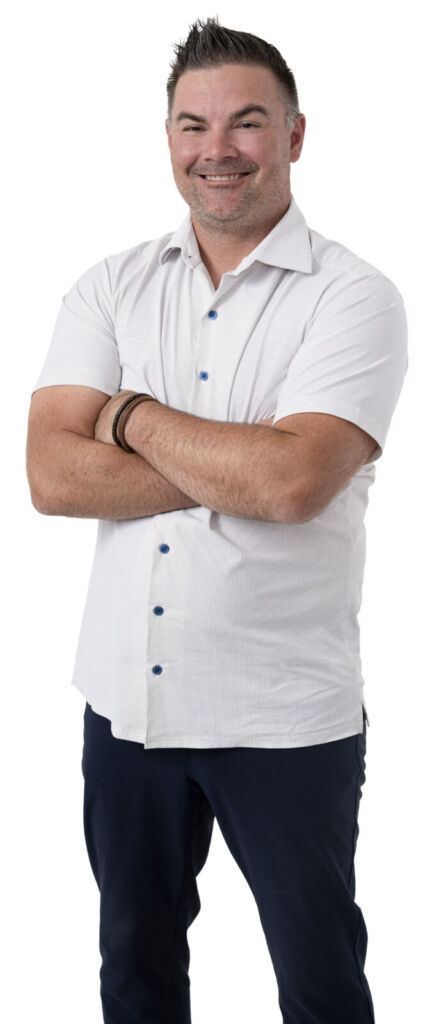
Kovach, specializing in architectural metal, glass, curtain walls and metal panels, has built a trusted reputation for quality materials and project execution.
“If you drive by the [Mortgage Matchup Center] and you see the shimmering orange tile wall, Kovach did that,” Wright says. “If you drive on your way to Flagstaff or returning from Sedona, and you see TSMC and the immense construction, Kovach hasn’t done it all, but we’ve done a great majority of the exterior gray panels on that.”
No matter what materials are incorporated in a project, Wright explains that Kovach’s expertise in each area — whether it’s glass, architectural metal or rainscreens — each pillar is rooted in subject matter expertise.
“The cool part about it is that we don’t like the silo effect,” Wright explains. “So we have bridges that connect silos. We never lose sight of what the other [silo] is doing. We might have multiple scopes on the same project. It’s the people, the bridges if you will, that keep it going.”
INNOVATION STARTS WITH PEOPLE
The expertise of Kovach’s employees is what Wright credits for the company’s innovative spirit. “Everyone strives to put out our best product,” he says. “We’ve really nurtured a culture of innovation, one that explores new products, new ideas, new design features and more efficiency.”
Wright adds that Kovach has stayed true to its roots while evolving its culture and expanding into new types of work. Part of his leadership is embedded in the family values that have remained steadfast during Kovach’s 50-year legacy.
“Innovating and growing and teaching folks how to think on a larger scale is how to take this company and make sure that everyone knows about it,” he says. “The people are incredible. I have a leadership team that I’d put up against anyone in the state, which helps me stay out of the weeds and stay focused on vision and development of our brand and relationships with clients.”
PROJECT SELECTION
Kovach’s reputation for high quality, expertise and innovation opens the door for lucrative and diverse project selection.
“I think it could be overwhelming for a lot of people,” Wright says, “but I think that any construction project, you start with a clean slate and you build it out on paper how you want it to go in the field.”
Kovach selects projects based on the relationships it has nurtured with architects and general contractors, as well as the scope and location.
“It’s not that we’re overly picky, but we’re very keen on finding the perfect storm for bigger projects. And that does exist, and it’s because of the hard work of our pre-construction team and the hard work of our operations team bringing those projects to life,” Wright says.
TRENDS
One current and on-the-horizon construction trend recognized by Wright is an uptick in the conversion of office complexes into apartments.
Apartments and urban areas will continue to emphasize multi-use, work-life spaces. Wright points to earlier models like Scottsdale’s Kierland Comons and the Mortgage Matchup Center in Downtown Phoenix.
Another rising construction trend is data center expansion, mirroring projects like TSMC. These developments are what Wright refers to as “mega projects.”
“These data centers are giant, and although they don’t end up employing a huge amount of people, they do during construction,” he says.
Wright also points out that Arizona still has ample developable space. The marriage between available space and a region with heavy sunshine is optimal for data centers that require massive amounts of energy. “I think that there’s got to be some collaboration between solar and data centers,” he says.
CHALLENGES AHEAD?
Lack of affordable housing continues to be an issue and has the potential to impact commercial development by creating labor shortages, limiting the growth of a local customer base and driving up land costs.
“The housing crisis is real,” Wright says. “It will be really interesting to see how that’s addressed over the next couple of years if the housing market isn’t addressed.”
Wright adds, “One of those pillar moments in American culture is buying your own property, buying your own house,” he says. “Ten to 15 years ago, you could get an FHA loan, start your first house, move in and five years down the road, you sell it, get into the school district you want and you have kids. That’s just not happening.”
Fewer homes mean less available labor, which Wright says could make mega projects like TSMC and other data centers harder to tackle. “It’s a domino effect that we’re going to have to address,” he says.
Midterms in 2026 could potentially lead to changes in available housing. “Hopefully, [decision makers] correct course and we continue to add to our population strategically to make things somewhat affordable for folks and create awesome jobs,” Wright says.
WHAT’S NEXT FOR CONSTRUCTION IN ARIZONA?
Arizona’s construction outlook has remained steady, even amid economic and political uncertainty. Now and heading into 2026, Wright predicts that while things may slow down some in the market, quality will remain key and ensure the health of companies like Kovach and the ability to remain competitive.
“We’re seeing some projects that are on paper, but aren’t getting over the finish line to close and really start construction,” Wright notes. “There’s never been a crystal ball in construction. We’re one day away from an event that might impact the commercial side or the residential side.”
And while future economic and political factors could impact the steadiness of commercial construction, Wright maintains optimism for the future.
“I think that we’re going to continue to see really good, large commercial growth in Arizona.”