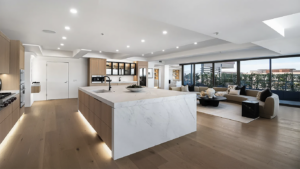
The Arizona housing market, like the overall economy, is telling two conflicting stories. The high end of the market continues to sell at a healthy pace while setting continued record prices. This is supported by buyers who aren’t constrained by financing and are making decisions based on wants rather than needs. At the same time, entry-level and mid-tier properties are, on average, lingering on the market, with sellers facing more price reductions and fewer multiple-offer situations than just a few years ago.
This split, also known as bifurcation, is shaping how buyers, sellers, and investors make decisions across the Valley. And while it can feel like slower market in certain segments, understanding the forces behind the divide can help you move forward with clarity.
READ MORE: Here’s why the Arizona economy is poised to accelerate
LOCAL NEWS: Want more stories like this? Get our free newsletter here
Why Arizona is Experiencing Two Markets at Once
Several factors are driving this widening gap. The large rise in interest rates (which are finally getting some downward pressure) had an outsized effect on all types of buyers who consider their monthly payments as part of their decision process. While this has decreased the overall demand from buyers, inventory still remains at average or below average historical numbers which has sustained the balance on the entry to moderate priced housing market. Prices have fallen from its highs in this segment but mostly remained steady while the higher end market continues to increase in price. Higher-end buyers, meanwhile, tend to be less impacted by rate hikes, as they rely less on financing and often times purchase with cash or sizeable down payments.
Inventory continues to be uneven. In some luxury neighborhoods, limited availability can still drive bidding wars. Meanwhile, mid-tier and entry-level homes may be seeing more supply, which is giving buyers perceived leverage to negotiate. But many of those homes either have unrealistic sellers or are in need of updating. These dynamics are creating an unusual reality: both buyers and sellers believe the market advantages themselves.
What This Means for Buyers, Sellers, and Investors

For buyers in the entry and mid-tier ranges, the slowdown isn’t all bad news. A return to healthy inventory levels means more choice, less pressure, and more room to negotiate on price, closing costs concessions, rate buydowns, repairs, or some combination price and seller concessions. It may not feel as easy, but buyers now have more breathing room to make informed decisions that feel comfortable for themselves.
But keep in mind, if you’re in the luxury market, speed still matters. Desirable properties are moving quickly, and being ready with a strong offers is essential. Buyers who are competing with you are capable and have been waiting and are ready to make quick decisions.
Through all this, sellers must stay realistic. In all price points pricing strategy is critical—overpricing will quickly lead to longer days on market, deflated expectations, and offers where buyers feel they can negotiate hard. While the luxury market remains strong, there are wide gaps between special homes and those that are new or remodeled. Make sure you and your agent are presenting your home in the best light. Staging and marketing can make the difference between a good offer and a record-setting one. Presentation still counts.
For investors, bifurcation creates opportunity. Aspiration homes may offer better long-term value, with room for appreciation as rates level out. Luxury rentals remain strong in high-demand neighborhoods.
What’s Ahead
The split in Arizona’s market is unlikely to disappear soon. The cost of our median home ownership is still on average six times the median wage for the median home which currently makes this segment of the market less affordable. Interest rates stabilizing is unlikely to change that. Only greater supply or wage growth will dramatically improve that segment. Fortunately, prices here remain steady due to lower buyer demand or should I say, buyer ability to qualify and purchase. Meanwhile population growth, even with higher rates, will bring more buyers into the market which will continue fueling pricing in the luxury market. Neighborhoods may see values move at different speeds depending on desirability, price point and buyer profile.
For families weighing whether to buy, sell, or wait, the key is not to get lost in the headlines. What matters most is understanding the dynamics in your price range and neighborhood. With the right strategy, abundant opportunities still exist. Bifurcation doesn’t have to be a barrier, it can be a roadmap to smart choices, long-term stability, and a more confident path forward.
Author: Keith Mishkin is a licensed real estate Broker and the Founder/Owner of Cambridge Propertiesin Phoenix, Arizona.