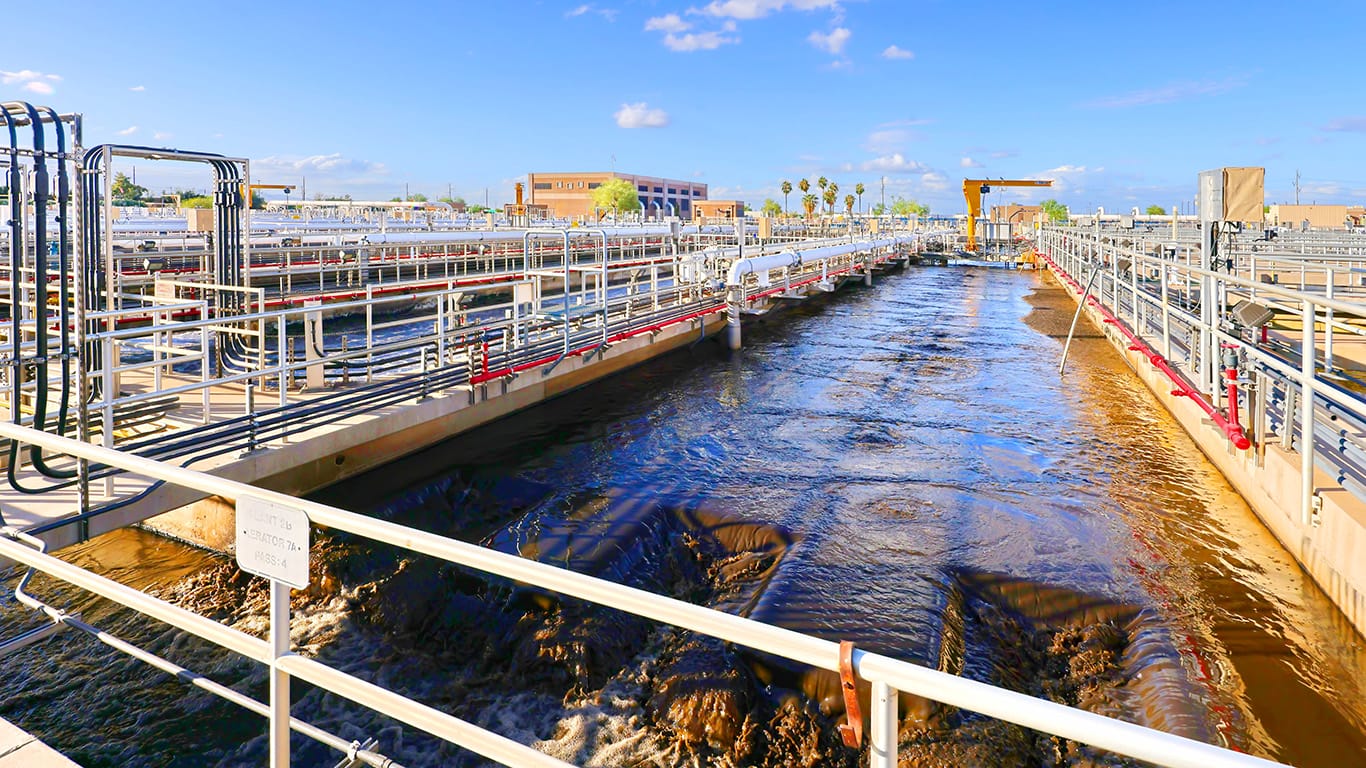
The City of Phoenix Water Services Department and McCarthy Building Companies have completed the $73.5 million major rehabilitation of Plant 2B at the 91st Avenue Wastewater Treatment Plant, marking an important milestone in the ongoing modernization and maintenance of the region’s critical wastewater infrastructure.
The multiyear project involved extensive improvements to aging treatment equipment, structures and supporting systems. The rehabilitation helps extend the useful life of existing infrastructure, improve operational reliability and provide greater flexibility for future maintenance while supporting continued wastewater treatment operations.
The 91st Avenue Wastewater Treatment Plant is a critical regional facility operated by the City of Phoenix through the Sub-Regional Operating Group (SROG), a partnership among Phoenix, Glendale, Mesa, Scottsdale and Tempe. The facility plays an essential role in protecting public health, supporting environmental stewardship and providing wastewater treatment services across the metropolitan area.
“Investing in our existing infrastructure is essential to maintaining the reliable wastewater services our communities depend on every day,” said Brandy Kelso, Phoenix Water Services Director. “The rehabilitation of Plant 2B reflects our commitment to responsible infrastructure management and helps ensures this important regional facility can continue serving the Valley for years to come. Projects like this are an example of the planning, collaboration and investment required to maintain resilient water and wastewater systems.”
MORE NEWS: The 10 scariest jobs in America that pay surprisingly well
DEEPER DIVE: 10 Arizona restaurants make Yelp’s Top 100 Mexican food spots
Modernizing Critical Infrastructure
Originally constructed with treatment systems designed in the 1980s, Plant 2B required significant rehabilitation to address aging equipment, structural conditions and changing operational needs.
The project included extensive upgrades to the treatment train, the series of processes used to remove contaminants from wastewater before it is discharged or reused. Improvements focused on modernizing essential components and strengthening the plant’s ability to maintain dependable operations.
Major rehabilitation work included:
- Removal and replacement of equipment in four 140-foot-diameter primary sedimentation basins
- Structural and concrete rehabilitation within the aeration basins and other treatment areas
- Installation of new coarse- and fine-bubble aeration diffuser systems
- Rehabilitation of the primary sludge pump station and return activated sludge/waste activated sludge pump station
- Improvements to secondary sedimentation basins, effluent distribution structures and associated treatment equipment
- Upgrades to buried piping, electrical equipment and process control systems
- Repairs and improvements to a reuse water pump station and a chlorination facility
- Installation of a new odor-control biofilter to replace the existing chemical scrubber system
As one of the nation’s largest in-ground soil media biofilters, the new odor-control biofilter uses biological treatment processes to manage odors associated with wastewater operations. The system includes four in-ground treatment cells containing specialized filtration media, along with air-distribution piping, fans and supporting equipment.
Together, these improvements modernize critical treatment infrastructure and provide operational benefits that will support the long-term performance and maintainability of the facility.
Supporting Regional Infrastructure Reliability
The 91st Avenue Wastewater Treatment Plant is an important component of the Valley’s regional wastewater system. Through the SROG partnership, Phoenix and neighboring communities work collaboratively to maintain the infrastructure necessary to support residents, businesses and continued economic activity.
Rehabilitation projects such as Plant 2B are part of the ongoing investment required to preserve existing treatment capacity, maintain regulatory compliance and help ensure reliable service as facilities age.
Completing major construction within an operating wastewater treatment facility also requires significant coordination to maintain treatment operations while replacing and rehabilitating essential equipment.
The Plant 2B rehabilitation began in June 2023 and was recently completed in September 2026. Hazen and Sawyer served as the project’s design engineer, and McCarthy Building Companies served as construction manager at risk.
The project also involved specialized trade partners, including OCM Inc., The Truesdell Corporation, Penington Painting Company and Industrial Power Solutions.
The successful completion of the rehabilitation reflects the collaboration among the SROG partner cities, City of Phoenix staff, engineering consultants, construction teams and specialized contractors working together to modernize critical public infrastructure.
McCarthy delivers the infrastructure projects that help communities grow, operate and adapt for the future. From water and wastewater improvements to heavy civil and power sites, these projects demand technical expertise, close stakeholder coordination and a long-term view of how essential infrastructure supports daily life and economic growth.
The 91st Avenue Wastewater Treatment Plant rehabilitation reflects McCarthy’s commitment to delivering infrastructure that improves reliability, increases capacity and positively impacts the Valley.