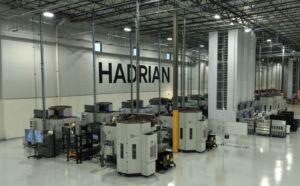
Arizona is rapidly emerging as a premier destination for data center development, driven by the exponential growth of artificial intelligence (AI) and the increasing demand for robust digital infrastructure. Developers are drawn to the region’s geographic stability, strong power grid and low risk of natural disaster.
What many people don’t realize is that behind the surge of AI and data centers lies the critical work of industrial contractors who design and build the foundational systems that make these high-tech facilities possible.
At Professional Piping Systems (PPS), we understand that meeting the pace of hyperscale data center growth in Arizona requires deep coordination and understanding of mechanical, structural and utility systems.
LOCAL NEWS: 100 best places to work and live in Arizona for 2025
INDUSTRY INSIGHTS: Want more news like this? Get our free newsletter here
Behind the Backbone of AI
Compared to traditional data centers, AI workloads require significantly more processing power, cooling and backup systems. Every facility must meet exacting standards, from the underground utilities that bring in power and water to the piping systems that support HVAC operations and cooling loops.
Contractors are engaged early to design and install mission-critical systems tailored to the complex components of AI. Every weld, joint and anchor must support continuous uptime and increased heat loads while allowing for future scalability. These systems aren’t one-size-fits-all. Each data center has unique requirements based on power density, cooling load and equipment layout, especially as AI introduces higher processing requirements and heat outputs.
Industrial contractors work directly with general contractors and developers to deliver these highly specialized systems. Whether the job involves underground utilities, mechanical piping or structural steel, the work must be executed with accuracy and built to scale.
Speed, Scale and Fabrication at the Core
Speed is another constant pressure point. Many projects operate on hyperscale timelines where delays of even a few days can jeopardize contracts, impact launch dates and cost clients millions of dollars. That’s why in-house fabrication and rapid response capabilities have become essential. By producing pipe spools, supports and structural components internally, contractors like PPS can avoid long lead times, maintain tighter quality control and pivot quickly when project conditions change.
This ability to move fast while maintaining precision is what makes the difference in hyperscale projects and keeps Arizona competitive in the national data center race.
Sustainability Starts Below Ground
As the size and number of data centers increase, so do their resource demands. In Arizona, where water conservation is a high priority, sustainability must begin with infrastructure.
Developers are prioritizing solutions like closed-loop water systems, air-cooled chillers and recycled water integration. These features reduce pressure on municipal water supplies while maintaining the high performance that AI-driven workloads require.
Contractors play a key role in implementing these systems. At PPS, we work alongside engineers and environmental consultants to design infrastructure that supports long-term efficiency. That includes planning for future retrofits, using corrosion-resistant materials and ensuring compliance with Arizona’s evolving sustainability standards. These systems are not just environmentally responsible. They are critical to the long-term viability of Arizona as a technology hub.
Where Tech Meets Trades
Behind every AI-powered data center is a team of skilled tradespeople whose expertise turns blueprints into reality. While data centers represent some of the most advanced technology in the world, the infrastructure that supports them relies on hands-on craftsmanship. Welders, pipefitters, millwrights and equipment operators are responsible for installing systems that support everything from fiber optics to AI supercomputers. As more projects break ground across the state, the need for skilled trades is growing alongside the need for data.
This is creating a surge in job opportunities and breathing new life into trades education. At PPS, we have seen this shift firsthand. We’ve grown our workforce significantly in recent years to meet this shift, creating local jobs and investing in the next generation of tradespeople who will power the infrastructure of tomorrow. For many, it isn’t just a job. It is a career path that offers purpose and a front-row seat to one of the most important infrastructure shifts of our time.
Arizona’s rise as a data center hub is the result of strategic investment, geographic advantage and overwhelming talent in skilled trades. As we look ahead to what AI will demand next, none of it works without the people building the groundwork to support it.
Author: Andrew Goodwin is president at Professional Piping Systems (PPS), Arizona’s “one stop shop” industrial piping company specializing in the fabrication, maintenance, installation and project management of piping systems. To learn more, visit www.ppsphx.com.