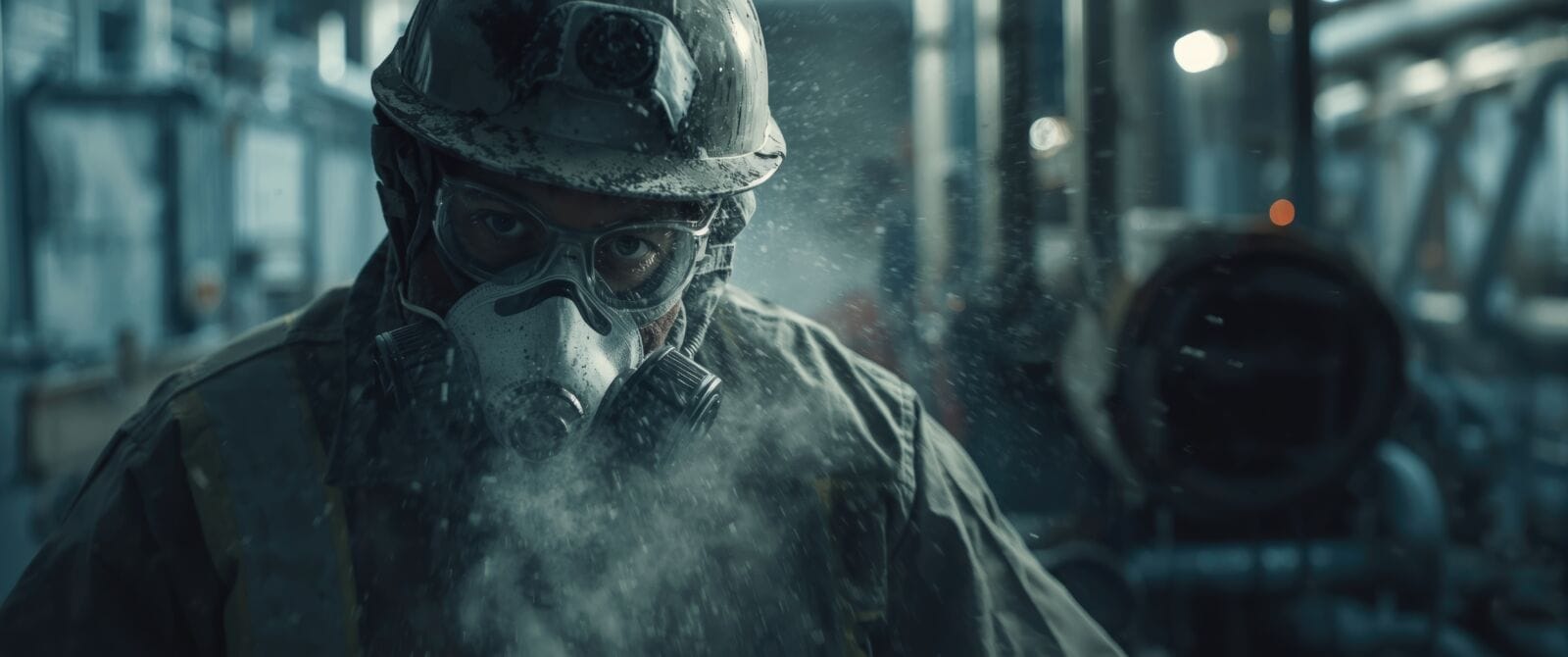
For many people, asbestos feels like a problem that belongs to the past, something that affected factory workers and shipyard crews in grainy black-and-white photographs. The reality is far more present-tense. Asbestos remains embedded in millions of buildings across the United States, regulations around it are still being contested in federal court, and tens of thousands of workers face meaningful exposure risks every year. If you work in construction, manufacturing, firefighting, or any number of other trades, understanding asbestos isn’t a history lesson. It’s a practical necessity.
What Is Asbestos and Why Was It Used?
Asbestos is a naturally occurring mineral fiber prized for its extraordinary resistance to heat, fire, and chemical corrosion. For much of the 20th century, it was considered a wonder material. Builders wove it into insulation, floor tiles, roofing shingles, pipe coverings, and ceiling panels. Manufacturers lined protective equipment with it. Shipyards used it extensively to fireproof vessels. The U.S. military incorporated it into everything from barracks construction to naval ships.
The problem is that asbestos fibers, when disturbed, become airborne and microscopic. When inhaled, they embed permanently in the lining of the lungs and other organs. The body cannot break them down or expel them. Over years and decades, this silent accumulation can lead to a range of serious diseases, most notably mesothelioma: a rare and aggressive cancer of the tissue lining the lungs, abdomen, or heart.
Is Asbestos Still a Risk Today?
This is the question most workers ask, and the answer is yes, in two distinct ways.
The first is current use. Asbestos has not been fully banned in the United States. The EPA finalized a rule in 2024 targeting chrysotile asbestos, the last form still actively used in certain American industries. However, that rule is now facing a significant legal challenge in the Fifth Circuit Court of Appeals, with oral arguments scheduled for June 2026. Industry groups argue the EPA overstepped its authority; public health advocates are fighting to uphold and strengthen the ban. Until the legal landscape settles, some commercial use continues.
The second and larger risk is legacy exposure. Tens of millions of older structures, including homes, schools, office buildings, factories, and power plants built before the 1980s, still contain asbestos in their original materials. That asbestos poses little risk when left completely undisturbed. The danger begins the moment those materials are cut, drilled, sanded, broken, or demolished. Renovation work, routine maintenance, and disaster response all create exactly those conditions.
Adding urgency to the issue, climate change is making legacy asbestos more dangerous. As hurricanes, wildfires, and other disasters become more frequent and severe, they destroy older buildings and release asbestos fibers into the surrounding air, exposing not just workers on site, but nearby residents and emergency responders with no protective gear at all.
Which Workers Face the Greatest Risk?
Asbestos exposure is not evenly distributed. Certain occupations carry significantly higher risk than others, and workers in these fields deserve to understand why.
Construction and demolition workers are among the most consistently at-risk groups. Disturbing walls, ceilings, flooring, or pipe insulation in older buildings releases fibers directly into the breathing zone of workers who may have no idea the material contains asbestos.
Firefighters face a particularly complex exposure profile. Asbestos is estimated to still lurk in around 30 million homes, and firefighters arriving at an emergency have no way of knowing in advance whether the structure contains hazardous materials. The International Association of Fire Fighters reported that 80% of those added to the Fallen Fire Fighter Memorial in 2025 died from occupational cancer, a grim reflection of the cumulative toll of hazardous exposures in the profession.
Shipyard workers continue to encounter asbestos in older vessels, where it was used extensively in insulation, gaskets, and flooring. Power plant workers face similar risks during maintenance on aging turbines and pipe systems. Industrial and factory workers in facilities that predate modern asbestos regulations may disturb legacy materials during routine repair work. Automotive mechanics can be exposed when working with older brake pads, clutch components, and gaskets that were manufactured with asbestos-containing materials.
Veterans represent another important group. Many military personnel were exposed to asbestos during their service, particularly those who worked in Navy shipyards or aboard older vessels. That exposure often continued into civilian careers in construction, firefighting, or industrial trades, compounding the risk over decades.
Why Symptoms Take So Long to Appear
One of the most disorienting aspects of asbestos-related disease is the latency period. Mesothelioma and other asbestos-related illnesses typically take 20 to 50 years to develop after initial exposure. This means that a worker exposed to asbestos in the 1980s or 1990s may only be receiving a diagnosis today. It also means that even as asbestos use has declined, the disease burden in the population continues to grow. More than 200,000 people globally die from asbestos-related health conditions every year, according to the World Health Organization, and over 70% of all fatalities from occupational cancers worldwide trace back to asbestos exposure.
This long latency makes early awareness especially important. Workers who believe they may have been exposed, even decades ago, should discuss their occupational history with a doctor and ask about appropriate screening options.
What Workers Can Do
If you work in a high-risk industry, the first step is awareness. Know the age of the buildings or structures you work in. Ask your employer whether asbestos surveys have been conducted before any renovation or demolition work begins. In the United States, OSHA maintains workplace exposure standards and requires employers to inform workers about known asbestos-containing materials on site.
If you suspect asbestos is present, do not disturb the material. Trained abatement professionals must handle removal under controlled conditions with proper protective equipment. Never sand, drill, or cut into a suspected asbestos-containing material without confirmation that the area has been tested and cleared.
For anyone already diagnosed with an asbestos-related illness, or for families trying to understand what a diagnosis means, finding reliable information and community is critical. Resources like mesothelioma support can help patients and families navigate the medical, financial, and emotional dimensions of a condition that, despite decades of research, remains as devastating as ever.
The Bottom Line
Asbestos is not a relic. It is woven into the physical fabric of older American infrastructure, still present in some commercial supply chains, and still generating thousands of new disease diagnoses every year. Workers in construction, the trades, emergency services, and industrial settings face real and ongoing risk, not from the distant past, but from the buildings and materials they encounter on the job today. Knowing the facts, asking the right questions, and pushing employers to take their legal obligations seriously are the most powerful tools any worker has.