
The new performance priority
Nearly 60 percent of employees report feeling burned out, and global sleep quality has declined for the third consecutive year. As 2026 begins, the evidence is hard to ignore: pushing harder is no longer working. The highest performers are shifting their focus from relentless effort to something more counterintuitive, recovery.
Productivity is no longer just about working longer hours. It is increasingly about mental clarity, nervous system regulation, and sustainable performance. Chronic stress has quietly become one of the biggest obstacles to progress, impacting sleep quality, emotional regulation, and decision-making long before burnout becomes obvious. More people are realizing that managing stress is not a luxury. It is foundational to everything else.
Stress is no longer a background issue
Modern stress looks different than it did a decade ago. It is constant, cognitive, and often invisible. Notifications, information overload, and high expectations keep the nervous system in a near-permanent state of alert.
Over time, this state reduces heart rate variability, disrupts sleep cycles, and limits the brain’s ability to shift into restorative modes. Even motivated individuals can feel stuck, unfocused, or mentally fatigued despite doing everything right.
READ MORE: Here is the outlook for Phoenix’s 2026 housing market
LOCAL NEWS: Want more stories like this? Get our free newsletter here
What mental recovery actually means
Mental recovery is not the same as relaxation or taking a break. It refers to the process by which the nervous system shifts out of a stress-dominant state and into parasympathetic mode, where restoration, repair, and cognitive reset can occur.
This shift supports emotional balance, cognitive flexibility, and creative thinking. High performers across industries are starting to talk openly about it. Athletes have long understood that progress happens during rest, not during exertion. The same principle applies to the brain.
Without adequate recovery, even the best routines and goals lose their effectiveness.
Signs you may be under-recovering
Many people live in a state of chronic under-recovery without realizing it. Common signs include:
- Waking up tired despite getting enough hours of sleep
- Difficulty concentrating or making decisions, especially later in the day
- Feeling wired but exhausted, alert yet depleted
- Irritability or emotional reactivity that seems disproportionate
- A sense of running on empty, even when you’re not “doing that much”
If several of these resonate, it may not be a discipline problem. It may be a recovery deficit.
What actually works: principles and evidence
As awareness grows, so does interest in evidence-based solutions. People are becoming more selective about what they invest in. Novelty gadgets are losing appeal, while tools supported by real research are gaining trust.
The approaches with the strongest evidence share a few things in common: they help the nervous system downshift intentionally, they are consistent and repeatable, and they produce measurable changes in biomarkers like heart rate variability and brainwave activity.
Mental fitness is now being treated like physical fitness. It requires consistency, structure, and proven methods.
An example: guided neural recovery with BrainTap
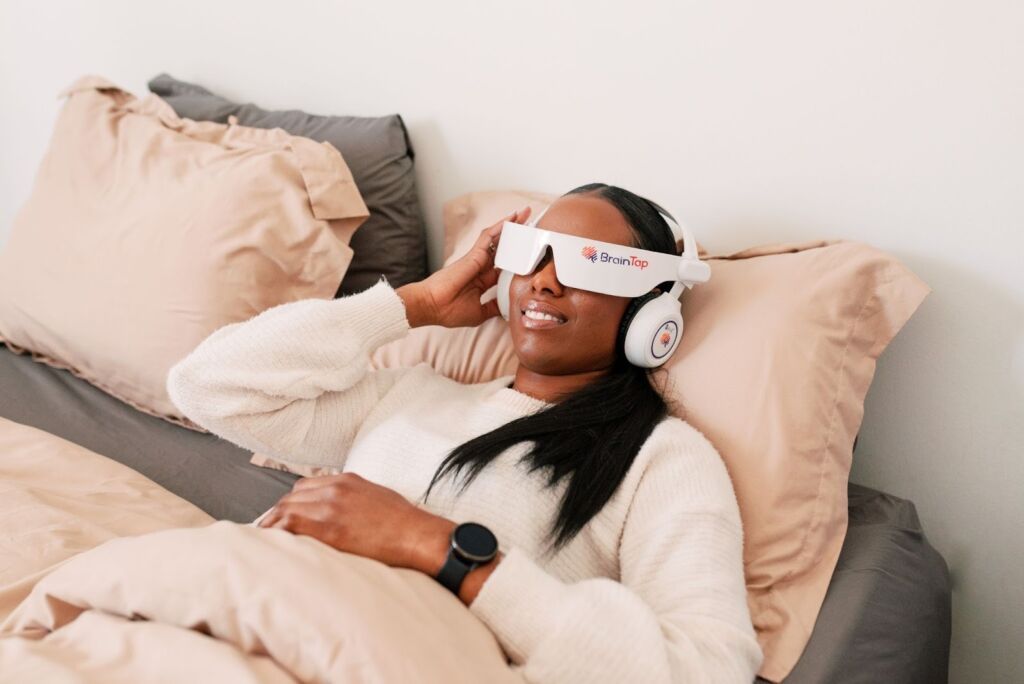
One solution gaining attention for its research-driven approach is BrainTap. Rather than relying on trends, it is built around neuroscience, sound technology, and light-based stimulation designed to guide the brain into restorative states.
BrainTap sessions combine guided audio, binaural beats, and synchronized light pulses. Together, they help the brain shift into parasympathetic dominance, where recovery and regeneration can occur.

What the research shows
A poster presented in connection with the 2020 International Congress on Integrative Medicine and Health reported findings from a study involving 100 adults who completed a single 20-minute audio-visual brain entrainment session.
The report found that one session with the BrainTap headset was associated with increases in heart rate variability markers, with parasympathetic activity indicators like RMSSD rising by 32.2 percent and pNN50 increasing by 51.6 percent. Participants also experienced a 38.4 percent reduction in their stress index.
These findings suggest that BrainTap’s combination of binaural beats, isochronic tones, and LED light stimulation may help shift the nervous system toward a more relaxed, restorative state.
Brainwave changes that support clarity and calm
Some studies on audiovisual entrainment report meaningful increases in alpha brainwave activity following a session. Alpha waves are linked to calm focus, creativity, and relaxed alertness, a state that is difficult to access consistently through willpower alone.
Tools like BrainTap help create this state intentionally, making recovery a repeatable process rather than a rare moment of quiet.
From stress relief to cognitive performance
While stress reduction is a major benefit, the effects go further. Users often report improved focus, better sleep quality, and faster mental recovery after demanding days. By improving sleep and nervous system balance, the brain becomes more adaptable, supporting learning, decision-making, and emotional resilience over time.
Note: This information is educational and not intended as medical advice. Consult a qualified professional for medical or mental health concerns.
A simple daily recovery protocol
You don’t need expensive equipment to start improving your recovery. Here is a basic framework that takes 10–20 minutes per day:
Morning (5–10 minutes): Begin with slow, diaphragmatic breathing or a brief mindfulness practice before checking your phone. This sets a parasympathetic tone for the day.
Midday (5 minutes): Take a genuine break. Step outside, close your eyes, or do a short breathing reset. Avoid scrolling; the goal is to give your nervous system a real pause.
Evening (10–20 minutes): Use a guided recovery session, whether through an app, audiovisual tool, or simple wind-down routine. Dim lights and reduce stimulation in the hour before bed.
What to track: Sleep consistency (same wake time daily), subjective energy and focus levels, mood stability, and heart rate variability if you have access to a tracker.
Building a smarter self-improvement plan
The most effective self-improvement plans balance ambition with restoration. They recognize that mental performance depends on nervous system health.
Recovery is not time lost. It is capacity gained.
For those setting intentions for 2026, incorporating science-backed mental fitness practices can make goals more sustainable. Better sleep, calmer focus, and improved resilience create momentum that lasts.
Start this week
- Audit your recovery: Track your sleep, energy, and mood for five days. Look for patterns.
- Add one intentional reset: Commit to a single 10–20 minute recovery practice daily, whether it’s breathwork, a guided session, or simply sitting in stillness.
- Protect your wind-down: Create a 30-minute buffer before sleep with no screens and low light.
The pace of modern life shows no signs of slowing. Without proactive recovery, stress compounds quietly. The good news: small, consistent investments in mental recovery pay compounding returns.
For readers interested in a deeper framework for long-term mental development, Dr. Patrick Porter explores these principles further in Brain Fitness Blueprint: Integrating Ancient Wisdom and Modern Technologies for Peak Performance.
Author: Shanique Brophy is a marketing professional with a degree in Marketing and eight years of hands-on experience in PR and SEO. She loves exploring and writing about diverse topics, from branding to lifestyle and everything in between.