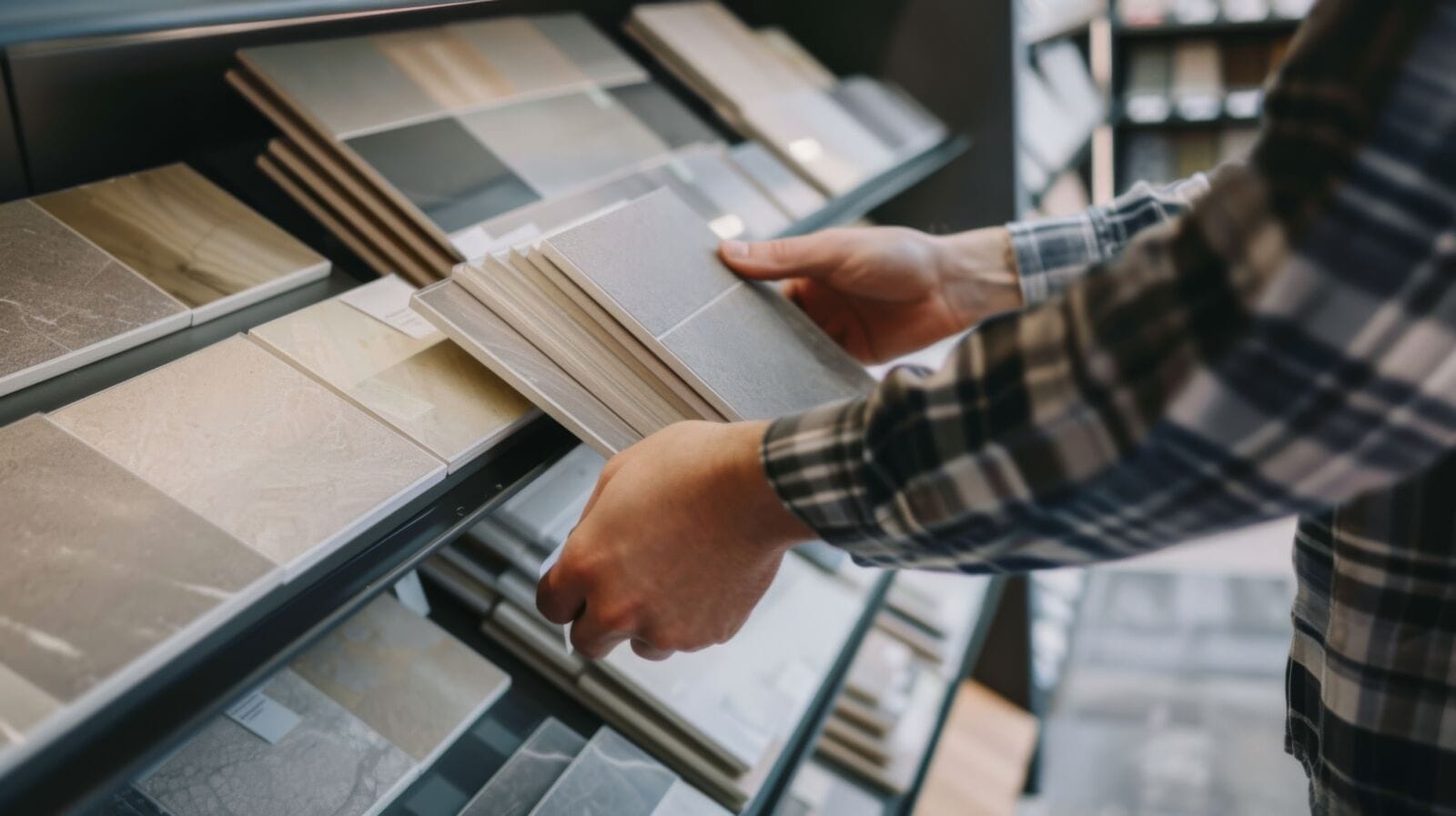
The rooms that make the strongest first impression are not always the largest ones.
An entryway may only occupy a few square feet, but its floor is often the first material you notice. A powder room can turn a single tiled wall into the most memorable surface in the house.
Even a fireplace surround or kitchen backsplash can carry more design weight than a much larger expanse of neutral flooring.
That is helping move tile away from its old role as a practical background material. Current interiors are leaning toward texture, visible materiality and surfaces that feel considered at close range. The shift is part of a broader move toward permanence and material depth in luxury interiors, where character increasingly comes from what a room is made from rather than what has been added to decorate it.
The five makers below approach that idea very differently. Some preserve the irregularities of hand production, while others use advanced porcelain manufacturing to create scale, texture or performance that handmade materials are not intended to provide.
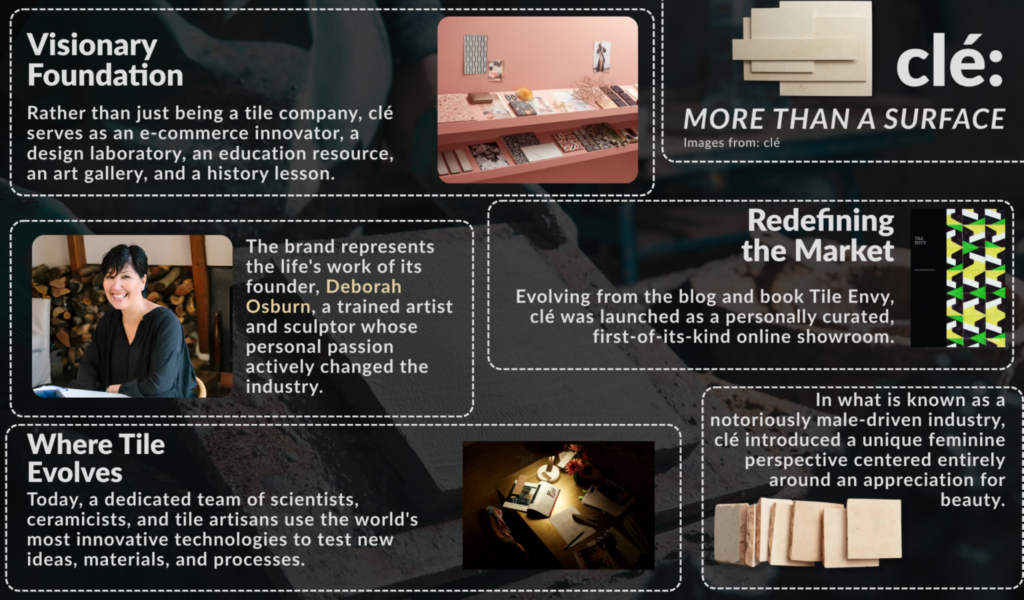
1. clé bringing artisan character
clé is the strongest starting point when the tile is meant to be noticed as a material rather than simply read as a finish.
Its collections move across zellige, terracotta, cement, brick, terrazzo and natural stone, with handmade variation central to much of the brand’s design language.
With authentic zellige, differences in glaze, edges and surface are consequences of the making process rather than imperfections engineered into an industrial reproduction. clé’s current entryway edit also brings together terracotta, slate, travertine, marble, terrazzo, cement and other materials specifically for foyer use.
That makes the entryway tile collections from clé particularly useful when the goal is to balance visual character with the realities of a hard-working entrance.
Zellige is one example of why that material knowledge is important. Its reflective, irregular surface produces a very different effect from conventional ceramic, something that also comes through when comparing handcrafted zellige with standard subway tile.
Terracotta offers another route, trading glaze movement for earthy tone, texture and the possibility of a surface that looks increasingly settled as the rest of the home ages around it.
The practical side should be embraced rather than ignored. Handmade floor tile requires careful layout, blending across boxes where tonal variation is expected, and an installer comfortable working with dimensional variation.
- Entryways, powder rooms, kitchens and feature surfaces where handmade material character is part of the design.
- What sets it apart: A point of view built around authentic artisan materials and their natural variation.
2. Daltile offers porcelain with wide design range
Daltile occupies a completely different end of the tile spectrum, and that is exactly why it belongs here.
The company is a major U.S. manufacturer and distributor of ceramic, porcelain and natural stone, with 80 collections currently identified as made in the USA. Its strength is not handmade irregularity but the ability to combine repeatable manufacturing with an unusually broad range of formats and looks.
For an entryway that sees children, pets, shoes and constant circulation, porcelain can be a sensible choice. Daltile specifically positions porcelain for moisture-prone and high-traffic areas, while its ranges move from marble and limestone interpretations to wood, concrete and more graphic options.
The design opportunity is scale. A larger-format porcelain can reduce visual interruptions from grout joints and give a foyer a quieter architectural base. Just remember that larger tiles place greater demands on substrate flatness and layout planning.
- Busy households, contemporary foyers and interiors where consistency and durability are priorities.
- What sets it apart: Large-scale U.S. manufacturing combined with exceptionally broad porcelain design options.
3. Crossville featuring architectural porcelain and specification depth
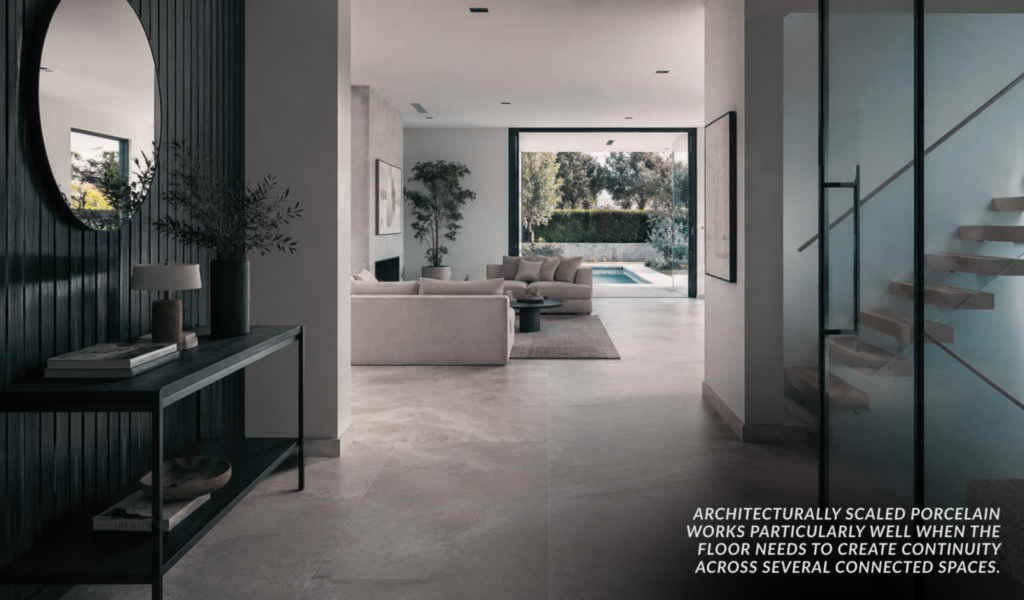
Crossville is less about creating the look of handwork and more about using manufacturing innovation to give designers precise control over scale, texture and performance.
The Tennessee-based manufacturer identifies itself as the first American manufacturer of large-format porcelain tile and offers specialized surface treatments designed to combine visual qualities with functional performance.
Its portfolio spans residential and commercial applications, which makes it particularly relevant where a high-impact interior also needs to tolerate serious use.
This is a good fit for open-plan homes where the entryway floor continues into adjacent rooms. Instead of treating the foyer like a decorative island, a restrained porcelain surface can establish a continuous ground plane while changes in furniture, lighting and rugs define each zone.
That approach also supports the idea that repeating materials and aligning floor transitions can make a home feel more cohesive.
- Larger entry halls, open-plan interiors and projects where designers want architectural continuity with commercial-level specification options.
- What sets it apart: American porcelain manufacturing with a strong architectural and technical focus.
4. StonePeak Ceramics: best for dramatic scale
Some high-impact spaces need fewer joints, not more decoration.
Stone Peak Ceramics is especially interesting when tile starts to move toward the scale of an architectural slab. The company operates a porcelain manufacturing plant in Crossville, Tennessee, and its current portfolio includes traditional tile alongside large-format porcelain surfaces.
Its U.S.-made Limitless Porcelain line uses 12mm large-format slabs, while other StonePeak systems push porcelain into expansive wall, countertop and furnishing applications.
For interiors, that opens up a different version of craftsmanship. A foyer might combine a restrained porcelain floor with an almost seamless wall surface, while a fireplace can be treated as one large material gesture rather than an arrangement of small units.
Large-format material also shifts the installation conversation. Handling, substrate preparation, cutting and setting require the correct equipment and installer experience. The fewer joints you see in the finished room, the more important precision behind the scenes becomes.
- Contemporary residences, dramatic walls, fireplaces and interiors where scale is the main design move.
- What sets it apart: High-tech porcelain manufacturing with a strong emphasis on slabs and oversized formats.
5. Florida Tile: best for natural looks with controlled variation
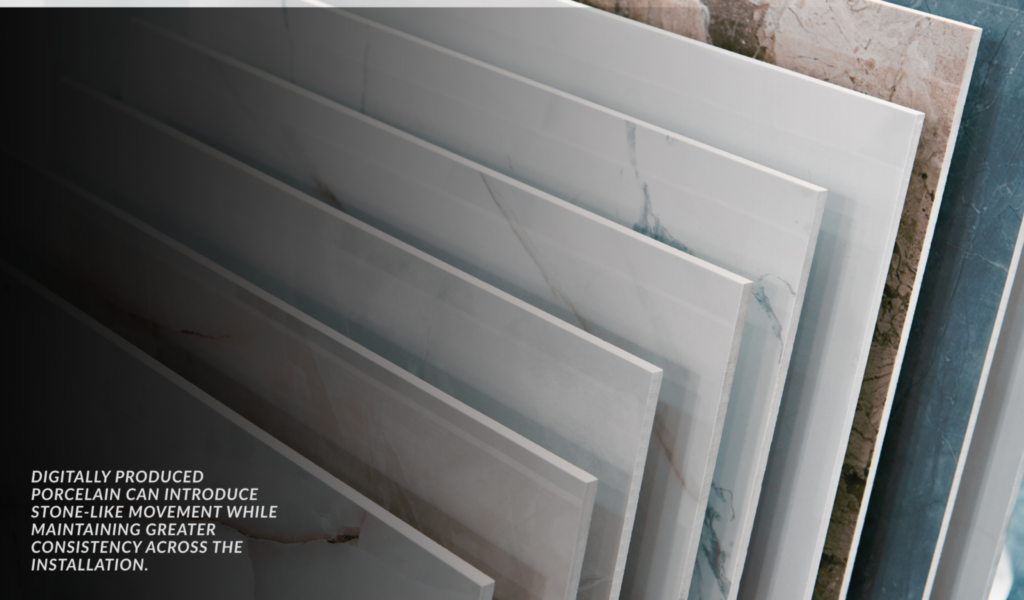
Florida Tile offers another useful middle ground: surfaces that reference natural materials but retain the repeatability of manufactured porcelain.
The company manufactures porcelain in Lawrenceburg, Kentucky, and its HDP process uses digital printing to produce greater graphic and color variation across tile surfaces. Its collections interpret materials ranging from marble and slate to wood and concrete, giving homeowners the visual language of natural surfaces without necessarily accepting all of their inherent variation.
That can be especially useful in an entryway where you want movement but not unpredictability. A slate-inspired floor can provide visual depth while keeping the overall palette controlled. A marble-look porcelain can create a more formal first impression without requiring every piece to be individually selected for veining.
- Transitional interiors and homeowners who want natural-material character with more predictable installation.
- What sets it apart: U.S. porcelain manufacturing paired with high-definition surface variation.
The real choice is between different kinds of character
These five makers demonstrate that “character” does not have to mean the same thing in every room.Before choosing any of them, look at the actual room.
Consider foot traffic, moisture at the entrance, the size of the space and how the floor will meet adjoining materials. Dry-lay the proposed pattern where possible so cuts at doors, stairs and visible walls can be planned before installation begins.
Most importantly, decide whether you want the surface to disappear quietly into the architecture or participate in it.
High-impact interiors do not require the loudest tile. They need the right material, used with enough intention that even a relatively small space can set the tone for everything that follows.