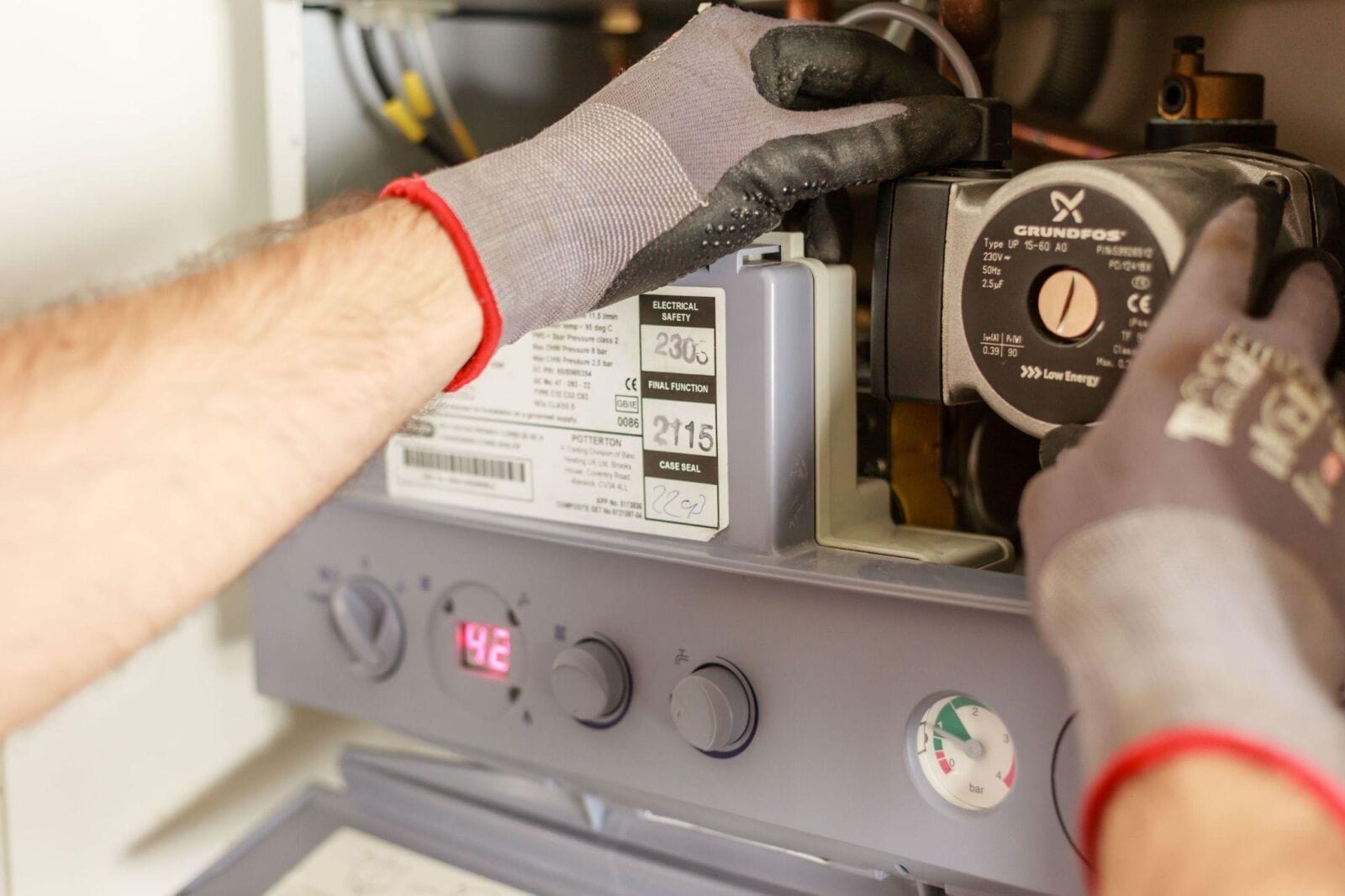
Your home’s functioning depends very much on the performance of your boiler, especially if you live in a cold region, and it is therefore important to have a reliable boiler. But, as with any kind of heating system, the boiler can fail from time to time.
Some issues can have very straightforward solutions, while others require professional boiler repair services without creating any more trouble or posing any risks to safety. Homeowners can respond to boiler problems more promptly by recognizing the warning signs that indicate a need for boiler repair and understanding which basic checks they can perform safely.
Signs Your Boiler May Have a Problem
On many occasions, a boiler will exhibit some indicators of a potential failure before it fails. Knowing what you are looking for early can help you realize that maintenance or repair might be needed.
Look out for the following indicators:
- Differences in heating
- Diminished hot water
- Additional noise
- Unexpected pressure drop or fluctuations
- Leaks visible
- Repeated shutdowns
Not all odd symptoms are serious faults. But, if there is an older boiler or previous breakdowns, it’s advisable to not disregard the persistent changes.
Common Boiler Problems and Their Causes
HVAC systems and their counterparts typically last between 15 and 25 years. If you know what may be causing the issues with your boiler, you will be able to gauge that instantly and tell your heating engineer without needing a replacement.
No Heating or Hot Water
If the boiler hasn’t been generating heat and/or hot water, the boiler could either have been disconnected from the power supply, have a problem, or is safely shut down.
Potential causes include:
- Power Loss or power breaker interruption.
- Incorrect thermostat settings.
- Faulty combination boiler diverter valve.
- Ignition system or internal system problems.
Ensure that the thermostat is working correctly, and that the boiler is monitoring correctly without any obvious fault words.
Low Boiler Pressure
Many sealed central-heating systems run at a pressure of around 1–1.5 bar when cold, but this is dependent on the manufacturer and the design. In some boilers, low pressure is the reason that they are not able to function properly.
Strange Noises Coming From the Boiler
Several sounds could indicate various issues, such as a sign of trapped air, whereas whistling or kettle-like sounds could point to restricted water flow or the presence of scaling.
Water Leaks Around the Boiler
Any pipe connections, valves, pumps, or internal components can become a place for leaks to form. A small leak can create a problem for other surfaces involved and may even cause problems with electrical equipment.
Radiators Not Heating Evenly
Causes of cold spots or hot radiators that don’t get hot can be trapped air in the system, the development of sludge, or inadequate circulation of the water.
Possible solutions are related to the cause:
- In cases where it is trapped air, bleeding the radiator may help.
- Properly balancing the heating system can help to distribute the heat more evenly.
- Sludge can limit circulation – professionals may be needed.
If you have a number of radiators affected, it could be a problem with the heating system and not with a specific radiator.
Boiler Keeps Switching Off
Frequent shutdowns can be caused by various reasons like low pressure, overheating, poor circulation, issues with the thermostat, or problems with the safety controls on the boiler. Look for the error code and proceed accordingly.
What Homeowners Can Check Before Calling a Professional
Various tests can be conducted to ensure that minor problems are solved without incurring expensive fees.
These steps have to be followed prior to any problem-solving process:
- It is necessary to ensure that the thermostat is turned on and set to the right temperature.
- The electrical connection should be ensured, and the circuit breaker should not be off.
- The pressure setting should be correct.
In case the heater is using gas and there is a smell of gas, exit quickly and contact the relevant authority for emergency gas service.

When to Call a Professional for Boiler Repair
Experts from boiler repair services will be in a better position to diagnose the issue, examine the parts, and give you a solution. It is imperative that when dealing with companies like Astera, you make sure that you ask about the kind of problem, cost analysis, and warranty or replacements.
How to Prevent Common Boiler Problems
When proper maintenance is done, early warning signs caused by mechanical failures can be picked up. Below are some simple steps that will help reduce the chances of trouble:
- Schedule and conduct routine maintenance.
- Monitor boiler pressure.
- Ensure easy access.
- Deal with any strange behavior.
- Control home heating wisely.
- Listen to the boiler technician.
Conclusion
There are many common boiler issues, from simple thermostat problems to problems that need to be addressed as urgently as possible. Homeowners who have an understanding of how to spot any early signs of problems, as well as how to perform basic safety tests, will be able to ensure that any disruptions are kept to a minimum and that their heating system, should they have one, is not damaged.