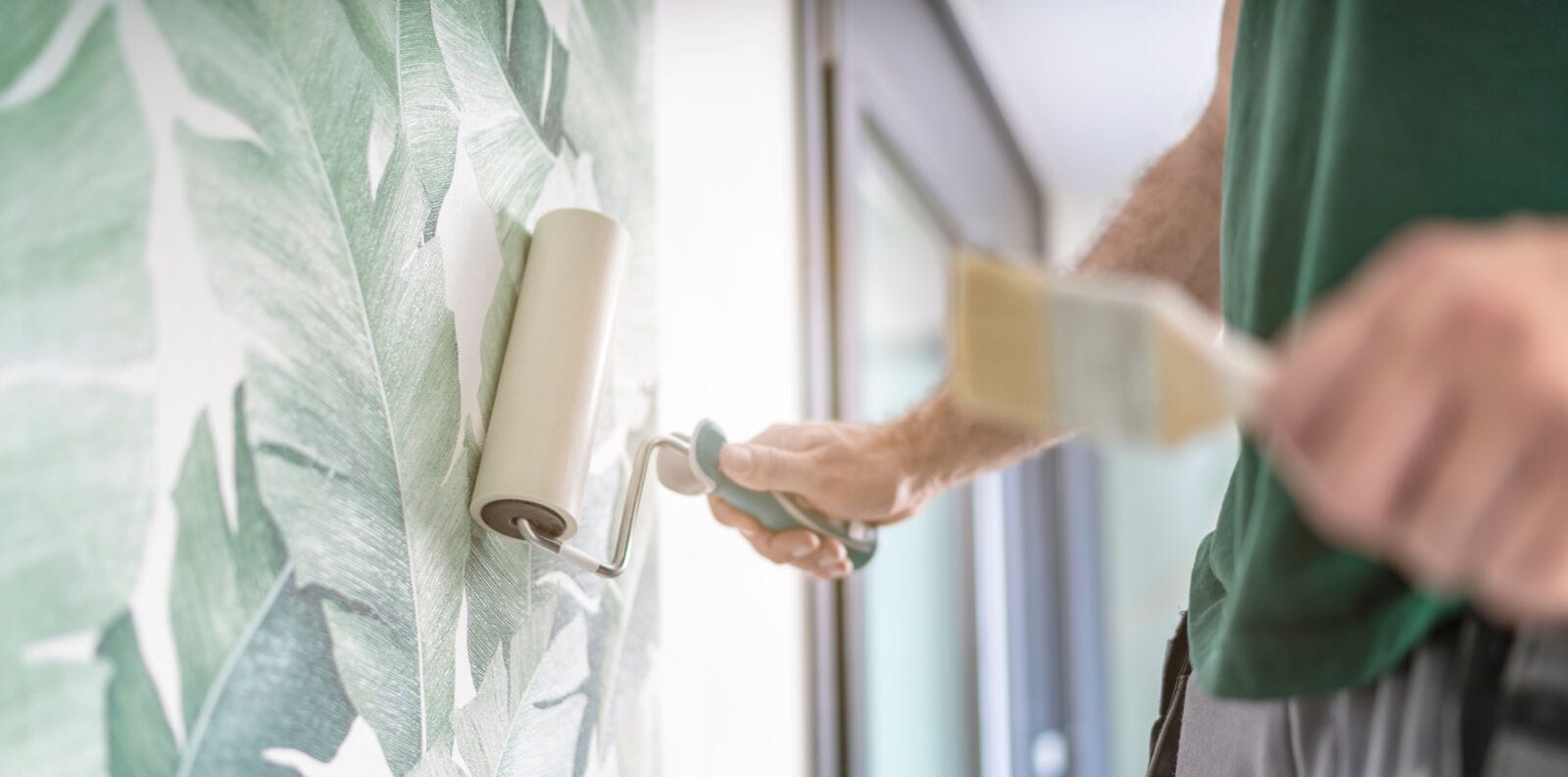
Beautiful wallpaper can completely change an interior, but the finished result depends on much more than the pattern or brand selected. The condition of the wall, the type of wallcovering, surface preparation, primer, adhesive, room conditions and installation method all work together.
That is one of the lessons the installation team at Enjoy The Wall has learned from working with different wallcoverings in residential, designer-led and commercial interiors throughout Colorado.
“Not every wall needs the most extensive preparation, and not every wallpaper needs a perfectly smooth wall,” explains Kris A., Lead Installer and Design Consultant at Enjoy The Wall. “The important part is matching the condition of the surface, the wallcovering and the client’s expectations.”
That distinction can save money on some projects. On others, trying to save money on preparation can become one of the most expensive decisions in the entire installation.
Wall Preparation and Wallpaper Should Be Considered Together
There is no single preparation specification that makes sense for every wallpaper project.
A relatively forgiving wallcovering may perform well over a properly cleaned, repaired and primed surface that still has a small amount of texture. A thin paper, metallic finish or other highly revealing material can require considerably more surface preparation to achieve the expected appearance.
This creates an opportunity to balance material selection and preparation costs.
If a homeowner is flexible about the wallcovering, choosing a material compatible with the existing surface may reduce the amount of skim coating, sanding and other preparation required. In that situation, professional planning can save money without necessarily sacrificing the desired appearance.
The opposite approach can create problems.
Selecting a thin or highly reflective wallcovering and then eliminating the surface preparation it requires does not make the project more efficient. It simply transfers imperfections from the wall into the finished installation.
This is particularly relevant for wallpaper installation in Denver, Colorado, where installers frequently encounter textured drywall, previous repairs, multiple layers of paint and surfaces that were originally finished with paint rather than wallcovering in mind.
Some Wallcoverings Reveal More Than Others
Wallcoverings behave differently after installation, which is why material selection cannot be separated from wall condition.
Thicker and more textured products may visually soften minor surface variations. Some commercial vinyls and dimensional materials can also be relatively forgiving when installed over appropriately prepared walls.
Thin papers are less forgiving. Light colors can reveal inconsistencies in the substrate, while smooth or glossy surfaces may emphasize bumps, repairs and texture as light moves across the wall.
Metallic and reflective finishes can be even more demanding because side lighting can turn a small imperfection into a visible shadow.
Natural grasscloth presents a different set of considerations. Its beauty comes partly from natural variation, and visible panel differences are often an inherent characteristic rather than an installation defect. Proper layout and discussion of the expected appearance therefore become particularly important.
Peel-and-stick wallcoverings can also surprise homeowners. Although they are frequently marketed as simple to apply, many are relatively thin and conform closely to the surface underneath. Existing wall texture can remain visible, while improper surface conditions may affect adhesion.
The name of the product does not eliminate the need to evaluate the wall.
Skipping Preparation Can Be a False Economy
Enjoy The Wall installers have repeatedly encountered projects where homeowners hoped to reduce costs by minimizing preparation. Sometimes that decision is reasonable because the chosen wallcovering and existing surface are compatible.
The problems begin when expectations and preparation no longer match.
A homeowner may purchase an expensive wallpaper and expect a nearly flawless finish while simultaneously deciding against the surface work necessary to produce that finish. Once the material is installed, previously acceptable wall imperfections can suddenly become much more noticeable.
At that point, fixing the problem may involve removing newly installed material, repairing or refinishing the wall, purchasing replacement wallpaper and installing it again.
The original savings can disappear very quickly.
“When someone invests in an expensive wallcovering, wall preparation is really part of protecting that investment,” says Kris A. “We would rather identify a surface problem before installation than explain after installation why it is visible through the material.”
This does not mean every wall needs to be rebuilt to a perfectly smooth finish. It means the level of preparation should be appropriate for the material and the expected result.
Premium Materials Raise the Stakes
Luxury wallcoverings can represent a substantial investment. Some are handmade, printed with specialty processes or manufactured from natural fibers. Others have large pattern repeats that increase material requirements.
When the product itself is expensive, the economics of cutting preparation costs become even harder to justify.
One damaged or unusable roll can cost more than the surface preparation that might have prevented the problem.
There is also an important distinction between price and durability. A premium wallcovering is not automatically more durable simply because it costs more. Delicate natural materials, for example, may require considerably more care than commercial vinyl.
What the higher investment does change is the cost of getting the project wrong.
Good Installation Starts Before Installation Day
Professional wallpaper work should ideally begin before the boxes are opened — and sometimes before the wallpaper is even ordered.
An installer can evaluate the wall, identify preparation requirements, review pattern repeat and roll dimensions, and help determine whether the selected material is appropriate for the intended surface.
This is especially valuable when an interior designer, general contractor and installer are involved in the same project.
Enjoy The Wall uses an agreed scope of work so the parties understand what preparation will be performed, what conditions already exist and what result can reasonably be expected. If another contractor is responsible for preparing the walls, the required condition can be established before the wallpaper installer arrives.
That documentation is not simply paperwork. It prevents different people from working toward different definitions of “ready for wallpaper.”
Quality Does Not Mean Spending the Maximum Everywhere
There is an important difference between cutting costs and controlling costs.
A well-planned wallpaper project does not necessarily require the most expensive solution at every stage. In some rooms, changing the material may reduce preparation requirements. In others, investing more in the wall makes sense because the selected finish will expose every imperfection.
Experienced installers learn where compromises are reasonable and where they are likely to become visible.
The same principle applies throughout interior construction: money spent on the finish cannot compensate for a substrate that is unsuitable for that finish.
Ultimately, quality has a cost. But professional planning determines where that money actually needs to be spent.
The best wallpaper projects are not simply the ones with the most expensive material or the most extensive wall preparation. They are the ones where the wall, preparation, wallcovering and expected finish were considered as one system — before the first strip ever went up.